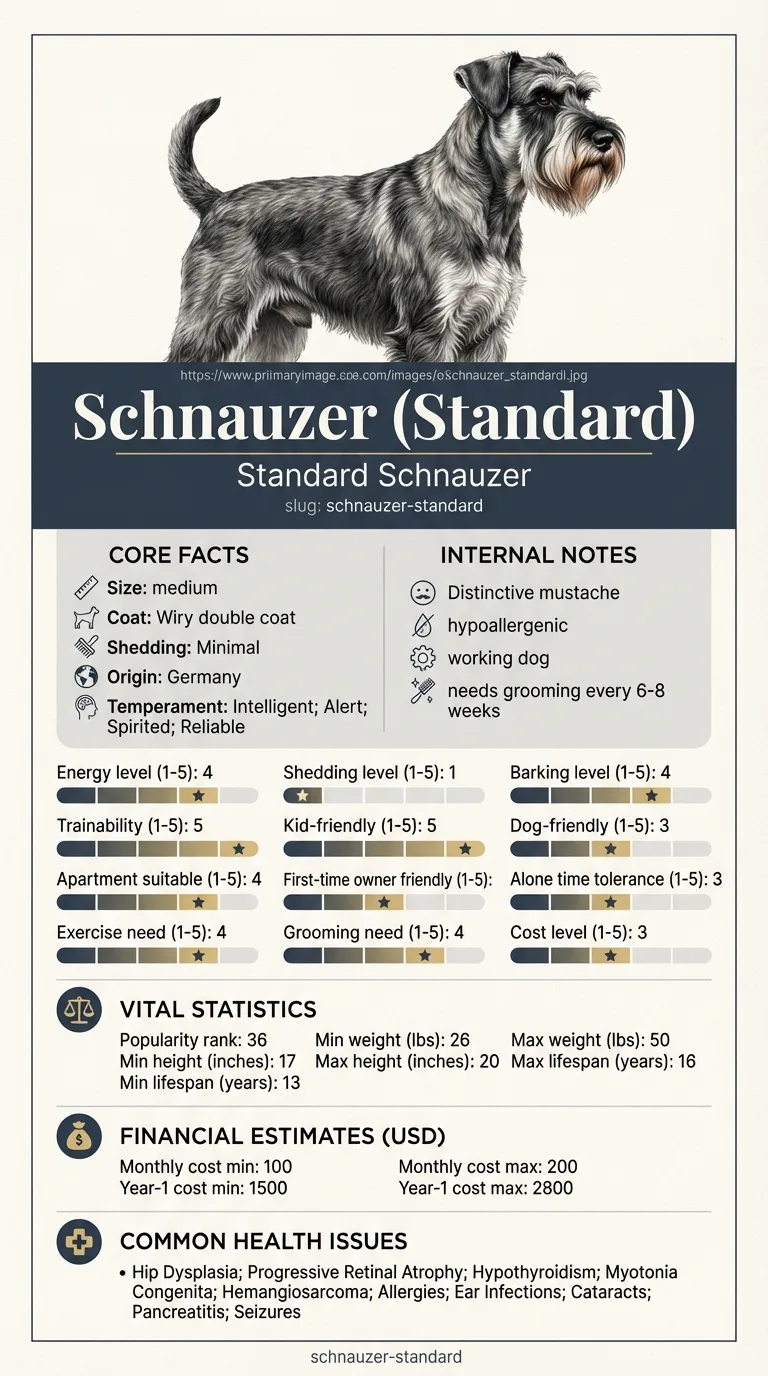
What are quick tips for Schnauzer (Standard) myxomatous mitral valve disease (mmvd)?
Keep your Schnauzer's weight in check and provide regular vet visits for monitoring. Maintain a low-sodium diet and ensure they have a stress-free environment.
Schnauzer (Standard) Myxomatous Mitral Valve Disease (MMVD) is a serious heart condition affecting many dogs. Understanding it is crucial for their health.

Typically, dog owners who may face this issue include those with Schnauzers (Standard) that are aging or those who may notice symptoms like coughing or fatigue in their pets. First-time dog owners may be particularly unprepared for this condition.
This guide is not medical advice. If your dog shows pain, sudden behavior change, or worsening symptoms, consult a licensed veterinarian.
Some links may be affiliate links. We may earn a commission at no extra cost to you. We only suggest products we believe are helpful for dog owners.
Schnauzer (Standard) myxomatous mitral valve disease (mmvd) is a heart condition that affects many dogs in this breed. It typically presents with symptoms like coughing, fatigue, and difficulty breathing, especially during physical exertion. Owners may notice their Schnauzer being less active or requiring more rest than usual.
Myxomatous mitral valve disease (mmvd) is the most common heart disease in Schnauzers (Standard), particularly in older dogs. Many Schnauzers develop this condition as they age, making it important for owners to monitor their dog's health closely.
Schnauzers (Standard) are genetically predisposed to myxomatous mitral valve disease (MMVD). This heart condition often arises due to the breed's specific genetic makeup, which can lead to heart valve deterioration over time. As they age, the likelihood of developing MMVD increases significantly.
Environmental factors can also play a role in the development of MMVD in Schnauzers. Stressful situations, poor diet, and lack of regular exercise may exacerbate heart health issues. Additionally, living in a noisy or chaotic household can increase anxiety levels, which may impact heart health.
If you notice your Schnauzer displaying excessive anxiety or behavioral issues, consider hiring a professional trainer. A trainer can help address specific behavior problems that may contribute to stress and heart health.
If you suspect your Schnauzer has symptoms of MMVD, such as coughing, difficulty breathing, or lethargy, consult your veterinarian immediately. Regular check-ups are essential, especially as your dog ages, to monitor heart health and catch potential issues early.
Managing Schnauzer (Standard) myxomatous mitral valve disease (MMVD) typically takes weeks to months. Regular vet visits and adjustments to treatment plans may be necessary over time.
Success means your Schnauzer is stable, showing minimal symptoms, and maintaining a good quality of life. Regular check-ups and following the vet's recommendations will be key.
Avoiding these common mistakes can help manage Schnauzer (Standard) myxomatous mitral valve disease (MMVD) more effectively.
Recognizing when Schnauzer (Standard) myxomatous mitral valve disease (MMVD) is an emergency can save your dog's life. If you notice severe symptoms, like difficulty breathing, fainting, or persistent coughing, call your vet immediately. These signs suggest that your dog may be in immediate danger and needs urgent care.

Emily, a first-time dog owner, noticed her Standard Schnauzer, Max, was coughing and seemed tired during walks. After a vet visit, she learned that Max had myxomatous mitral valve disease (MMVD). Initially overwhelmed, Emily began managing his health with medication and a tailored diet. She learned to monitor his symptoms closely and adjusted their routine to include gentle exercise. Over time, Max's condition stabilized, and Emily found a support group for pet owners facing similar challenges.
Key takeaway: With proper management and support, living with a Schnauzer (Standard) with MMVD can be manageable, allowing for a fulfilling life together.

Myxomatous mitral valve disease (mmvd) is common in Schnauzers due to genetic predispositions. Factors such as age, weight, and overall health can also increase the risk. Regular vet check-ups are essential for early detection. This answer relates to Schnauzer (Standard) myxomatous mitral valve disease (mmvd).
Symptoms of mmvd can include coughing, difficulty breathing, and reduced exercise tolerance. You may also notice an increased heart rate or fatigue. If you observe these symptoms, consult your veterinarian immediately.
Managing mmvd involves regular vet visits for monitoring and medication as needed. Providing a low-stress environment and controlling their weight can also help. Gentle exercise is important, but avoid overexertion.
A heart-healthy diet low in sodium can benefit Schnauzers with mmvd. Your vet may recommend specific dog foods or supplements to support heart health. Always consult your veterinarian before making dietary changes.
The outlook can vary based on the severity of mmvd and how well the condition is managed. Many dogs live comfortably for years with appropriate care and monitoring. Regular veterinary check-ups are crucial for adjusting treatment as needed.
Early signs of MMVD in a Schnauzer (Standard) may include a persistent cough, difficulty breathing, or reduced exercise tolerance. You might also notice your dog being more lethargic than usual. If you see these symptoms, consult your vet for an evaluation.
Management of MMVD involves regular vet check-ups, a heart-healthy diet, and possibly medication to help your dog's heart function better. Keeping your Schnauzer (Standard) calm and avoiding strenuous activities can also be beneficial. Always follow your vet's specific recommendations.
Yes, myxomatous mitral valve disease (MMVD) can be hereditary in Schnauzers (Standard). If you have concerns about your dog's health, consider discussing breeding practices with responsible breeders and vet specialists who can guide you on genetic testing.
Absolutely, older Schnauzers (Standard) can develop myxomatous mitral valve disease (MMVD) as their heart tissue weakens over time. Regular vet visits become even more crucial as your dog ages to catch and manage any health issues early.
To help a Schnauzer (Standard) with MMVD, consider a low-sodium diet, controlled exercise, and maintaining a healthy weight. Reducing stress is also important, so creating a calm environment can help your dog feel more comfortable.
Keep your Schnauzer's weight in check and provide regular vet visits for monitoring. Maintain a low-sodium diet and ensure they have a stress-free environment.
Focus on gentle training methods that avoid physical strain. Use positive reinforcement for obedience and socialization, adapting activities to their energy levels.
Watch for labored breathing, excessive coughing, or reluctance to exercise. These signs may indicate that your Schnauzer needs immediate veterinary attention.
Yes, but play should be gentle and not overly strenuous. Short, low-impact activities are best to keep them engaged without overexerting their heart.