Behavior
What are quick tips for managing Vizsla wobbler syndrome?
Keep your Vizsla's weight in check and provide a safe, comfortable environment. Regular vet check-ups and following treatment recommendations are key.

Quick answer
What are quick tips for managing Vizsla wobbler syndrome?
Keep your Vizsla's weight in check and provide a safe, comfortable environment. Regular vet check-ups and following treatment recommendations are key.
Vizsla wobbler syndrome is a neurological condition that affects balance and coordination. It can be distressing for both the dog and the owner.
Owners of Vizslas often face this issue, especially those with active lifestyles. Busy families or first-time dog owners may struggle to manage the symptoms and seek effective training solutions for their pets.
This guide is not medical advice. If your dog shows pain, sudden behavior change, or worsening symptoms, consult a licensed veterinarian.
Some links may be affiliate links. We may earn a commission at no extra cost to you. We only suggest products we believe are helpful for dog owners.
We research and check what we publish, but we do not warrant that any figure, date, price, or statement is accurate, complete, or current, and we accept no liability for any loss, cost, injury, or other harm arising from the use of this site. Use it as one reference among several. You remain responsible for your own decisions and for your dog's care - confirm anything that matters with a licensed veterinarian or another qualified professional before you act on it. Full disclaimer.
Check this first
Recognizing when your Vizsla's wobbler syndrome requires immediate veterinary attention can be crucial. If you notice any of the following red-flag signs, call your vet right away: persistent wobbling or difficulty standing, sudden paralysis, or severe pain when moving. These symptoms may indicate a worsening condition that needs urgent care.
On the other hand, if your Vizsla is showing minor symptoms such as occasional clumsiness or mild unsteadiness, you can monitor them at home. It's important to develop a plan to observe their behavior and keep track of any changes. Regular check-ins with your veterinarian can help you determine if further action is necessary.
Knowing the difference between an emergency and a situation that can be managed at home will help ensure your Vizsla gets the care they need when they need it. Always err on the side of caution if you're unsure about their condition.
If any of these apply, call your vet or an emergency clinic now. The rest of this page is for the cases that are not an emergency.
Vizsla wobbler syndrome is a neurological condition that affects the spinal cord. This syndrome can cause instability in the cervical vertebrae, leading to wobbly movements, difficulty walking, and an awkward gait. Daily life for a Vizsla with this syndrome may involve stumbling or falling, which can be distressing for both the dog and the owner.
Wobbler syndrome is not extremely common in Vizslas but does occur, particularly in younger dogs or those with a family history of the condition. Owners should be aware of the symptoms and consult their vet if they notice signs of instability.
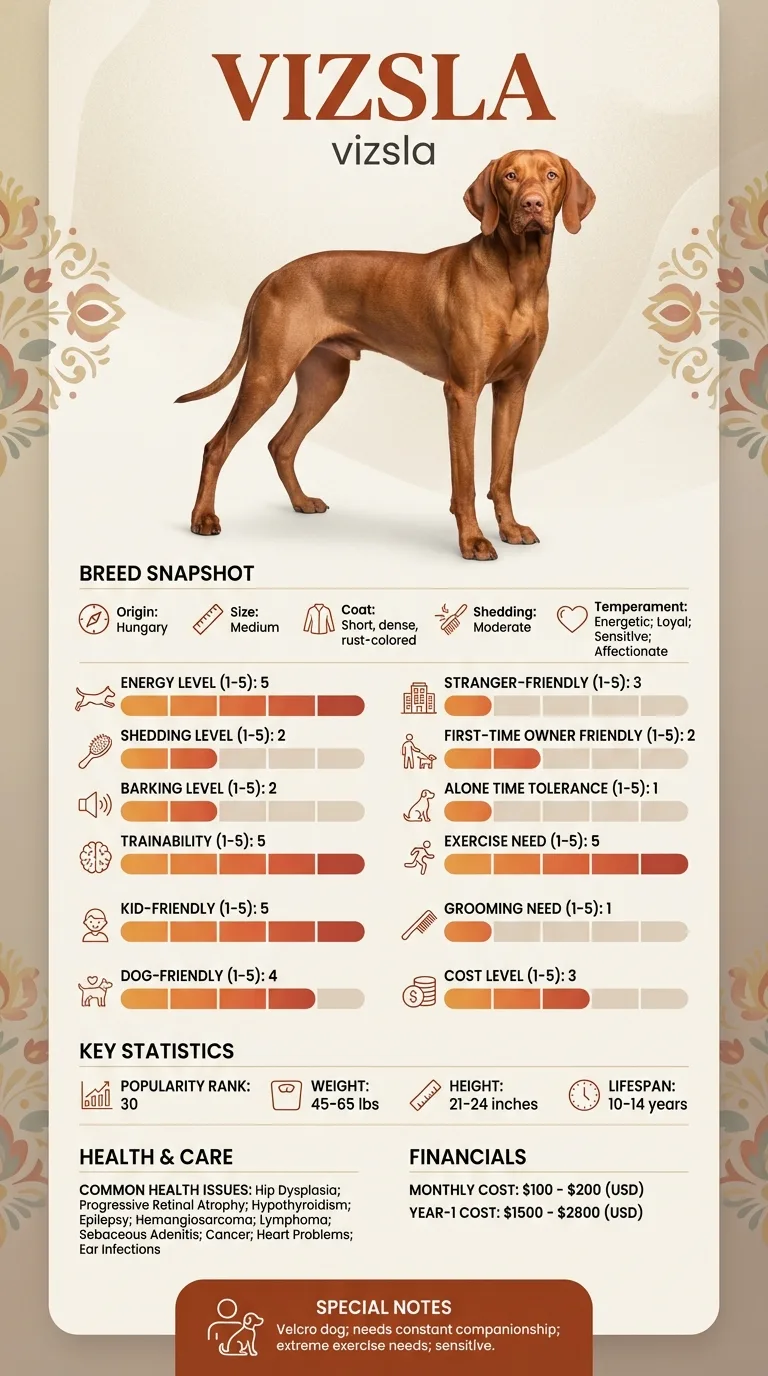
Vizslas are medium-sized dogs known for their energetic and affectionate nature. Their physical structure makes them more prone to Wobbler Syndrome, a condition involving cervical vertebral instability. This can lead to neurological issues and mobility problems.
Environmental factors can also play a role in Wobbler Syndrome. Poorly managed exercise, sudden physical trauma, or a lack of proper nutrition can exacerbate the condition. Ensuring a safe environment and appropriate activity levels is crucial for managing symptoms.
If you notice persistent wobbling, difficulty walking, or any signs of pain, it's essential to talk to your vet. They can assess the severity of the condition and recommend necessary treatments or interventions.
Avoiding these common mistakes can help manage Vizsla wobbler syndrome more effectively.
Start here: Vizsla Most Common Genetic Disorders: What to Screen For
See all Vizsla health problems, which breeds are prone to wobbler syndrome, or the full Vizsla breed guide for temperament, exercise needs and ownership costs.
Improvement can take 3 to 6 months with consistent care and vet support.
Success means your Vizsla shows reduced wobbling, increased stability, and a better quality of life.
Jenna, a first-time Vizsla owner, noticed her dog Max wobbling when he walked. Concerned, she took him to the vet, who diagnosed him with Wobbler Syndrome. After starting a training program focused on strengthening exercises, Jenna worked with a canine physical therapist for several months. Slowly but surely, Max began to regain some stability. The combination of training and vet guidance made a noticeable difference in his mobility, allowing him to enjoy walks again.
Key takeaway: With the right support and consistent training, you can help your Vizsla manage Wobbler Syndrome effectively.
Vizsla wobbler syndrome is a neurological condition caused by instability in the cervical vertebrae. This can lead to symptoms like wobbling, difficulty walking, or weakness in the limbs. It's important to monitor your dog closely and consult a vet for diagnosis.
While you can't prevent wobbler syndrome entirely, early diagnosis and treatment can help manage the condition. This may include medication, physical therapy, or in severe cases, surgery. Always work with your vet to determine the best approach for your dog.
Treatment options vary based on severity but may include anti-inflammatory medications, physical therapy, or surgical intervention. Regular check-ups with your vet are essential to monitor your dog's progress and adjust treatment as needed.
While some aspects of wobbler syndrome can be managed at home through gentle exercise and a healthy diet, professional veterinary care is crucial. Home management should always complement your vet's recommendations.
Common signs of Vizsla wobbler syndrome include unsteady gait, neck pain, and difficulty walking. If your dog seems to have trouble coordinating their movements or is reluctant to engage in physical activities, it's essential to consult a vet for a proper diagnosis.
Yes, older Vizslas may exhibit more severe symptoms of wobbler syndrome due to age-related factors. They might also take longer to recover from any treatments or interventions, making regular vet check-ups even more important.
Managing your Vizsla's wobbler syndrome at home may involve creating a safe environment that limits their movement and prevents falls. Providing supportive bedding and encouraging gentle, low-impact exercises can also help maintain their mobility.
Surgery is one option for treating Vizsla wobbler syndrome, but not always necessary. Depending on the severity of the condition, your vet may suggest medication, physical therapy, or lifestyle changes as alternatives.
If you notice any signs of wobbler syndrome, such as difficulty walking or neck pain, it's crucial to see a vet promptly. Early diagnosis and intervention can significantly improve your dog's quality of life.
Keep your Vizsla's weight in check and provide a safe, comfortable environment. Regular vet check-ups and following treatment recommendations are key.
Treatment costs can range from $500 to $7,000 depending on the severity and type of care needed. Always discuss costs with your vet for a better estimate.
Immediately consult your veterinarian if you notice wobbling or coordination issues. Early intervention can greatly improve your dog's quality of life.
A one-page prep sheet for this condition: the signs, the questions to ask, what to get priced. Unlocks here.
You get: Vet visit prep sheet
No spam. One-click unsubscribe. See our privacy policy.
Preview page 1 before you decide.