Behavior
What are some Vizsla progressive retinal atrophy (PRA) quick tips?
Maintain a consistent environment and use tactile cues to help your Vizsla navigate safely. Regular vet check-ups are crucial for monitoring their condition.

Quick answer
What are some Vizsla progressive retinal atrophy (PRA) quick tips?
Maintain a consistent environment and use tactile cues to help your Vizsla navigate safely. Regular vet check-ups are crucial for monitoring their condition.
Vizsla progressive retinal atrophy (PRA) leads to gradual vision loss, which can deeply affect your dog's quality of life.
Owners of Vizslas, especially those who are first-time dog parents or have busy lifestyles, often struggle with managing PRA. The emotional toll of seeing a beloved pet face vision loss can be overwhelming, and finding effective ways to support their needs can be challenging.
This guide is not medical advice. If your dog shows pain, sudden behavior change, or worsening symptoms, consult a licensed veterinarian.
Some links may be affiliate links. We may earn a commission at no extra cost to you. We only suggest products we believe are helpful for dog owners.
We research and check what we publish, but we do not warrant that any figure, date, price, or statement is accurate, complete, or current, and we accept no liability for any loss, cost, injury, or other harm arising from the use of this site. Use it as one reference among several. You remain responsible for your own decisions and for your dog's care - confirm anything that matters with a licensed veterinarian or another qualified professional before you act on it. Full disclaimer.
Check this first
Recognizing when Vizsla progressive retinal atrophy (PRA) becomes an emergency is crucial for your dog's well-being. If you notice any sudden changes in your dog's behavior or vision, it's important to act quickly. Red-flag signs include sudden loss of vision, inability to navigate familiar environments, or visible discomfort in bright lights. These symptoms warrant an immediate call to your vet.
Mild cases of PRA can often be monitored. If your Vizsla shows gradual changes in night vision or seems less responsive to visual cues, keep a close eye on them. Regular vet check-ups can help track the condition. Consider creating a plan for adjustments in your dog's routine, like using voice commands and minimizing bright light exposure. These proactive measures can help your dog adapt better to their vision loss.
In summary, if you observe significant behavioral changes or distress, don't hesitate to seek veterinary help. Meanwhile, if the changes are subtle and gradual, you can take a more watchful approach while keeping your vet informed.
If any of these apply, call your vet or an emergency clinic now. The rest of this page is for the cases that are not an emergency.
Vizsla progressive retinal atrophy (PRA) is a serious eye condition that leads to gradual vision loss. Owners often notice their Vizsla stumbling or having difficulty navigating familiar spaces. This can be distressing for both the dog and the owner, as the dog's once vibrant energy is affected by the loss of sight.
PRA is relatively common in Vizslas, as this breed is genetically predisposed to the condition. Many owners report noticing symptoms by the time their dog reaches middle age, making it an important concern for Vizsla enthusiasts.
Vizslas are prone to genetic disorders, including Progressive Retinal Atrophy (PRA). This condition is inherited and affects the retina, leading to gradual vision loss. As active and energetic dogs, they rely on their vision for play and interaction, making this condition particularly challenging.
Environmental factors like prolonged exposure to bright light or lack of stimulation can exacerbate the symptoms of PRA. A stimulating environment is essential for Vizslas to keep their minds engaged. Neglecting their needs can lead to increased anxiety and behavioral issues.
If you notice any sudden changes in your Vizsla's behavior or worsening vision, it's important to consult your veterinarian. They can provide insights into managing PRA and discuss potential treatments or support systems.
Here are some common mistakes that can worsen your Vizsla's progressive retinal atrophy (PRA) situation. Avoiding these can help improve their quality of life.
Start here: Vizsla Most Common Genetic Disorders: What to Screen For
See all Vizsla health problems, which breeds are prone to progressive retinal atrophy pra, or the full Vizsla breed guide for temperament, exercise needs and ownership costs.
You may start noticing changes in your Vizsla's vision within a few months to a year after diagnosis. Regular vet check-ups and adjustments are key, and owners often see gradual improvements in their dog's comfort and adaptation over 6 to 12 months.
Success looks like your Vizsla adapting to its surroundings with confidence despite vision loss. You'll notice them navigating their home better and responding positively to training cues, which can enhance their quality of life.
Emma, a busy nurse in Chicago, noticed her Vizsla, Max, bumping into furniture and hesitating on walks. After a vet visit confirmed a diagnosis of progressive retinal atrophy (PRA), she felt overwhelmed. With patience and a dedicated training plan, Emma taught Max to rely more on auditory cues and scents. Over time, Max became more confident, and their daily walks turned into joyful adventures again. Emma also found comfort in joining a local support group for Vizsla owners facing similar challenges.
Key takeaway: With the right training and support, dogs with progressive retinal atrophy can adapt and thrive, maintaining their joyful spirit and bond with their owners.
Vizslas can inherit progressive retinal atrophy (PRA) due to genetic factors. This condition causes the gradual degeneration of the retina, leading to vision loss. Regular veterinary check-ups can help diagnose this condition early.
While there's no cure for PRA, you can help your Vizsla adapt to vision loss. Utilize consistent commands and create a safe environment to prevent accidents. Training sessions can help reinforce their confidence and independence.
Unfortunately, PRA is progressive and cannot be stopped. However, regular vet visits and genetic testing can help identify at-risk dogs early. Focus on creating a stable environment to support their needs.
Common signs of PRA include difficulty seeing in dim light, increased bumping into objects, and reluctance to navigate new spaces. If you notice these behaviors, consult your vet for an evaluation.
Yes, training is still possible and beneficial for a Vizsla with PRA. Use verbal cues and tactile signals to guide them. Consistent training can enhance their confidence and help them adjust to their condition.
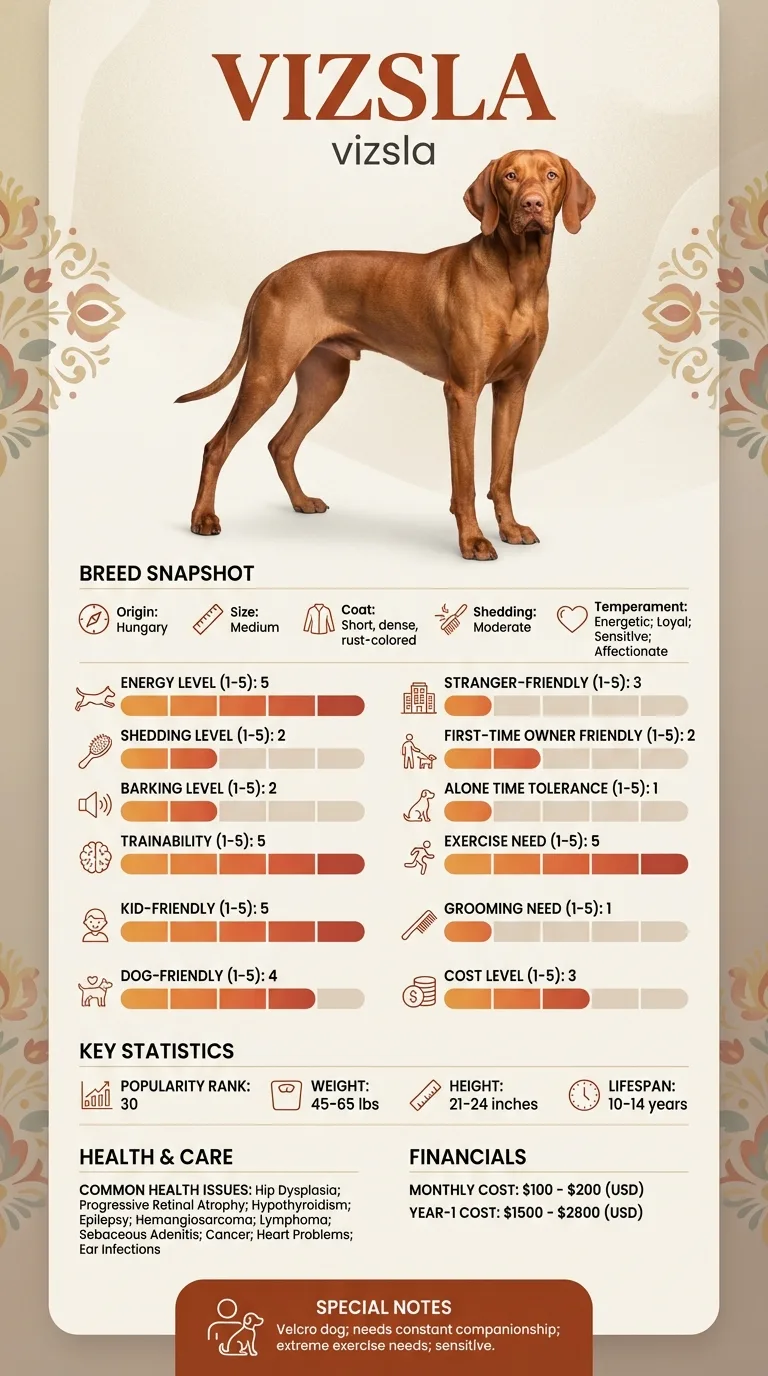
A Vizsla with PRA typically has a normal lifespan, around 10 to 14 years. However, the quality of life can be affected by how well you manage their condition and adapt to their needs.
Yes, progressive retinal atrophy (PRA) can occur in older Vizslas, but it is typically more common in younger dogs. If you notice any signs of vision changes in your older Vizsla, it's a good idea to consult a vet for a thorough examination.
If you suspect your Vizsla is experiencing vision loss, schedule a visit to your vet immediately. Early diagnosis and treatment options can help manage the condition and improve your dog's quality of life.
PRA typically starts with night blindness and can gradually lead to complete vision loss over months to years. Regular vet check-ups can help monitor the condition and provide you with strategies to support your Vizsla during this time.
While there is no cure for PRA, a balanced diet might support overall health. Some owners find that supplements rich in antioxidants can be beneficial, but always consult your vet before starting any new regimen.
Yes, Vizslas with PRA may become more hesitant or anxious due to their vision loss. You might notice changes in their willingness to explore new environments or play. It's important to provide reassurance and adjust their surroundings to help them feel secure.
Maintain a consistent environment and use tactile cues to help your Vizsla navigate safely. Regular vet check-ups are crucial for monitoring their condition.
Create a safe space and use verbal commands to guide them. Play with familiar toys to help them feel secure.
Yes, genetic testing can identify Vizslas at risk for PRA. This allows for early intervention and planning.
Costs can vary, but regular vet visits and potential treatments may range from $100 to $200 monthly. Prepare for added expenses related to their care.
Absolutely! Training using verbal cues and positive reinforcement can still be effective and beneficial for a Vizsla with PRA.
A one-page prep sheet for this condition: the signs, the questions to ask, what to get priced. Unlocks here.
You get: Vet visit prep sheet
No spam. One-click unsubscribe. See our privacy policy.
Preview page 1 before you decide.