Behavior
What are quick tips for Siberian Husky eye problems?
Keep your Husky's living area free from hazards and schedule regular vet visits to monitor eye health.

Quick answer
What are quick tips for Siberian Husky eye problems?
Keep your Husky's living area free from hazards and schedule regular vet visits to monitor eye health.
Siberian Husky eye problems can significantly affect their health and quality of life. It's important to recognize these issues early.
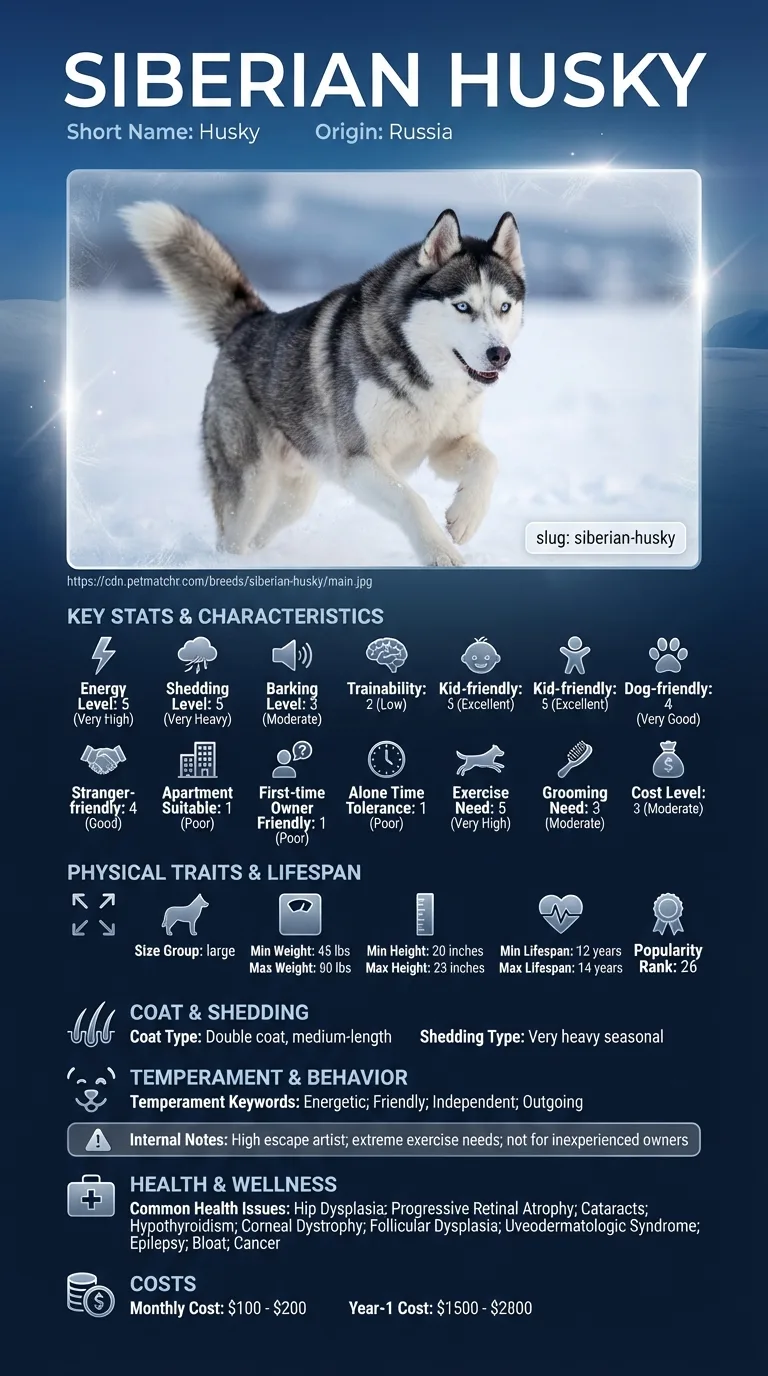
Many Husky owners, particularly first-time dog parents, find themselves concerned about their dog's eye health. Those living in environments with high allergens or exposure to bright sunlight might notice these issues more frequently.
This guide is not medical advice. If your dog shows pain, sudden behavior change, or worsening symptoms, consult a licensed veterinarian.
Some links may be affiliate links. We may earn a commission at no extra cost to you. We only suggest products we believe are helpful for dog owners.
We research and check what we publish, but we do not warrant that any figure, date, price, or statement is accurate, complete, or current, and we accept no liability for any loss, cost, injury, or other harm arising from the use of this site. Use it as one reference among several. You remain responsible for your own decisions and for your dog's care - confirm anything that matters with a licensed veterinarian or another qualified professional before you act on it. Full disclaimer.
Check this first
Not all eye issues in your Siberian Husky require immediate action, but some can be serious. It's important to know when to call your vet right away versus when you can monitor the situation. Red flags like sudden vision loss, severe redness, or excessive tearing mean you should seek veterinary help immediately. If your Husky is squinting or seems in pain, that’s also a reason to reach out to a professional.
On the other hand, mild cases can often be watched and managed at home. If your Husky has minor irritation or a few tears without any other symptoms, you can keep an eye on it for a day or two. If the condition doesn’t improve or worsens, then it’s time to consult a vet. Regular check-ups can help catch potential eye problems early, so staying proactive is key to your dog’s health.
If any of these apply, call your vet or an emergency clinic now. The rest of this page is for the cases that are not an emergency.
Siberian Husky eye problems can be a significant concern for owners. Common issues include cataracts, corneal dystrophy, and progressive retinal atrophy. These conditions can lead to discomfort and vision impairment, making it important for Husky owners to be proactive about their dog's eye health.
Eye problems are relatively common in Siberian Huskies, especially as they age. Many Huskies will experience some form of eye issue during their lifetime, making awareness and regular vet check-ups essential.
Siberian Huskies are prone to specific eye problems due to their genetic makeup. Conditions like Progressive Retinal Atrophy and Corneal Dystrophy are more common in this breed. Their physical traits, such as the shape of their eyes, can also make them more susceptible to injuries.
Environmental factors can contribute significantly to eye issues. Prolonged exposure to harsh weather or debris can lead to injuries or irritations. Additionally, inadequate nutrition or health care can exacerbate underlying conditions.
If you notice persistent symptoms like excessive tearing, blinking, or any visible abnormalities, contact your vet immediately. Regular check-ups are important, especially if your Husky has a history of eye issues.
Avoid these common mistakes that can worsen Siberian Husky eye problems. Instead, focus on nurturing a healthy environment for your dog.
Start here: Siberian Husky Most Common Genetic Disorders: Screening
See all Siberian Husky health problems, which breeds are prone to eye problems, or the full Siberian Husky breed guide for temperament, exercise needs and ownership costs.
Addressing Siberian Husky eye problems can take several weeks to months. Consistent care and veterinary follow-up are essential.
Success means your Husky shows improved eye health, reduced discomfort, and better behavior during training. Regular vet check-ups should confirm the health of their eyes.
Emily, a busy nurse in Chicago, adopted a Siberian Husky named Max. Shortly after bringing him home, she noticed Max squinting and occasionally bumping into things. Concerned, she visited the vet, who diagnosed him with early-stage cataracts. Emily learned that with proper care and regular check-ups, Max could still lead a happy life. She adjusted Max's diet and followed a training regimen focused on positive reinforcement. Over time, Max's confidence grew, and he adapted well to his visual limitations.
Key takeaway: With dedication and the right support, even dogs facing eye problems can thrive. Regular vet visits, tailored training, and a loving home make all the difference.
Siberian Huskies can face eye problems due to genetic conditions like Progressive Retinal Atrophy or Cataracts. Environmental factors, such as injury or exposure to harsh weather, can also contribute. Regular vet check-ups can help identify these issues early.
To prevent eye problems, ensure your Husky has regular eye exams and protect their eyes from injuries. Limit exposure to bright sunlight and avoid letting them roam in dense brush where they could get hurt. Keeping their living environment clean can also help.
Look for signs like redness, tearing, squinting, or cloudy eyes. If your Husky is bumping into objects or seems disoriented, it may indicate a vision issue. Early detection is key, so consult your vet if you notice these symptoms.
Training can help manage behaviors that might lead to eye injuries, such as excessive jumping or running in dangerous areas. Teaching commands like 'stop' or 'leave it' can prevent accidents. However, it won't address genetic conditions or health issues.
Treatment varies based on the condition. Some eye problems may require medication, while others may need surgical intervention. Always consult your veterinarian to determine the best course of action for your Husky's specific issue.
Yes, eye issues can be relatively common in Siberian Huskies due to their genetic predispositions. However, not all Huskies will experience these problems. Regular health screenings can help catch issues early.
Yes, as Siberian Huskies age, they may become more prone to eye problems such as cataracts or progressive retinal atrophy. Regular check-ups with a vet can help catch these issues early.
If you notice any sudden changes in your Husky's vision or your dog is showing discomfort, it's best to consult your vet right away. Early intervention can prevent more serious issues.
Siberian Huskies are particularly prone to progressive retinal atrophy and cataracts. Understanding these breed-specific issues can help you be proactive about your dog's eye health.
Keep your Husky's living area free from hazards and schedule regular vet visits to monitor eye health.
Gently clean their eyes with a damp cloth and check for any unusual discharge.
Treatment costs can range from $100 for basic vet visits to several thousand dollars for surgery, depending on the condition.
Take them to the vet if you notice any signs of discomfort, such as squinting or excessive tearing.
A one-page prep sheet for this condition: the signs, the questions to ask, what to get priced. Unlocks here.
You get: Vet visit prep sheet
No spam. One-click unsubscribe. See our privacy policy.
Preview page 1 before you decide.