DogBreedCompass
← Back to breed profile

Schnauzer (Standard) von Willebrand's Disease (vWD1): What You Need to Know

Schnauzer (Standard) von Willebrand's disease (vWD1) is a genetic bleeding disorder that can be serious for affected dogs.

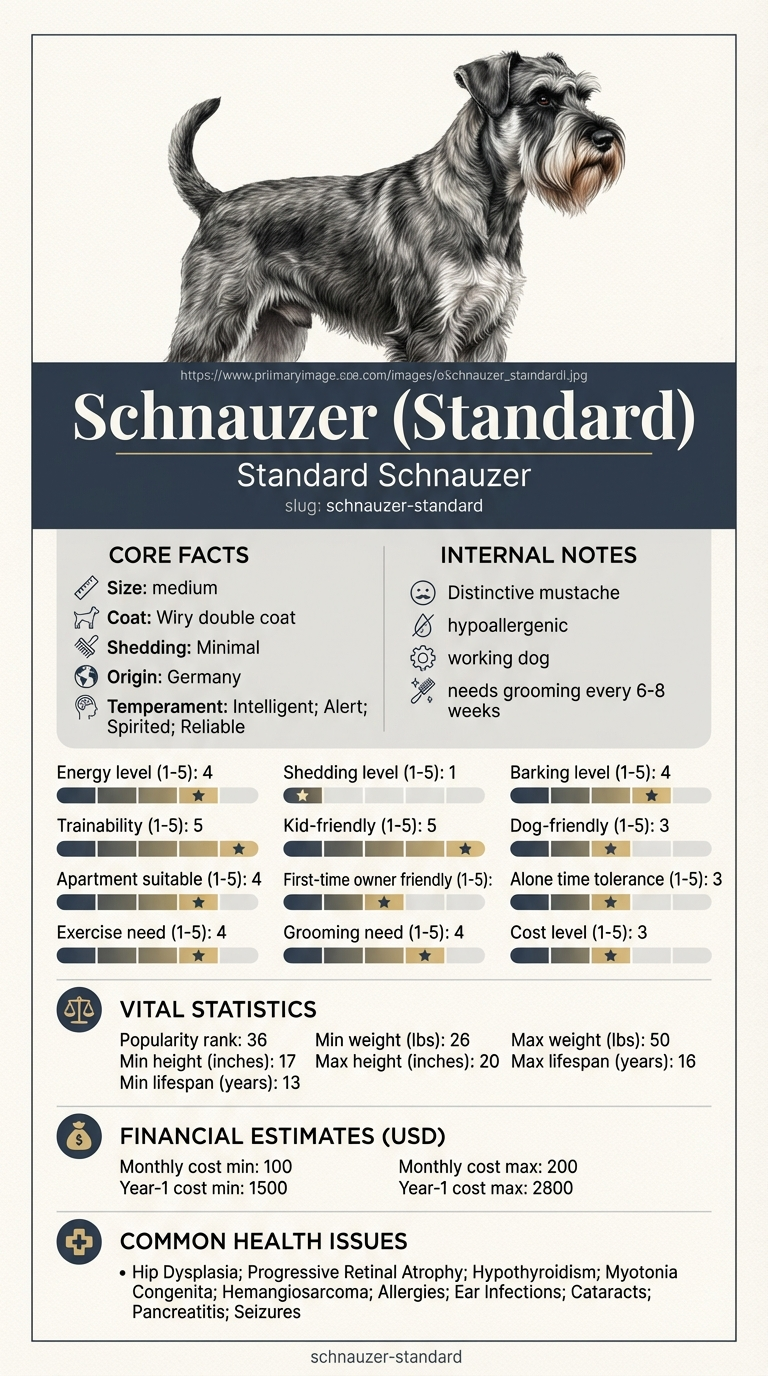
Schnauzer (Standard) von Willebrand's Disease (vWD1): What You Need to Know infographic

Typically, owners of Schnauzers (Standard) may face challenges with vWD1, especially those who are not aware of the symptoms or implications. New pet parents, in particular, might feel overwhelmed when trying to navigate this health issue.

Important reminder

This guide is not medical advice. If your dog shows pain, sudden behavior change, or worsening symptoms, consult a licensed veterinarian.

Some links may be affiliate links. We may earn a commission at no extra cost to you. We only suggest products we believe are helpful for dog owners.

What this problem looks like

Schnauzer (Standard) von Willebrand's disease (vWD1) is a genetic bleeding disorder that affects blood clotting. Day-to-day, this means your Schnauzer may experience excessive bleeding from minor injuries, nosebleeds, or prolonged bleeding after surgery. These symptoms can be alarming and require immediate veterinary attention.

Common triggers

  • Minor cuts or scrapes
  • Dental cleanings or surgeries
  • Stressful situations or high-energy activities

Von Willebrand's disease (vWD1) is relatively common in Schnauzers (Standard), particularly due to their genetic predisposition. While not every Schnauzer will have this condition, it’s important for owners to be aware and proactive, especially during routine vet visits.

Why this happens

Breed factors

Schnauzers (Standard) are prone to von Willebrand's disease (vWD1) due to their genetic makeup. This hereditary bleeding disorder affects their ability to form blood clots, making them more susceptible to bleeding. If your Standard Schnauzer has a family history of vWD1, they are at a higher risk.

Environment factors

Environmental factors can also play a role in the severity of vWD1 symptoms. Stressful situations, such as changes in routine or exposure to loud noises, may exacerbate bleeding episodes. Additionally, certain medications or injuries can trigger bleeding complications in affected dogs.

What you can try

At-home strategies

  • Monitor your Schnauzer closely for any signs of excessive bleeding, such as prolonged bleeding from minor cuts or bruising.
  • Maintain a low-stress environment by keeping a consistent routine and avoiding sudden changes. Provide a quiet space where your dog can retreat during stressful times.
  • Use soft bedding and avoid sharp objects in your home to minimize injury risks. Regularly check your dog's paws and body for any signs of injury or irritation.

When to consider a trainer

If your Schnauzer shows signs of anxiety or stress-related behaviors, consider consulting a trainer experienced with vWD1. They can help you develop a plan to manage your dog's stress and improve their overall well-being. Training can also enhance your dog's comfort in social situations.

When to talk to your vet

Talk to your vet if you notice any unusual bleeding or if your Schnauzer has a family history of vWD1. Regular check-ups are essential for monitoring their health. If symptoms worsen or you have concerns about your dog's bleeding tendencies, your vet may recommend specific tests or treatments.

Realistic expectations

Managing von Willebrand's disease (vWD1) in your Schnauzer can take several months to establish an effective routine. Regular vet visits and training will be crucial in this process.

Success means your Schnauzer is stable and has a reduced risk of bleeding episodes. You'll have a solid plan in place for emergencies and a good understanding of how to manage their condition.

Mistakes that make this worse

Avoiding common mistakes can help manage your Schnauzer (Standard) with von Willebrand's Disease (vWD1) effectively. Here are some behaviors to steer clear of and safer alternatives.

  • Ignoring Vet Advice: Some owners underestimate the importance of regular vet check-ups. Always follow your vet's guidance for managing vWD1.
  • Neglecting Diet: Feeding a poor diet can worsen health issues. Instead, provide a balanced, vet-approved diet to support your Schnauzer's health.
  • Overexerting During Exercise: Many owners push their dogs too hard. Opt for moderate, consistent exercise instead of intense sessions to avoid excessive strain.
  • Not Recognizing Symptoms: Failing to notice signs of bleeding or lethargy can delay treatment. Regularly check for any unusual behaviors and consult your vet if you notice something off.
  • Using Unverified Treatments: Some owners try home remedies without consulting a vet. Stick to treatments that your veterinarian recommends for vWD1.
  • Avoiding Socialization: Isolating your Schnauzer due to their condition can lead to anxiety. Instead, introduce them to calm, friendly dogs and people in a controlled manner.

When Schnauzer (Standard) von Willebrand's Disease (vWD1) is an Emergency

If your Schnauzer shows any of these red-flag signs, consider it an emergency: - Excessive bleeding from minor cuts or injuries. - Unexplained bruising or swelling. - Blood in urine or stool. - Persistent nosebleeds that don't stop. - Lethargy or weakness following any bleeding incidents.

These symptoms indicate that your dog may require immediate medical intervention.

On the other hand, if your Schnauzer has mild symptoms, you can monitor the situation with a watchful eye. Signs such as occasional nosebleeds or minor cuts that heal without excessive bleeding can often be observed at home. Keep track of any changes in their behavior or health and consult your vet for a routine check-up. Regular vet visits are essential to manage von Willebrand's Disease effectively and to adjust treatment as necessary.

Remember, when in doubt, it's always better to err on the side of caution. If you notice any significant changes in your Schnauzer's health, reach out to your veterinarian for advice.

Schnauzer (Standard) von Willebrand's Disease (vWD1): What You Need to Know - When Schnauzer (Standard) von Willebrand's Disease (vWD1) is an Emergency

Emily's Journey with Leo and vWD1

Emily, a first-time dog owner in Austin, adopted Leo, a Standard Schnauzer, without knowing he had von Willebrand's disease (vWD1). After a few weeks of noticing unusual bruising and bleeding, she took him to the vet, where they confirmed the diagnosis. Concerned but determined, Emily learned about the disease and how to manage it. With proper training, she taught Leo to avoid overly rough play, and she kept a first-aid kit ready for emergencies. Emily also joined a local support group for owners with dogs who have vWD1. Over time, she felt more confident and equipped to handle Leo's condition. Now, they enjoy their daily walks, and Emily has peace of mind knowing she’s doing everything she can for him.

Key takeaway: Understanding your dog's health condition is essential. With the right information and support, you can create a safe environment that allows your Schnauzer to thrive.

Frequently asked questions

What is Schnauzer (Standard) von Willebrand's Disease (vWD1)?

Schnauzer (Standard) von Willebrand's Disease (vWD1) is a genetic bleeding disorder that affects blood clotting. Dogs with this condition may experience excessive bleeding from injuries or during surgery. It's important to have your dog evaluated by a vet if you suspect they may have vWD1.

Why does my Schnauzer (Standard) have von Willebrand's Disease (vWD1)?

vWD1 is inherited and is common in Schnauzers due to genetic predisposition. If one or both parents carry the gene for this disorder, their puppies can inherit it. Genetic testing can help determine if your dog is at risk.

How can I manage my Schnauzer (Standard) with von Willebrand's Disease (vWD1)?

Managing vWD1 involves regular veterinary check-ups and monitoring for signs of bleeding. Avoid activities that could lead to injury, and inform your vet about your dog's condition before any surgical procedure.

What are the symptoms of von Willebrand's Disease (vWD1) in Schnauzers?

Symptoms may include prolonged bleeding from cuts, nosebleeds, or blood in the urine. If you notice any unusual bleeding, contact your veterinarian immediately for assessment and possible testing.

Can von Willebrand's Disease (vWD1) be treated?

While there is no cure for vWD1, treatment focuses on managing symptoms. In some cases, your vet may recommend a blood transfusion or medications to help improve clotting ability, especially before surgery.

Can von Willebrand's disease (vWD1) affect older Schnauzers (Standard)?

Yes, older Schnauzers (Standard) can still be affected by von Willebrand's disease (vWD1). Even if symptoms are not visible in younger years, the condition can develop or worsen with age. Regular check-ups with a vet can help catch any potential issues early.

What are the signs that my Schnauzer (Standard) may have von Willebrand's disease (vWD1)?

Signs of von Willebrand's disease (vWD1) can include excessive bleeding from minor injuries, unusual bruising, or prolonged bleeding after surgery. If you notice any of these symptoms, it's important to consult your veterinarian promptly for a proper diagnosis.

How can I manage my Schnauzer's (Standard) von Willebrand's disease (vWD1) at home?

Managing your Schnauzer's (Standard) von Willebrand's disease (vWD1) at home involves minimizing risks for injury by keeping them in a safe environment. You should also monitor their health closely and follow any treatment plans prescribed by your vet, including avoiding certain medications that could exacerbate bleeding issues.

Is there a cure for von Willebrand's disease (vWD1) in Schnauzers (Standard)?

Currently, there is no cure for von Willebrand's disease (vWD1) in Schnauzers (Standard). However, it can often be managed with proper veterinary care, including treatments that help control bleeding. Regular veterinary check-ups are essential for maintaining their health.

Why does my Schnauzer (Standard) have von Willebrand's disease (vWD1)?

Von Willebrand's disease (vWD1) is a genetic bleeding disorder that can be inherited. It occurs when the body lacks a specific protein needed for blood clotting. If your Schnauzer (Standard) has been diagnosed, it’s important to talk to your vet about the implications and care options.

Quick answers

View more answers
Behavior

What are quick tips for Schnauzer (Standard) von Willebrand's Disease (vWD1)?

Regular veterinary check-ups and avoiding high-risk activities are essential for managing vWD1. Keep first-aid supplies handy and know how to handle bleeding emergencies.

Health

Is von Willebrand's Disease (vWD1) common in Schnauzer (Standard)?

Yes, vWD1 is relatively common in Schnauzer (Standard) dogs due to their genetic background. Responsible breeding can help reduce the prevalence of this disorder.

Living

How can I ensure my Schnauzer stays healthy with vWD1?

Maintain a healthy diet, regular vet visits, and minimize stress to support your Schnauzer's overall health. Keeping your dog calm can help prevent bleeding episodes.

Related DogBreedCompass guides

  • Schnauzer (Standard) health issuesLearn more about the common health issues that can affect your Schnauzer (Standard).
  • Schnauzer (Standard) training guideFind training tips to help manage your Schnauzer's behavior and health.
  • Schnauzer (Standard) cost breakdownExplore ways to keep your Schnauzer (Standard) happy and healthy while managing their costs.
  • Schnauzer (Standard) separation anxiety guideUnderstand how to address separation anxiety in Schnauzers to improve their wellbeing.
  • Schnauzer (Standard) behavior problemsDiscover strategies for dealing with behavior problems specific to Schnauzers.

Related guides