Health
What should I do if my Poodle (Standard) has a bleeding injury?
Apply pressure to the wound and contact your vet immediately. Quick action is crucial to prevent excessive bleeding.

Quick answer
What should I do if my Poodle (Standard) has a bleeding injury?
Apply pressure to the wound and contact your vet immediately. Quick action is crucial to prevent excessive bleeding.
Poodle (Standard) von Willebrand's disease is a bleeding disorder that can affect your dog's health and wellbeing. This condition can lead to excessive bleeding, making it crucial for owners to recognize and manage it properly.
Typical owners who struggle with this issue often include those who have a Poodle (Standard) that shows signs of unexplained bleeding or bruising. New dog owners or those unfamiliar with health issues in Poodles may find this particularly concerning.
This guide is not medical advice. If your dog shows pain, sudden behavior change, or worsening symptoms, consult a licensed veterinarian.
Some links may be affiliate links. We may earn a commission at no extra cost to you. We only suggest products we believe are helpful for dog owners.
We research and check what we publish, but we do not warrant that any figure, date, price, or statement is accurate, complete, or current, and we accept no liability for any loss, cost, injury, or other harm arising from the use of this site. Use it as one reference among several. You remain responsible for your own decisions and for your dog's care - confirm anything that matters with a licensed veterinarian or another qualified professional before you act on it. Full disclaimer.
Check this first
Von Willebrand's Disease can be serious for your Poodle (Standard). It's crucial to know when to act quickly and when you can monitor the situation. If your dog shows any red-flag symptoms, it's time to call your vet immediately.
If any of these apply, call your vet or an emergency clinic now. The rest of this page is for the cases that are not an emergency.
Poodle (Standard) von Willebrand's disease is a bleeding disorder that can affect daily life for both you and your dog. This condition may result in excessive bleeding from minor cuts or injuries, making everyday activities like grooming or playing a bit more complicated. It's crucial to be aware of this condition, as it can lead to serious health issues if not managed properly.
Von Willebrand's disease is relatively common in Poodles (Standard), especially when compared to other breeds. It's important for owners to be proactive about screening and managing this condition to ensure their dog's health and safety.
Poodles (Standard) are prone to von Willebrand's disease due to their genetics. This bleeding disorder affects blood clotting and is inherited. If your Poodle has a family history of this condition, they may be more likely to develop it.
Environmental factors can also play a role in how this disease manifests. Stressful situations, injuries, or certain medications may trigger symptoms or worsen the condition. A calm and stable environment is essential for managing your Poodle's health.
If you notice any unusual bleeding, lethargy, or changes in appetite, contact your vet immediately. Your vet can offer guidance on treatments or medications to help manage von Willebrand's disease.
Avoiding these common mistakes can help improve your Poodle's (Standard) situation with von Willebrand's disease. Here are some behaviors to steer clear of.
Start here: Standard Poodle Most Common Genetic Disorders: Screening
See all Poodle Standard health problems, which breeds are prone to von willebrands disease, or the full Poodle Standard breed guide for temperament, exercise needs and ownership costs.
If your Poodle (Standard) is diagnosed with von Willebrand's disease, expect to see improvements within a few weeks of starting treatment and management strategies.
Success means your dog experiences fewer bleeding episodes and maintains a good quality of life with regular vet check-ups and proper care.
Look out for these urgent signs: - Excessive bleeding from cuts or during grooming - Blood in stool or urine - Unexplained bruising or swelling - Weakness or lethargy - Difficulty breathing or rapid heart rate If you notice any of these symptoms, don't hesitate to contact your vet right away.

In less severe situations, you might notice mild symptoms. These can include occasional nosebleeds or minor gum bleeding. If your Poodle (Standard) has these symptoms, keep an eye on them and maintain a calm environment.

If you're monitoring mild cases, follow these steps: - Keep a journal of symptoms and any changes. - Maintain regular vet check-ups to monitor their condition. - Ensure a stress-free environment to reduce bleeding risks. If symptoms worsen, be ready to seek immediate help.
Jenna, a busy nurse in Seattle, noticed her Poodle, Max, was having unusual bleeding after playing at the park. After consulting their vet, Max was diagnosed with von Willebrand's disease. Jenna learned to manage Max's condition by keeping him calm, avoiding rough play, and following a strict vet care routine. With time and proper care, Max's bleeding episodes decreased significantly, allowing him to enjoy his daily walks again.
Key takeaway: Managing von Willebrand's disease in Poodles requires diligence, but with the right care, your furry friend can still lead an active, happy life.
Poodle (Standard) von Willebrand's disease is a bleeding disorder that affects the dog's ability to clot blood. This condition can lead to excessive bleeding from minor injuries and can be life-threatening if not managed properly.
Management often involves regular veterinary check-ups and monitoring for signs of bleeding. Your vet may recommend avoiding certain activities that could lead to injury and may prescribe medication to help manage symptoms.
Common symptoms include prolonged bleeding after injury, nosebleeds, and unusual bleeding during heat cycles. If you notice any of these signs, consult your vet for an assessment.
While there is no cure for von Willebrand's disease, treatment focuses on managing symptoms and preventing bleeding episodes. Your vet can guide you on the best approaches for your Poodle.
Yes, you can train your Poodle, but it's important to focus on gentle activities that minimize the risk of injury. Positive reinforcement training can be very effective.
Yes, von Willebrand's disease is a genetic condition. If you are considering breeding your Poodle, it's essential to have them tested to prevent passing the condition to their puppies.
Keep training sessions short and positive, avoiding any activities that might lead to injuries. Focus on gentle commands and rewards, ensuring your dog feels safe and secure.
Apply direct pressure to the bleeding area and keep your dog calm. Seek immediate veterinary care for further assessment and treatment options.
While von Willebrand's disease is typically inherited, older Poodles can exhibit symptoms as they age. If you notice any unusual bleeding or bruising, consult your veterinarian for a check-up.
Apply pressure to the wound and contact your vet immediately. Quick action is crucial to prevent excessive bleeding.
Yes, ensure that grooming is done carefully to avoid cuts. Regular professional grooming may be safer than at-home grooming.
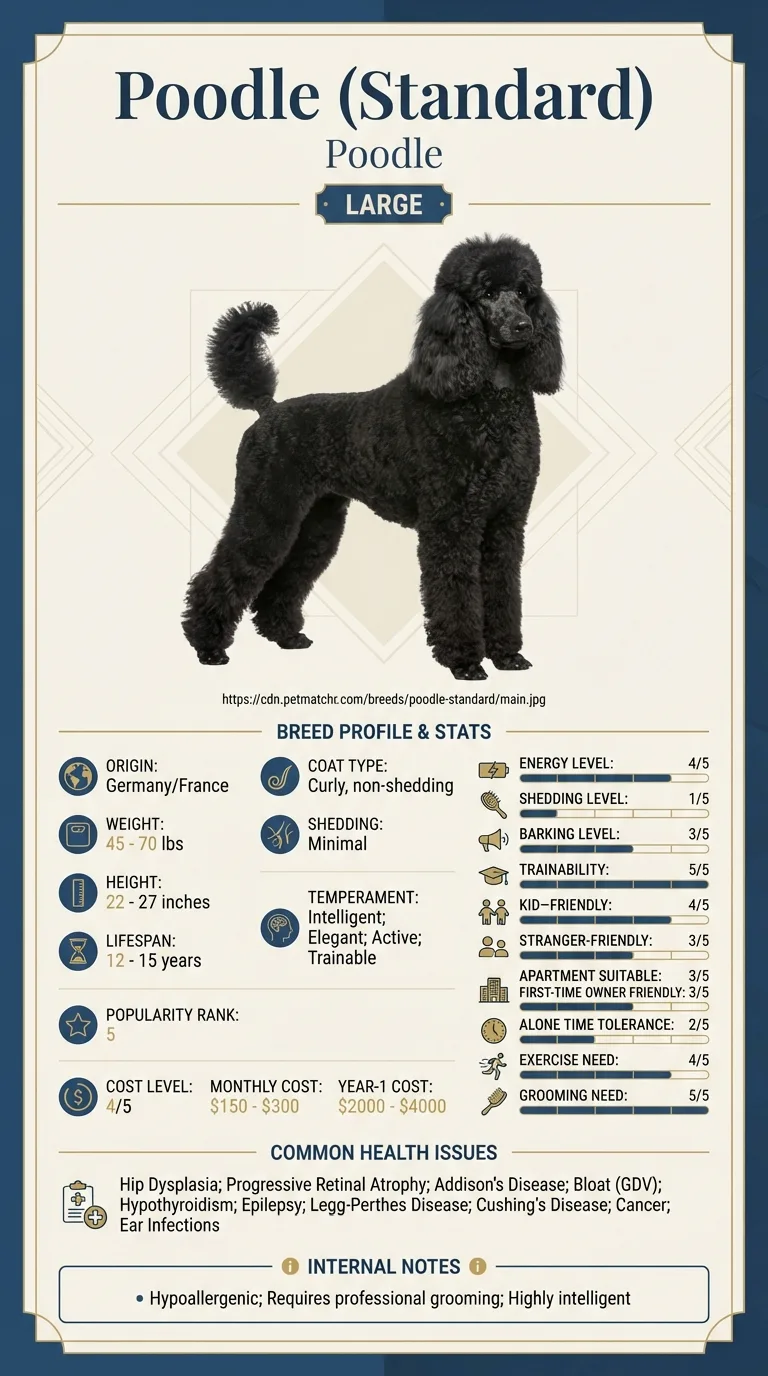
Monthly costs can range from $150 to $300, depending on vet visits and any medications needed.
A one-page prep sheet for this condition: the signs, the questions to ask, what to get priced. Unlocks here.
You get: Vet visit prep sheet
No spam. One-click unsubscribe. See our privacy policy.
See a sample page before you decide.
Early access list
The free prep sheet covers the same-day warning signs, a symptom log and the questions to ask. We are considering a fuller kit that adds a cost worksheet for the usual tests and treatments (US price ranges with their sources) and a plain-English guide to ways of covering the bill. It is not built yet; this list tells us whether it is worth building.
One email, no spam, unsubscribe anytime. Information only, not veterinary advice.