Health
What are some quick tips for Poodle (Standard) liver shunts?
Ensure your Poodle (Standard) has a vet-recommended diet and regular check-ups. Monitor their behavior closely for any changes or signs of distress.

Quick answer
What are some quick tips for Poodle (Standard) liver shunts?
Ensure your Poodle (Standard) has a vet-recommended diet and regular check-ups. Monitor their behavior closely for any changes or signs of distress.
Poodle (Standard) liver shunts can be serious, affecting your dog's health and happiness. Understanding this condition is crucial for any owner.
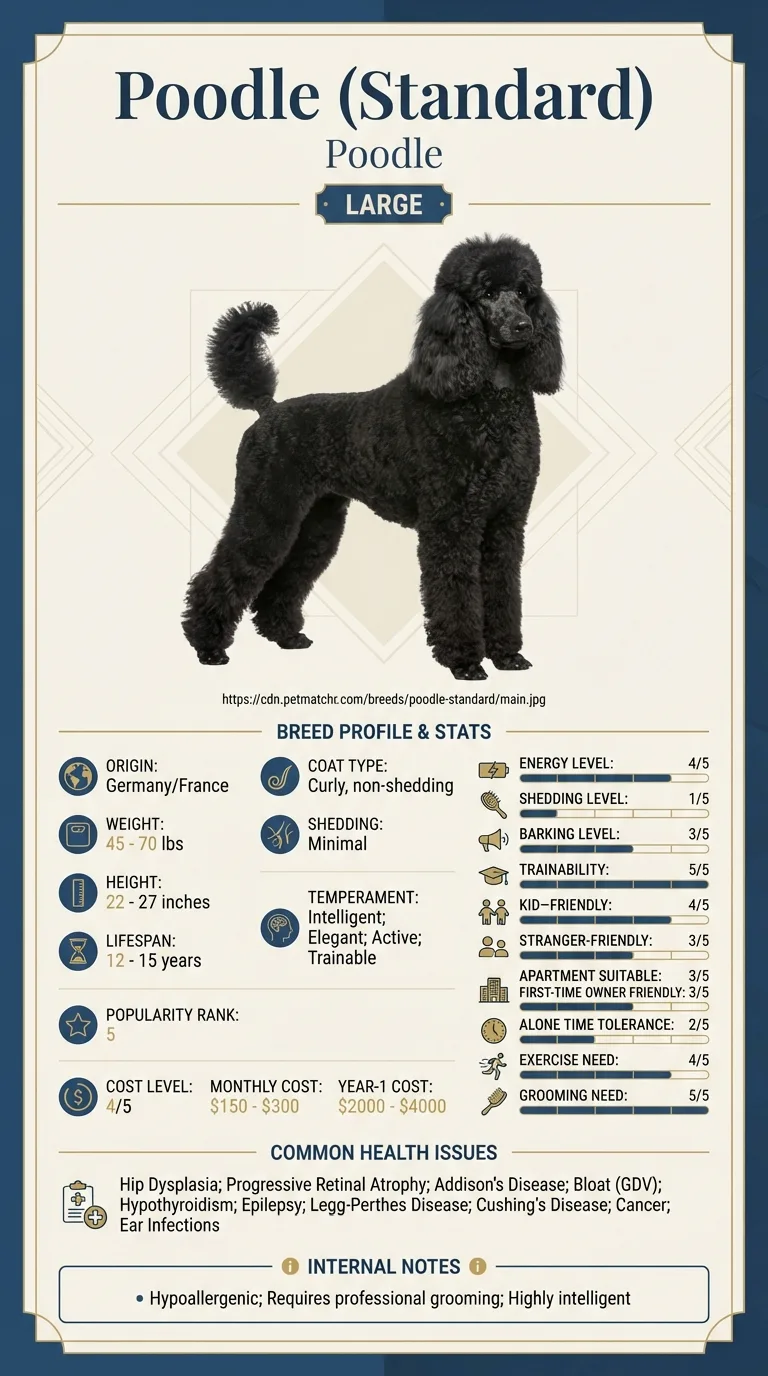
Owners of Poodle (Standards) may find themselves concerned about liver shunts, particularly if their dog shows signs of lethargy, poor appetite, or unusual behavior. First-time dog owners and busy families may struggle to recognize these symptoms early on, which is why education is so important.
This guide is not medical advice. If your dog shows pain, sudden behavior change, or worsening symptoms, consult a licensed veterinarian.
Some links may be affiliate links. We may earn a commission at no extra cost to you. We only suggest products we believe are helpful for dog owners.
We research and check what we publish, but we do not warrant that any figure, date, price, or statement is accurate, complete, or current, and we accept no liability for any loss, cost, injury, or other harm arising from the use of this site. Use it as one reference among several. You remain responsible for your own decisions and for your dog's care - confirm anything that matters with a licensed veterinarian or another qualified professional before you act on it. Full disclaimer.
Check this first
Recognizing when Poodle (Standard) liver shunts become an emergency is crucial. If your dog is showing severe symptoms, it's time to act quickly. Red flags include vomiting, seizures, lethargy, and loss of coordination. If your Poodle exhibits these signs, you should call your vet immediately.
On the other hand, there are milder symptoms that can be monitored. If your dog has occasional vomiting or a slight decrease in appetite, it might not be an immediate crisis. You can create a watch-and-wait plan in these cases. Keep an eye on their behavior and consult your vet if symptoms persist or worsen.
Always prioritize your dog's health. When in doubt, it’s better to err on the side of caution and seek professional advice. Early intervention can make a significant difference in your Poodle's well-being.
If any of these apply, call your vet or an emergency clinic now. The rest of this page is for the cases that are not an emergency.
Poodle (Standard) liver shunts are serious health issues caused by abnormal blood flow in the liver. This condition can lead to a variety of symptoms, including poor growth, vomiting, and seizures. Owners may notice their Poodle seems lethargic or has a decreased appetite, which can be alarming.
Liver shunts are relatively rare in Poodles, but they can occur. It's important for owners to be aware of potential symptoms and consult a vet if they notice any unusual behavior.
Poodles (Standard) can be prone to liver shunts due to genetic factors. These shunts are abnormal blood vessels that bypass the liver, leading to liver dysfunction. As a breed known for its intelligence and elegance, Poodles may inherit certain health problems, including liver issues.
Environmental factors such as diet and exposure to toxins can also contribute to liver shunts. Feeding your Poodle a poor diet or exposing them to harmful substances can exacerbate liver conditions. Stressful environments may further impact their overall health.
If you notice symptoms such as vomiting, lethargy, or changes in appetite, contact your vet immediately. It's crucial to discuss any concerns about liver health to determine the best treatment plan.
Understanding common mistakes can help you manage Poodle (Standard) liver shunts more effectively. Here are some behaviors to avoid.
Start here: Standard Poodle Most Common Genetic Disorders: Screening
See all Poodle Standard health problems, which breeds are prone to liver shunts, or the full Poodle Standard breed guide for temperament, exercise needs and ownership costs.
Managing liver shunts in a Poodle (Standard) often takes several months. Initial treatment and dietary adjustments usually show improvements within 4 to 6 weeks.
Success looks like reduced symptoms such as vomiting or lethargy, along with a healthier, more energetic dog. Regular vet check-ups will also help ensure long-term management.
When Sarah adopted Bella, her lively Poodle (Standard), she noticed Bella becoming easily fatigued and having digestive issues. After a vet visit, Sarah learned Bella had liver shunts. Determined to help her new friend, Sarah followed a strict diet and medication plan. Over the next few months, she monitored Bella closely and adjusted her routine. Bella's energy gradually returned, and her symptoms decreased significantly. Their bond grew stronger through this journey, and now Bella enjoys her life to the fullest.
Key takeaway: Early detection and a committed care plan can transform the life of a dog with liver shunts, leading to a happier and healthier companion.
Liver shunts in Poodles (Standard) can be caused by genetic factors or developmental issues. These shunts allow blood to bypass the liver, leading to serious health problems. Regular vet check-ups can help identify any signs early.
To help your Poodle (Standard), work closely with your vet to create a treatment plan. Dietary changes may be necessary, and some dogs might require medication or surgery. Consistent monitoring is key to managing their condition.
Symptoms of liver shunts can include lethargy, poor appetite, vomiting, and behavioral changes. If you notice these issues, consult your vet immediately. Early detection can significantly improve outcomes.
While some liver shunts can be corrected through surgery, others may require lifelong management. Your vet will help decide the best course of action based on your dog's specific situation. Regular follow-ups are essential.
To prevent liver shunts from worsening, maintain a healthy diet, limit exercise as advised by your vet, and schedule regular check-ups. Monitoring your Poodle's behavior and symptoms will also help catch any changes early.
Common symptoms of liver shunts in Poodles include poor growth, lethargy, vomiting, and seizures. If your dog shows any of these signs, it's crucial to consult your veterinarian for a proper diagnosis.
While some liver shunts are congenital and can't be prevented, maintaining a healthy diet and regular vet check-ups can help. Always follow your vet's recommendations about feeding and care to support liver health.
Yes, while liver shunts are often present at birth, older Poodles can develop acquired liver shunts due to liver disease. It's important to monitor any changes in behavior or health as your dog ages and consult your vet.
Treatment options for liver shunts may include surgery to correct the shunt or medical management to control symptoms. Your veterinarian will guide you on the best course of action based on your dog's specific condition.
Liver shunts can occur due to genetic factors or developmental issues. If your Poodle has been diagnosed, working closely with your vet will help determine the best management plan to improve your dog's quality of life.
Ensure your Poodle (Standard) has a vet-recommended diet and regular check-ups. Monitor their behavior closely for any changes or signs of distress.
Yes, liver shunts can have a genetic component. Responsible breeding practices can help reduce the risk of hereditary liver shunts in Poodles.
Treatment costs can vary widely but may range from a few hundred to several thousand dollars, depending on the severity and required interventions.
Training can provide mental stimulation and improve the overall well-being of your Poodle. However, keep sessions short and low-energy to avoid stress.
A one-page prep sheet for this condition: the signs, the questions to ask, what to get priced. Unlocks here.
You get: Vet visit prep sheet
No spam. One-click unsubscribe. See our privacy policy.
Preview page 1 before you decide.