Behavior
What are quick tips for managing Poodle (Miniature) patellar luxation?
Keep your Mini Poodle at a healthy weight and provide low-impact exercises. Regular vet visits are essential for monitoring the condition.
Patellar luxation is a common issue for Poodle (Miniature) owners. It can lead to discomfort and mobility problems if not addressed properly. (Poodle (Miniature) patellar luxation)
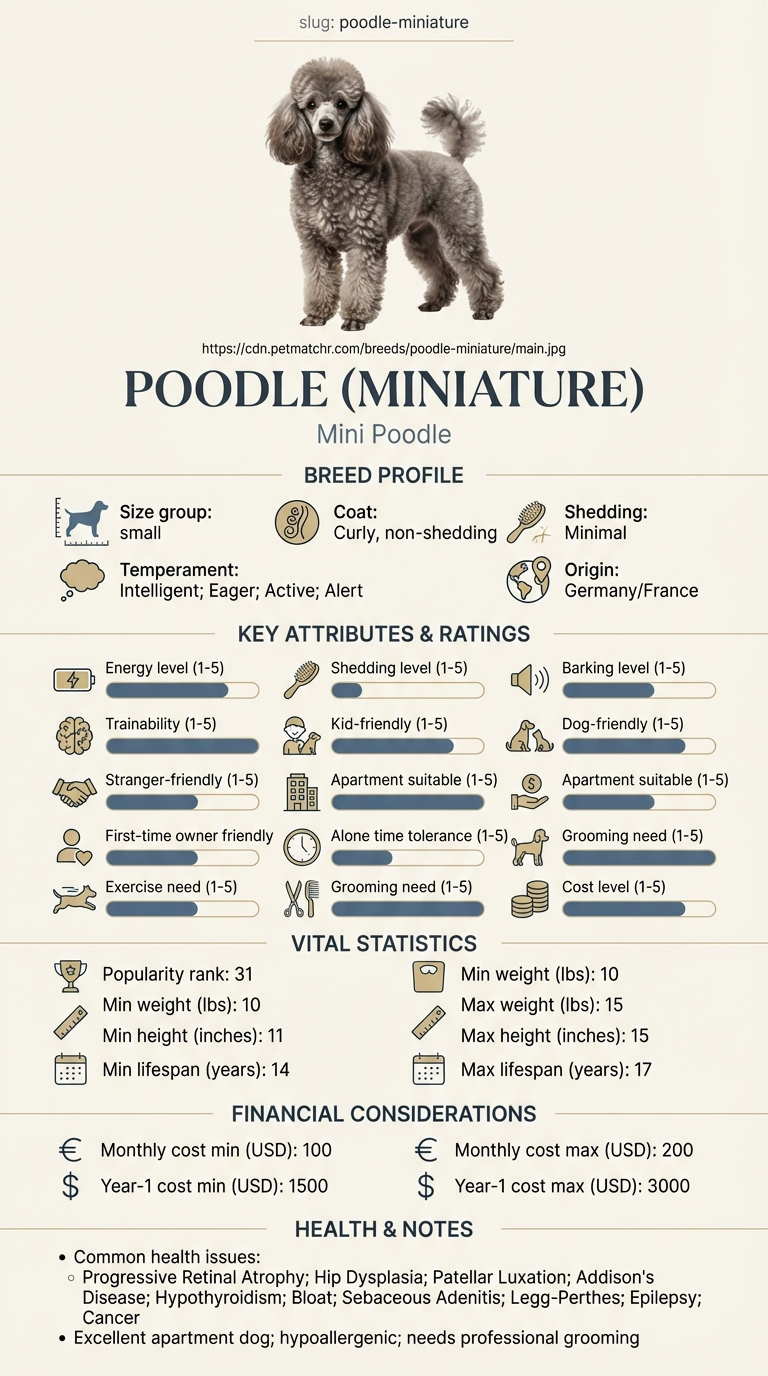
Owners of Poodle (Miniature) dogs often face challenges with patellar luxation. This is especially true for first-time dog owners or those living in apartments with limited space for exercise.
This guide is not medical advice. If your dog shows pain, sudden behavior change, or worsening symptoms, consult a licensed veterinarian.
Some links may be affiliate links. We may earn a commission at no extra cost to you. We only suggest products we believe are helpful for dog owners.
Poodle (Miniature) patellar luxation is a common issue where the kneecap dislocates, causing pain and mobility challenges. You might notice your Mini Poodle limping, holding a leg up, or experiencing difficulty jumping or running. This condition can occur suddenly or develop over time, especially in small breeds like the Mini Poodle.
Patellar luxation is relatively common in Mini Poodles, affecting around 15-30% of the breed. It's particularly prevalent in smaller dogs, making it a significant concern for potential owners.
Poodles (Miniature) are prone to patellar luxation due to their small size and bone structure. Their knee joint can be less stable, leading to dislocation of the kneecap. This condition is often inherited, so it's more common in this breed.
Environmental factors can also contribute to patellar luxation. If your Mini Poodle is overweight, the extra weight can put stress on their joints. Additionally, slippery floors or rough play can lead to injuries that make dislocation more likely.
If your Poodle continues to show signs of discomfort or frequently dislocates their kneecap, it might be time to consult a professional trainer. A trainer can provide specific exercises to strengthen the muscles around the knee and improve overall stability.
You should talk to a vet if your Mini Poodle exhibits persistent limping, swelling, or signs of pain. Early intervention can help manage the condition and prevent further injury.
You can expect to see improvements in your Poodle (Miniature) within a few weeks to a few months of consistent training and management.
Success means your Poodle can walk comfortably, show less pain, and engage in normal activities without frequent limping or discomfort.
Avoiding these common mistakes can help improve your Mini Poodle's condition.
Recognizing when your Poodle (Miniature) is facing a patellar luxation emergency is crucial. If your dog is unable to walk, shows severe pain, or has a visibly dislocated kneecap, you should call your vet immediately. Other red-flag signs include swelling around the knee, inability to bear weight, or crying out in pain when the leg is touched. These symptoms suggest a serious issue that requires prompt medical attention.
In contrast, mild cases of patellar luxation can often be monitored at home. If your Poodle (Miniature) occasionally skips or limps but seems otherwise healthy and active, you can typically watch and wait. Keeping track of any changes in behavior or mobility is essential, and a vet visit can be scheduled to discuss a management plan if the problem persists. Regular gentle exercise and maintaining a healthy weight can help too.
Always trust your instincts as a pet owner. If you feel something is off with your dog, don't hesitate to reach out to a professional. Early intervention can prevent more severe complications down the road.

Emily, a nurse living in a small apartment, noticed her Mini Poodle, Bella, limping after playtime. After visiting the vet, she learned that Bella had patellar luxation. Determined to help her pup, Emily researched how to stop Poodle (Miniature) patellar luxation and started a gradual training program, including strength exercises and weight management. She also learned to avoid stairs and slippery floors to reduce Bella's discomfort.
Key takeaway: Patellar luxation can be managed effectively with the right training and lifestyle changes. Consistency is key!
Poodle (Miniature) patellar luxation often occurs due to genetic factors or developmental issues. It can also result from injury or overactivity. Regular vet check-ups can help identify this condition early.
To manage Poodle (Miniature) patellar luxation, maintain a healthy weight and ensure your dog gets appropriate exercise. Consult your vet for a tailored exercise plan and consider physical therapy if necessary.
Signs include limping, difficulty jumping, or sudden changes in walking patterns. You may also notice your dog occasionally holding up a leg after activity. If you see these signs, consult your vet.
Surgery may be necessary for severe cases of patellar luxation. If your dog experiences regular pain or mobility issues, your vet might recommend surgical options to correct the knee cap's position.
Training can help by reinforcing gentle exercise and proper movement. Physical activities that strengthen the leg muscles can reduce the chance of dislocations. Always consult your vet before starting any training.
Common signs include limping, skipping, or sudden changes in gait. You may also notice your Mini Poodle holding up one leg while standing or having difficulty jumping. If these symptoms occur, it's best to consult your vet.
Yes, patellar luxation can be hereditary in Mini Poodles. This condition is often seen in small breeds due to their anatomy. Responsible breeding practices can help reduce the risk of this issue.
Training can help strengthen your Mini Poodle's muscles, which may provide better support for their joints. Focus on low-impact activities and avoid strenuous exercises. Consult a trainer experienced with joint issues for tailored advice.
If you notice persistent limping or if your dog seems to be in pain, it's time for a vet visit. Early intervention can help manage the condition and prevent further complications. Regular check-ups are also beneficial.
Yes, older Mini Poodles can develop patellar luxation as their joints wear down over time. If your senior dog starts showing signs of discomfort, consult your vet for options to manage their condition.
Keep your Mini Poodle at a healthy weight and provide low-impact exercises. Regular vet visits are essential for monitoring the condition.
Treatment costs can range from $1,500 to $3,000 in the first year, depending on severity and required care. Surgery can significantly increase these costs.
Gentle walks and swimming are great options. Avoid high-impact activities like jumping or running in rough terrain.
A balanced diet focused on maintaining a healthy weight is crucial. Consult your vet for specific dietary recommendations tailored to your Mini Poodle's needs.