Behavior
What are quick tips for managing Poodle (Miniature) neurologic disease?
Regular vet check-ups, a balanced diet, and a consistent routine can help manage neurologic disease in your Poodle (Miniature). Monitor any behavioral changes closely.

Quick answer
What are quick tips for managing Poodle (Miniature) neurologic disease?
Regular vet check-ups, a balanced diet, and a consistent routine can help manage neurologic disease in your Poodle (Miniature). Monitor any behavioral changes closely.
Poodle (Miniature) neurologic disease is a serious condition that affects their health and happiness. Understanding this disease is crucial for every owner.
Typically, owners of Mini Poodles, especially those who are first-time dog parents or those with busy lifestyles, may struggle with recognizing and addressing neurologic issues. The unpredictability of symptoms can be overwhelming, leaving owners unsure of how to provide the best care.
This guide is not medical advice. If your dog shows pain, sudden behavior change, or worsening symptoms, consult a licensed veterinarian.
Some links may be affiliate links. We may earn a commission at no extra cost to you. We only suggest products we believe are helpful for dog owners.
We research and check what we publish, but we do not warrant that any figure, date, price, or statement is accurate, complete, or current, and we accept no liability for any loss, cost, injury, or other harm arising from the use of this site. Use it as one reference among several. You remain responsible for your own decisions and for your dog's care - confirm anything that matters with a licensed veterinarian or another qualified professional before you act on it. Full disclaimer.
Check this first
When dealing with Poodle (Miniature) neurologic disease, it's crucial to know when to seek immediate veterinary help. Red flags that indicate an emergency include sudden seizures, loss of coordination, or a significant change in behavior. If your Mini Poodle is unable to stand or walk, or shows signs of severe lethargy or unresponsiveness, call your vet right away.
If any of these apply, call your vet or an emergency clinic now. The rest of this page is for the cases that are not an emergency.
Poodle (Miniature) neurologic disease can manifest in various daily behaviors. Affected dogs may show signs of weakness, coordination issues, or unusual movements. This disease can be triggered by genetic factors, stress, or changes in their environment, making it essential for owners to be observant.
Neurologic disease is notably concerning in Mini Poodles, with reports indicating they have a 291% higher risk than other breeds. This makes awareness and early intervention crucial for owners.
Poodles (Miniature) are known to be intelligent and active, but they can also be prone to specific health issues, including neurologic diseases. This breed may inherit genetic conditions that affect the nervous system, increasing their vulnerability to these diseases.
Environmental factors can also contribute to neurologic diseases in Mini Poodles. Stressful situations, lack of mental stimulation, and poor nutrition can exacerbate these health issues, potentially leading to behavioral changes.
If you notice severe symptoms such as seizures, coordination problems, or changes in behavior, it's essential to talk to a vet. They can provide a proper diagnosis and recommend treatment options tailored to your Mini Poodle's needs.
Avoid these common mistakes to help manage Poodle (Miniature) neurologic disease effectively.
Start here: Miniature Poodle Most Common Genetic Disorders: Screening
See all Poodle Miniature health problems, which breeds are prone to neurologic disease, or the full Poodle Miniature breed guide for temperament, exercise needs and ownership costs.
With proper care and follow-up, you may start to see improvements in your Mini Poodle's neurologic symptoms within 6 to 12 months.
Success means your Poodle (Miniature) can engage in daily activities with fewer neurologic issues, displaying improved mobility and overall comfort.
In less severe cases, some symptoms may not warrant an immediate trip to the vet. If your Mini Poodle experiences mild tremors or slight changes in activity levels, monitor these symptoms for a few days. Keeping a detailed log of any changes can help your vet assess the situation better when you do visit.

Megan, a busy nurse from New York City, adopted Bella, her Mini Poodle, and soon noticed her struggling with balance and coordination. After consulting a vet, Megan learned Bella had a neurologic disease, which left her feeling overwhelmed. Determined to help Bella, Megan began a tailored training program, focusing on gentle exercises and mental stimulation. With patience and consistent effort, Bella improved significantly. Today, she enjoys walks in Central Park and plays with toys, showcasing her lively personality again.
Key takeaway: With dedication and the right support, owners can help their Mini Poodles manage neurologic diseases and lead fulfilling lives.
Neurologic disease in Poodles (Miniature) can stem from genetic predispositions, environmental factors, or underlying health issues. Regular veterinary check-ups can help identify early signs. It's essential to monitor your dog's behavior and seek professional advice if you notice any changes. This answer relates to Poodle (Miniature) neurologic disease.
Helping a Poodle (Miniature) with neurologic disease involves ensuring a stable environment and routine. Maintaining a healthy diet and regular vet visits can support their needs. Training should focus on positive reinforcement to manage any behavioral changes.
Signs of neurologic disease can include changes in behavior, coordination issues, and seizures. Look for symptoms like weakness, stumbling, or excessive barking. If you notice these signs, consult your veterinarian promptly.
Currently, many neurologic diseases cannot be cured but can be managed with appropriate care. Treatments may include medication, dietary changes, and regular exercise. Early intervention can significantly improve your dog's quality of life.
Training a Poodle (Miniature) with neurologic disease should focus on patience and consistency. Use positive reinforcement techniques and short training sessions to avoid overwhelming your dog. Tailoring your approach to their specific needs is crucial.
Yes, some neurologic diseases can be inherited in Poodles (Miniature). It's vital to discuss your dog's family history with your vet to understand potential risks and take preventive measures.
If your Poodle (Miniature) has a seizure, stay calm and ensure they are in a safe environment. After the seizure, contact your vet for further guidance on how to manage this condition.
Supporting a Poodle (Miniature) with neurologic disease involves providing a stable environment, routine vet check-ups, and possibly medication. Training focused on positive reinforcement can also help manage symptoms.
Deciding on euthanasia for a Poodle (Miniature) with neurologic disease is deeply personal and should involve discussions with your vet. Factors include your dog's quality of life and the progression of their symptoms.
Regular vet check-ups, a balanced diet, and a consistent routine can help manage neurologic disease in your Poodle (Miniature). Monitor any behavioral changes closely.
A balanced diet rich in Omega-3 fatty acids can support brain health in dogs with neurologic disease. Consult your vet for specific dietary recommendations.
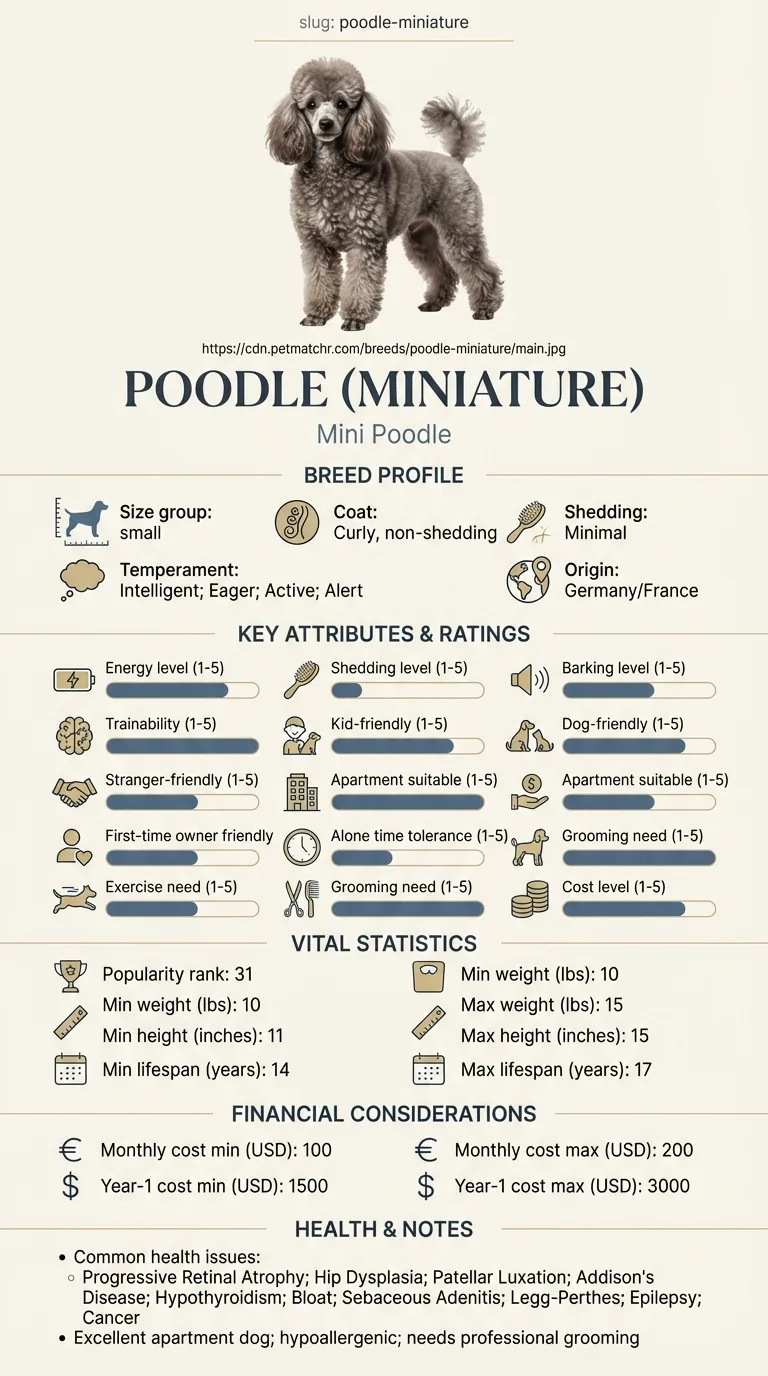
Treating neurologic disease can vary widely but may range from $100 to $200 monthly, depending on the condition and required care. Be prepared for potential emergency visits as well.
Poodles (Miniature) typically need moderate exercise. However, adjust the level based on your dog's health condition and consult your vet for personalized recommendations.
A one-page prep sheet for this condition: the signs, the questions to ask, what to get priced. Unlocks here.
You get: Vet visit prep sheet
No spam. One-click unsubscribe. See our privacy policy.
Preview page 1 before you decide.