Behavior
What are quick tips for managing Poodle (Miniature) insurance claims?
Focus on regular vet check-ups and maintain a healthy diet for your Poodle (Miniature). Training and socialization can also prevent behavior-related claims.

Quick answer
What are quick tips for managing Poodle (Miniature) insurance claims?
Focus on regular vet check-ups and maintain a healthy diet for your Poodle (Miniature). Training and socialization can also prevent behavior-related claims.
Poodle (Miniature) insurance claims can be a frustrating experience for owners. Understanding why these claims occur is essential for responsible pet ownership.
Typically, first-time dog owners or those unfamiliar with the breed may struggle with understanding these claims. Busy families or individuals who work long hours might also find themselves overwhelmed by the health needs of their Mini Poodles.
This guide is not medical advice. If your dog shows pain, sudden behavior change, or worsening symptoms, consult a licensed veterinarian.
Some links may be affiliate links. We may earn a commission at no extra cost to you. We only suggest products we believe are helpful for dog owners.
We research and check what we publish, but we do not warrant that any figure, date, price, or statement is accurate, complete, or current, and we accept no liability for any loss, cost, injury, or other harm arising from the use of this site. Use it as one reference among several. You remain responsible for your own decisions and for your dog's care - confirm anything that matters with a licensed veterinarian or another qualified professional before you act on it. Full disclaimer.
Check this first
When it comes to Poodle (Miniature) insurance claims, recognizing the signs of a true emergency is crucial. If your Mini Poodle exhibits severe symptoms, such as sudden lethargy, difficulty breathing, or uncontrollable bleeding, call your vet immediately. These signs could indicate a serious health issue that requires urgent care.
On the other hand, if your Poodle (Miniature) shows mild symptoms, such as a slight cough or a low-grade fever, it may be best to monitor their condition at home. Keep a close eye on their behavior and appetite, and create a plan to consult your vet if symptoms persist or worsen. Knowing when to act can make all the difference in your dog's health.
Red flags to watch for include: - Significant changes in behavior, like excessive barking or hiding. - Signs of pain, such as whining or reluctance to move. - Digestive issues like vomiting or severe diarrhea lasting more than a day.
Less urgent signs to monitor might include: - Occasional sneezing or mild cough. - Slight changes in appetite or energy level. - Minor skin irritations or allergies.
Always trust your instincts. If something feels off with your Poodle (Miniature), it’s better to be safe and consult your vet. Keeping your dog healthy should always be your top priority.
If any of these apply, call your vet or an emergency clinic now. The rest of this page is for the cases that are not an emergency.
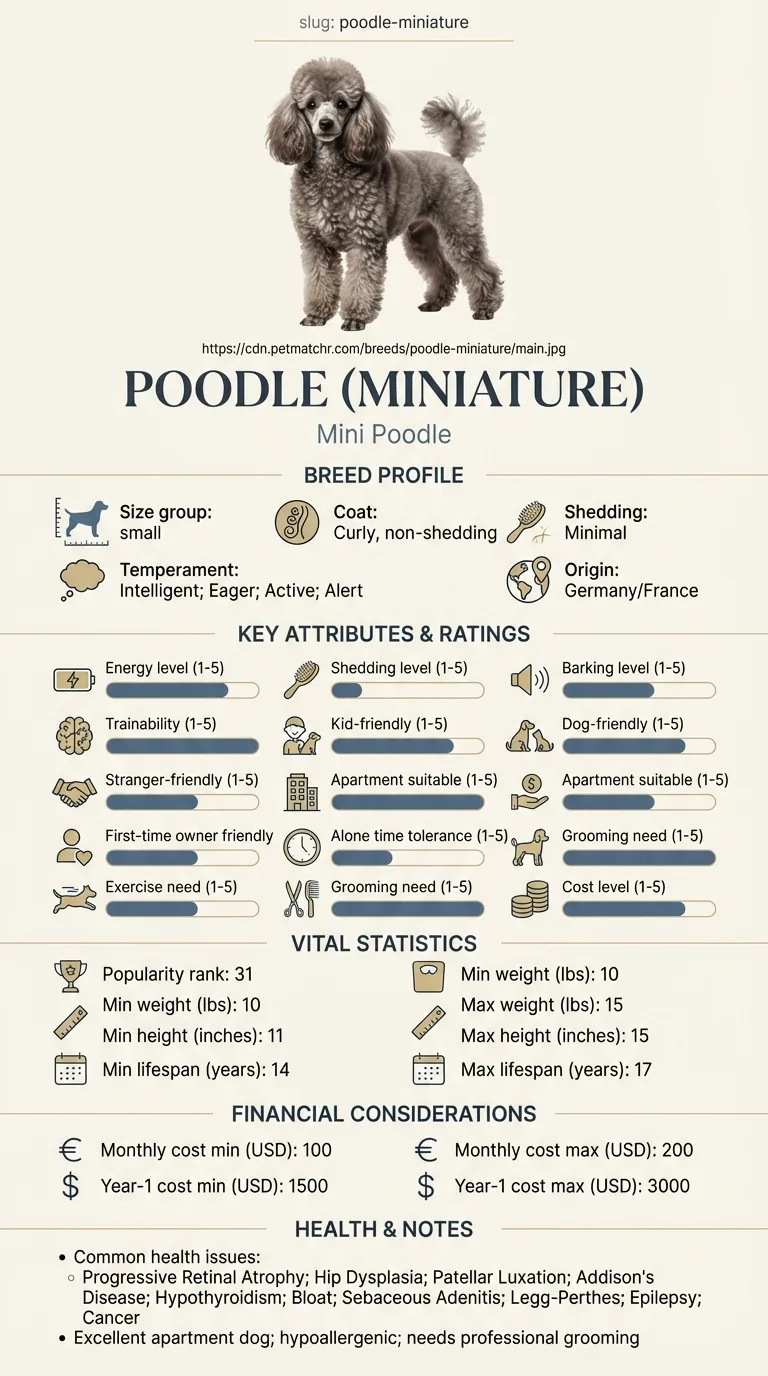
Poodle (Miniature) insurance claims can be a frustrating issue for pet owners. These small dogs, while intelligent and friendly, can develop health problems that lead to increased vet visits and insurance claims. Common issues like Progressive Retinal Atrophy and Hip Dysplasia can particularly contribute to higher claim rates, causing stress for owners who want to provide the best care for their pets.
Insurance claims among Mini Poodles are somewhat common, especially for conditions like hip dysplasia and eye issues. While not every Mini Poodle will face these problems, owners should be prepared for the potential costs associated with these health concerns.
Poodle (Miniature) insurance claims may arise from their genetic predispositions to certain health issues. Conditions like Progressive Retinal Atrophy and Hip Dysplasia are more common in this breed. Their small size can also make them more susceptible to injuries, leading to higher claim rates.
Environmental factors can also contribute to insurance claims for Mini Poodles. Stressful living conditions, such as a noisy apartment or lack of socialization, can lead to anxiety-related health issues. Additionally, inadequate exercise or poor diet can exacerbate health problems, resulting in more frequent claims.
If you notice sudden changes in your Mini Poodle's health or behavior, contact your vet. Persistent health problems or frequent injuries might require a thorough examination to prevent further insurance claims.
Here are some common mistakes that can unintentionally worsen your Poodle (Miniature)'s insurance claims issues. Avoiding these behaviors can help improve your dog's situation and reduce claims.
Start here: Miniature Poodle Most Common Genetic Disorders: Screening
See all Poodle Miniature health problems, which breeds are prone to insurance claims, or the full Poodle Miniature breed guide for temperament, exercise needs and ownership costs.
You may notice improvements in your Mini Poodle's behavior within 3 to 6 months of consistent care and support.
Success means your Poodle (Miniature) will show a reduced tendency to submit insurance claims due to anxiety or behavioral issues. You'll see a calmer demeanor and fewer incidents that trigger anxiety.
Maria, a busy nurse in Chicago, adopted a Mini Poodle named Oliver. At first, he was sweet and cuddly, but soon she noticed he was anxious and prone to accidents at home, resulting in multiple insurance claims. Feeling overwhelmed, Maria sought help from a local trainer. They worked through separation anxiety techniques over several months. With consistent training, Oliver learned to cope when left alone. Now, he happily plays with toys instead of getting stressed, and Maria has not had to file any claims in over a year.
Key takeaway: With patience and the right training, you can help your Mini Poodle manage anxiety, leading to fewer insurance claims and a happier home.
Poodle (Miniature) insurance claims can arise due to their predisposition to certain health issues, like hip dysplasia and progressive retinal atrophy. Regular vet check-ups and a healthy diet can help catch problems early. Additionally, genetics play a role, so it's crucial to choose a reputable breeder.
To reduce Poodle (Miniature) insurance claims, focus on preventive care. Regular exercise, a balanced diet, and consistent vet visits can keep your dog healthy. Training and socialization can also help address behavioral issues that might lead to claims.
Poodle (Miniature) insurance claims often arise from conditions like hip dysplasia, progressive retinal atrophy, and patellar luxation. These health issues can be costly to treat, leading to higher claim rates. Regular veterinary check-ups can help catch these problems early.
Proper training can mitigate behaviors that lead to accidents or health issues, thereby reducing insurance claims. Positive reinforcement and socialization are effective strategies. Training can also enhance your dog's overall well-being.
Insurance costs for a Poodle (Miniature) can range from $100 to $200 per month. Factors like age, health history, and coverage options influence the price. It's wise to shop around and compare plans for the best fit.
Watch for signs like changes in appetite, unusual lethargy, or difficulty moving. If your Mini Poodle seems to be in pain or is acting differently, it's best to consult your vet. Early detection can reduce the likelihood of costly insurance claims.
Yes, older Poodle (Miniature) dogs often face increased health risks that can lead to more insurance claims. Conditions such as cancer and arthritis become more common with age. It's essential to adjust their care as they age to help minimize these risks.
Regular vet visits, a balanced diet, and consistent exercise can help maintain your Poodle's health. Training your dog to manage anxiety or stress can also prevent behavior-related health issues, reducing the potential for insurance claims.
Keep thorough records of your dog's health and treatment history. Contact your insurance provider to understand their claims process and what documentation is required. Being proactive can streamline your claims experience and ensure you receive the coverage you're entitled to.
Focus on regular vet check-ups and maintain a healthy diet for your Poodle (Miniature). Training and socialization can also prevent behavior-related claims.
Aim for at least one vet visit per year for wellness checks. More frequent visits may be needed if your Poodle (Miniature) has health concerns.
Most insurance plans do not cover grooming costs. However, some plans might include coverage for necessary medical grooming due to health issues.
Preventive care like vaccinations, dental cleanings, and spaying/neutering can help minimize health risks. Discuss a tailored plan with your vet.
A one-page prep sheet for this condition: the signs, the questions to ask, what to get priced. Unlocks here.
You get: Vet visit prep sheet
No spam. One-click unsubscribe. See our privacy policy.
Preview page 1 before you decide.