Health
What are quick tips for Poodle (Miniature) eye disorders?
Keep their eyes clean and consult your vet for any unusual symptoms. Regular grooming can also prevent irritants from affecting their eyes.

Quick answer
What are quick tips for Poodle (Miniature) eye disorders?
Keep their eyes clean and consult your vet for any unusual symptoms. Regular grooming can also prevent irritants from affecting their eyes.
Poodle (Miniature) eye disorders can significantly impact your dog's quality of life. Understanding these issues is crucial for their well-being.
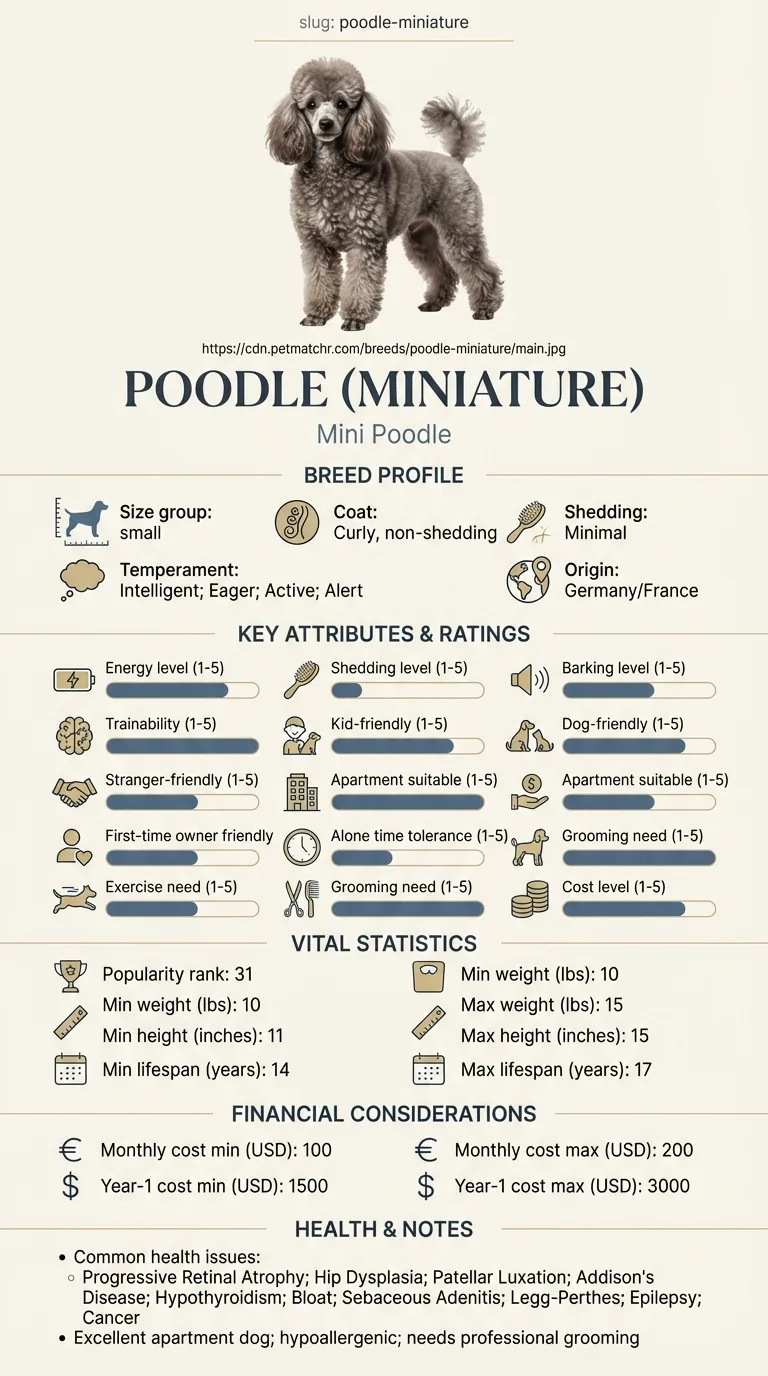
This issue often affects Poodle (Miniature) owners who may notice their pets squinting, tearing excessively, or showing signs of discomfort. First-time dog owners, in particular, might feel overwhelmed when navigating these health concerns.
This guide is not medical advice. If your dog shows pain, sudden behavior change, or worsening symptoms, consult a licensed veterinarian.
Some links may be affiliate links. We may earn a commission at no extra cost to you. We only suggest products we believe are helpful for dog owners.
We research and check what we publish, but we do not warrant that any figure, date, price, or statement is accurate, complete, or current, and we accept no liability for any loss, cost, injury, or other harm arising from the use of this site. Use it as one reference among several. You remain responsible for your own decisions and for your dog's care - confirm anything that matters with a licensed veterinarian or another qualified professional before you act on it. Full disclaimer.
Check this first
It's crucial to know when Poodle (Miniature) eye disorders become an emergency. If you notice severe symptoms, such as sudden blindness, excessive squinting, or discharge that is yellow or green, these are signs to call your vet immediately. Other red flags include swollen eyelids, significant redness, or if your dog is in pain and not acting like themselves. These symptoms can indicate serious conditions that require prompt treatment.
On the other hand, some eye issues can be monitored at home. Mild cases, like slight redness or minor tearing without other symptoms, might not need immediate attention. You can keep an eye on these situations, ensuring they're not worsening over a few days. However, if symptoms persist or worsen, don't hesitate to reach out for professional help. Keeping a close watch on your Mini Poodle’s eyes will help you catch any serious issues early.
If any of these apply, call your vet or an emergency clinic now. The rest of this page is for the cases that are not an emergency.
Poodle (Miniature) eye disorders can significantly affect your dog's quality of life. These issues may include cataracts, eyelid disorders, and corneal ulcers. Affected dogs may squint, have watery eyes, or show signs of discomfort, making it essential to monitor their eye health closely.
Eye disorders in Poodle (Miniature) are relatively common, particularly as they age. Regular veterinary check-ups are critical for early detection and management.
Poodle (Miniature) eye disorders can be linked to genetic factors. Some Mini Poodles have a predisposition to issues like Progressive Retinal Atrophy. This can lead to vision problems over time, which is common in certain breeds.
Environmental factors can also contribute to eye disorders. For example, exposure to irritants, allergens, or even poor lighting can affect your dog's eye health. Additionally, lack of regular grooming can lead to eyelash and eyelid issues.
If you notice any changes in your Poodle's vision, such as difficulty seeing in low light or unusual eye discharge, it's important to talk to your vet. They can provide a thorough examination and recommend appropriate treatment.
Avoiding common pitfalls can help improve your Poodle (Miniature) eye disorders. Here are some mistakes to watch out for.
Start here: Miniature Poodle Most Common Genetic Disorders: Screening
See all Poodle Miniature health problems, which breeds are prone to eye disorders, or the full Poodle Miniature breed guide for temperament, exercise needs and ownership costs.
In general, addressing Poodle (Miniature) eye disorders can take several weeks to months. This includes diagnosing the issue and implementing a treatment plan.
Success means your Poodle (Miniature) shows improvement in eye health, reduced discomfort, and a better quality of life. Regular check-ups with the vet will help ensure progress.
Sophie, a busy nurse in New York City, noticed her Mini Poodle, Bella, squinting and occasionally bumping into furniture. After a vet visit, they discovered Bella had cataracts. With a treatment plan involving eye drops and regular check-ups, Sophie learned to manage Bella's condition. Over time, Bella's vision improved, and she returned to her playful self, enjoying walks in the park again.
Key takeaway: Early detection and consistent care are crucial for managing Poodle (Miniature) eye disorders. Don't hesitate to consult your vet if you notice changes in your dog's behavior.
Poodle (Miniature) eye disorders can occur due to genetic factors, age, or environmental conditions. Common issues include cataracts and eyelid disorders. Regular vet check-ups can help catch these problems early.
To prevent Poodle (Miniature) eye disorders, maintain a clean environment and schedule regular vet visits. A balanced diet rich in vitamins can also support eye health. Additionally, avoid exposing your dog to harmful chemicals.
Symptoms of eye disorders may include excessive tearing, redness, squinting, or unusual eye discharge. If you notice these signs, it's essential to consult your vet as soon as possible. Early intervention can make a significant difference.
To manage Poodle (Miniature) eye disorders, follow your vet's recommendations for treatment, which may include medications or surgery. Keeping your dog's eyes clean and avoiding irritants can also help. Regular monitoring is crucial for managing their condition.
Training a Poodle (Miniature) with eye disorders focuses on positive reinforcement and patience. Use verbal cues and gentle guidance to help them navigate their environment safely. Consistency is key to building their confidence.
If your Poodle (Miniature) is diagnosed with an eye disorder, work closely with your vet to create a management plan. This may include medication, special diets, or even surgery. Make sure to stay informed about potential changes in their condition.
Common signs of eye disorders in Poodles (Miniature) include excessive tearing, redness, squinting, or cloudiness in the eyes. If you notice your dog frequently rubbing their eyes or having difficulty seeing, it's time to consult a vet.
Yes, some eye disorders in Poodles (Miniature), like Progressive Retinal Atrophy, can be hereditary. It's important to ask breeders about the health history of the parents to understand potential risks for your puppy.
If you notice any sudden changes in your Mini Poodle's vision or eye appearance, you should see a vet immediately. Delaying treatment can lead to more serious issues or even permanent damage.
Yes, older Poodles (Miniature) are more prone to specific eye disorders like cataracts and glaucoma. Regular vet check-ups can help catch these issues early and manage them effectively.
Regular grooming and keeping the eye area clean can help prevent some eye issues. Additionally, ensure your Poodle (Miniature) has a balanced diet and regular vet check-ups for early detection of potential problems.
Keep their eyes clean and consult your vet for any unusual symptoms. Regular grooming can also prevent irritants from affecting their eyes.
Treatments can range from $200 to $2,000, depending on the condition and necessary procedures. Regular vet check-ups can help manage costs.
Yes, eye disorders can lead to anxiety or changes in behavior due to confusion or discomfort. Providing a consistent environment is essential.
Foods rich in omega-3 fatty acids and antioxidants, like fish and leafy greens, can promote better eye health. Consult your vet for specific recommendations.
A one-page prep sheet for this condition: the signs, the questions to ask, what to get priced. Unlocks here.
You get: Vet visit prep sheet
No spam. One-click unsubscribe. See our privacy policy.
Preview page 1 before you decide.