Behavior
What are Poodle (Miniature) epilepsy quick tips?
Keep a seizure diary to track frequency and duration, which can help your vet in treatment planning.

Quick answer
What are Poodle (Miniature) epilepsy quick tips?
Keep a seizure diary to track frequency and duration, which can help your vet in treatment planning.
Epilepsy in Poodle (Miniature) dogs can be a worrying issue for owners. Seizures can be both frightening and challenging to manage. (Poodle (Miniature) epilepsy)
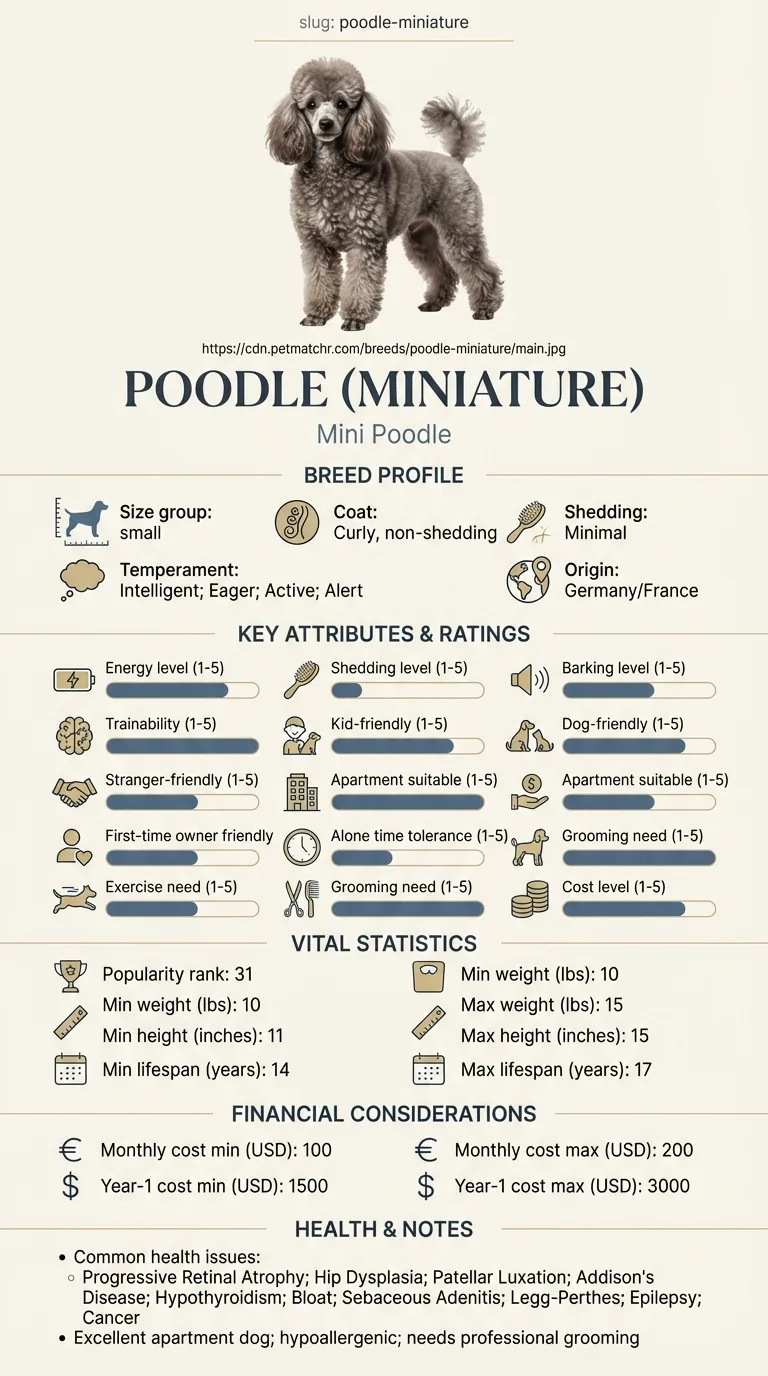
Owners of Poodle (Miniature) dogs often face anxiety about their pet's health, particularly those who notice unusual behaviors or seizures. This problem can be especially daunting for first-time dog owners or those unprepared for such health challenges.
This guide is not medical advice. If your dog shows pain, sudden behavior change, or worsening symptoms, consult a licensed veterinarian.
Some links may be affiliate links. We may earn a commission at no extra cost to you. We only suggest products we believe are helpful for dog owners.
We research and check what we publish, but we do not warrant that any figure, date, price, or statement is accurate, complete, or current, and we accept no liability for any loss, cost, injury, or other harm arising from the use of this site. Use it as one reference among several. You remain responsible for your own decisions and for your dog's care - confirm anything that matters with a licensed veterinarian or another qualified professional before you act on it. Full disclaimer.
Check this first
Understanding when Poodle (Miniature) epilepsy is an emergency is crucial for your dog's health. While some seizure episodes can be mild and manageable, others require immediate veterinary attention. Here’s a breakdown to help you know the difference.
If any of these apply, call your vet or an emergency clinic now. The rest of this page is for the cases that are not an emergency.
Poodle (Miniature) epilepsy manifests as sudden seizures that can be alarming for both the dog and its owner. These seizures may vary in severity and frequency, often presenting as convulsions or loss of consciousness. Day-to-day, a dog experiencing these episodes may seem perfectly normal between seizures, making it challenging for owners to anticipate when one might occur.
Epilepsy is relatively common in Poodle (Miniature) breeds, with some studies suggesting that around 5-10% may be affected. This condition often appears in young adulthood, but can develop at any age.
Poodle (Miniature) epilepsy can have genetic roots. Certain lines of Mini Poodles are more prone to epilepsy due to inherited traits. This breed's intelligence and sensitivity may also influence how they experience and react to seizures.
Environmental factors can trigger seizures in Mini Poodles. Stress, changes in routine, and exposure to toxins can contribute to the frequency of seizures. Additionally, not providing a calm, stable environment can increase anxiety and lead to seizure activity.
If your Mini Poodle experiences seizures, it's crucial to consult a vet. They can evaluate the severity and frequency of seizures and suggest appropriate treatments, including possible medication options.
Avoiding these common mistakes can help manage your Poodle (Miniature) epilepsy more effectively.
Start here: Miniature Poodle Most Common Genetic Disorders: Screening
See all Poodle Miniature health problems, which breeds are prone to epilepsy, or the full Poodle Miniature breed guide for temperament, exercise needs and ownership costs.
Managing Poodle (Miniature) epilepsy can take several weeks to months of consistent care and treatment. Regular vet visits and adjustments to medication may be necessary.
Success means recognizing seizure triggers, administering medication as prescribed, and seeing a reduction in seizure frequency and intensity. A stable routine helps both you and your Mini Poodle feel more at ease.
If your Mini Poodle experiences any of the following signs, it’s essential to seek veterinary help immediately: - Seizures lasting more than 5 minutes - Multiple seizures occurring in a short period - Signs of distress or injury during a seizure - Loss of consciousness or awareness after a seizure - Difficulty breathing or excessive drooling - Unresponsiveness or confusion post-seizure

In contrast, some seizure episodes may not require immediate action. If your Poodle (Miniature) has occasional, brief seizures that last under 5 minutes and they recover quickly, you can monitor them at home. However, keep a detailed log of the seizures to discuss with your vet during your next appointment.

Sarah, a busy nurse in Seattle, noticed her Mini Poodle, Charlie, having sudden seizures. Initially panicked, she reached out to her vet, who diagnosed him with epilepsy. With a treatment plan that included medication and lifestyle adjustments, Sarah learned to identify Charlie's triggers, such as stress and certain noises. After a few months of diligence and care, Charlie's seizures became less frequent, allowing Sarah to feel more confident in managing his condition.
Key takeaway: With the right support and a proactive approach, you can successfully manage Poodle (Miniature) epilepsy and improve your dog's quality of life.
Epilepsy in Poodle (Miniature) can be caused by genetics, brain trauma, or underlying health conditions. If your dog has frequent seizures, it's important to consult a veterinarian for a proper diagnosis and treatment plan.
While you can't always stop epilepsy, you can manage it effectively. Work with your vet to develop a treatment plan that may include medication, lifestyle changes, and regular monitoring.
Stay calm and ensure your Poodle (Miniature) is in a safe space. Time the seizure, and avoid putting your hands near their mouth. After the seizure, comfort them and contact your vet for guidance.
Training for Poodle (Miniature) with epilepsy should focus on creating a stable environment. Positive reinforcement can help reduce anxiety, which may trigger seizures in some dogs.
Maintaining a consistent routine, providing a low-stress environment, and ensuring regular vet check-ups can support your dog's well-being. A balanced diet and regular exercise may also help.
Some dogs have sensitivities to certain ingredients that could potentially trigger seizures. Consult your vet about an appropriate diet and any necessary food restrictions.
Yes, epilepsy can be hereditary in Poodle (Miniature) dogs. If your dog has a family history of seizures, they may be at a higher risk. It's important to discuss any concerns with your vet.
If your Poodle (Miniature) has a seizure, stay calm and ensure they're in a safe space. Time the seizure, and if it lasts more than five minutes or they have multiple seizures, contact your veterinarian immediately.
Certain triggers may contribute to seizures in Poodle (Miniature) dogs, such as stress, flashing lights, or sudden changes in routine. Keeping a journal of your dog's seizures can help identify potential triggers.
Managing Poodle (Miniature) epilepsy often involves medication prescribed by your vet, regular check-ups, and maintaining a consistent routine. Training can also help reduce anxiety, which may lessen seizure frequency.
While there's no specific diet proven to prevent epilepsy, a balanced diet can support overall health. Some owners find that adding omega-3 fatty acids may help, but it's best to consult your vet before making dietary changes.
Keep a seizure diary to track frequency and duration, which can help your vet in treatment planning.
Seizures themselves are not painful, but the aftermath can leave your dog disoriented or tired.
Monthly treatment costs can range from $100 to $200, depending on medication and vet visits.
Yes, keeping your dog on a leash can help prevent accidents or injuries during a seizure in public places.
Yes, epilepsy can be genetic, so if your dog has it, be cautious if breeding is considered.
A one-page prep sheet for this condition: the signs, the questions to ask, what to get priced. Unlocks here.
You get: Vet visit prep sheet
No spam. One-click unsubscribe. See our privacy policy.
Preview page 1 before you decide.