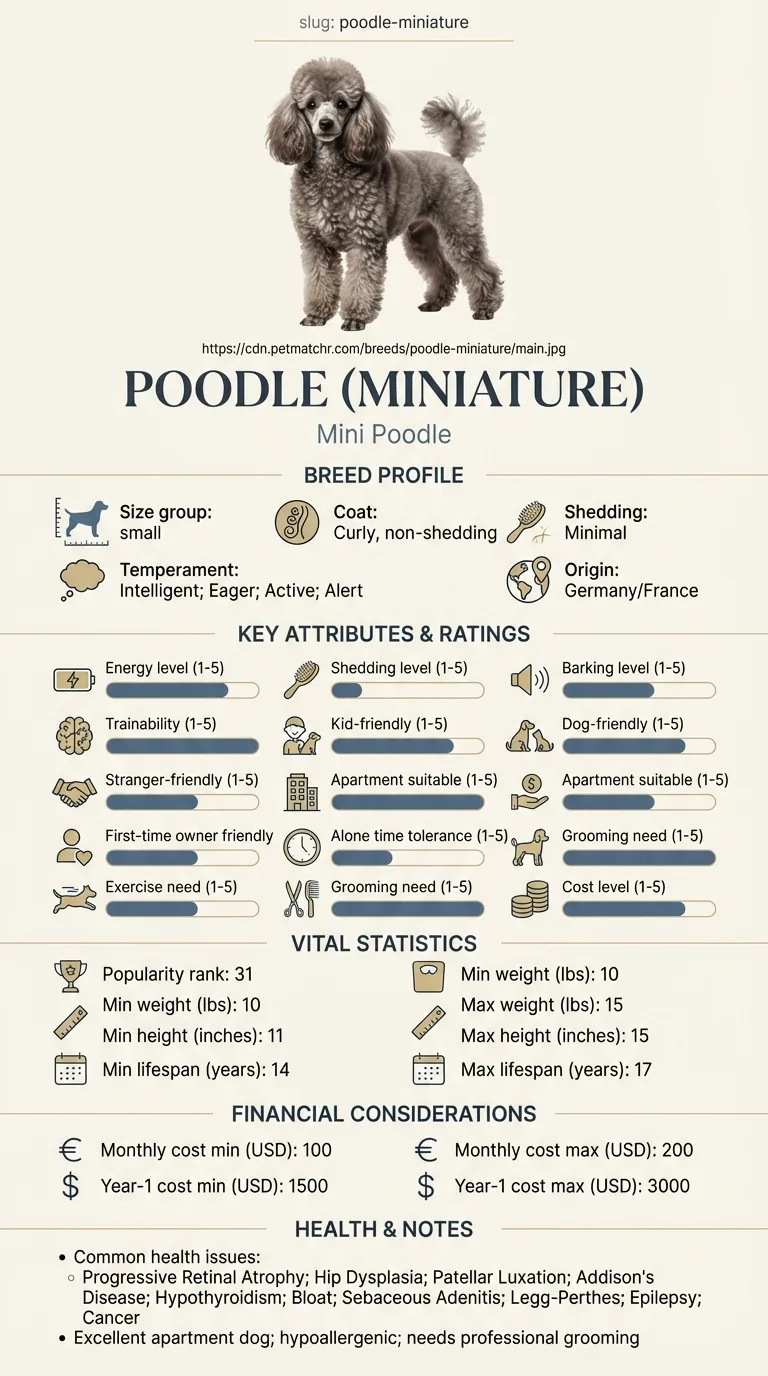
Poodle (Miniature) degenerative myelopathy (DM) is a serious condition affecting your dog's mobility. Understanding it is crucial for your pet's health.
Typically, owners of older Mini Poodles may struggle with this issue, especially those who notice their dogs becoming unsteady or having difficulty walking. It's a heartbreaking experience for any pet parent who wants their furry friend to live a happy, active life.
Important reminder
This guide is not medical advice. If your dog shows pain, sudden behavior change, or worsening symptoms, consult a licensed veterinarian.
Some links may be affiliate links. We may earn a commission at no extra cost to you. We only suggest products we believe are helpful for dog owners.
What this problem looks like
Poodle (Miniature) degenerative myelopathy (DM) is a progressive spinal cord disease that affects movement. This condition often starts with uncoordinated walking, which can escalate to dragging hind legs or difficulty standing. Owners may notice their Mini Poodle having trouble getting up or climbing stairs, leading to frustration and concern.
Common triggers
Aging process
Genetic predisposition
Lack of exercise
Injuries or trauma
Degenerative myelopathy is relatively rare in Poodle (Miniature) breeds, but it can occur, especially in older dogs. While not every Mini Poodle will develop DM, awareness and early detection play a crucial role in managing this condition.
Why this happens
Breed factors
Poodle (Miniature) degenerative myelopathy (DM) is often linked to genetic predisposition. This breed can inherit the condition from their parents, increasing their risk as they age. It's primarily a neurological disorder that affects their spinal cord, leading to loss of mobility over time.
Environment factors
Environmental factors can also play a role in the onset of DM. Lack of exercise, obesity, and injuries can exacerbate symptoms. A dog's living conditions, including their activity level and overall health, significantly influence how quickly the disease progresses.
What you can try
At-home strategies
Provide a safe, comfortable space for your Poodle. Use ramps or non-slip mats to help them navigate around the house without slipping.
Engage in low-impact exercises like swimming or gentle walks to maintain mobility without straining their joints.
Consider a balanced diet that supports overall health. High-quality dog food can help manage weight and muscle strength.
When to consider a trainer
If your Poodle struggles with mobility or seems to have behavioral issues stemming from DM, a professional trainer can help. They can provide specialized exercises and training techniques tailored to your dog's condition.
When to talk to your vet
Consult your vet if you notice signs of weakness, loss of coordination, or if your Poodle experiences changes in behavior. A vet can confirm the diagnosis of DM and suggest appropriate management plans. Regular check-ups are essential to monitor your dog's health.
Realistic expectations
Managing degenerative myelopathy in your Poodle (Miniature) typically takes several months to see noticeable improvements. Initial adjustments may take 4-6 weeks, but ongoing care and adaptation are essential for long-term success.
Success means your Poodle (Miniature) maintains mobility and comfort for as long as possible. This includes implementing a routine of physical therapy, maintaining a healthy weight, and using assistive devices as needed.
Mistakes that make this worse
Avoid these common mistakes that can worsen your Poodle (Miniature)'s degenerative myelopathy (DM). Here are safer alternatives to help your pup.
Ignoring early signs: Many owners overlook the first signs of DM, like slight coordination issues. Early detection can help with management strategies.
Overexerting your dog: Pushing your Poodle (Miniature) too hard during exercise can lead to fatigue and pain. Opt for gentle, short walks to keep them active without strain.
Neglecting weight management: Excess weight can exacerbate mobility issues. Ensure a balanced diet and regular vet check-ups to maintain a healthy weight.
Skipping physical therapy: Some owners avoid rehabilitation, thinking it won't help. Regular physical therapy can improve mobility and quality of life for dogs with DM.
Failing to adapt the home environment: Not modifying your home can lead to falls and injuries. Adding rugs, ramps, or non-slip mats can create a safer space for your dog.
Using harsh training methods: Punishing your dog for accidents or mistakes can increase anxiety. Positive reinforcement is key to encouraging desired behaviors without stress.
Delaying veterinary visits: Some owners wait too long to consult a vet about symptoms. Regular check-ups can help manage DM effectively and improve your dog's comfort.
When Poodle (Miniature) Degenerative Myelopathy (DM) is an Emergency
Identifying when Poodle (Miniature) degenerative myelopathy (DM) is an emergency is crucial for your dog's health. There are specific red-flag signs that indicate you should call your vet immediately. These include sudden loss of mobility, severe weakness in the hind legs, or difficulty standing or walking. If your dog shows any signs of difficulty breathing, excessive pain, or you notice a significant change in their behavior, seek help right away.
On the other hand, some symptoms can be monitored at home with a plan. If your Mini Poodle has mild wobbliness or occasional stumbling, these may not require immediate veterinary attention. You can watch for any changes in their mobility or behavior over a few days. Keep track of their daily activities and note any new symptoms that develop. It’s important to keep your vet informed about these observations, as they can help determine the best course of action.
Always trust your instincts as a pet owner. If you feel something is off, don’t hesitate to reach out to your vet. Regular check-ups can help catch issues early, especially with conditions like degenerative myelopathy that can progress over time.

Poodle (Miniature) Degenerative Myelopathy (DM) Guide - When Poodle (Miniature) Degenerative Myelopathy (DM) is an Emergency
Finding Hope for Daisy: A Poodle (Miniature) with DM
When Emily adopted Daisy, her Mini Poodle, she had no idea about degenerative myelopathy. After noticing Daisy's back legs struggling during walks, she consulted a vet. With a diagnosis of DM, Emily felt overwhelmed but determined to help her pup. She started daily physical therapy exercises at home and adjusted Daisy's diet to keep her weight down. Emily also invested in a supportive harness to help Daisy during walks. Gradually, Daisy adapted to her routine, and Emily found ways to keep her engaged through puzzle toys and gentle play.
Key takeaway: With dedication and the right strategies, you can enhance the quality of life for a Poodle (Miniature) with degenerative myelopathy. Regular vet check-ups and a tailored care plan are key.
Frequently asked questions
What is Poodle (Miniature) degenerative myelopathy (DM)?
Poodle (Miniature) degenerative myelopathy (DM) is a progressive spinal cord disease that affects the dog's ability to walk. It often starts with weakness in the hind legs and can lead to paralysis over time. Early detection and management can help improve your dog's quality of life.
Why does my Poodle (Miniature) have degenerative myelopathy (DM)?
Degenerative myelopathy (DM) is typically caused by genetic factors. It is more common in certain breeds, including Poodles, and often occurs in older dogs. If your Poodle shows signs of weakness or difficulty moving, consult your vet for a proper diagnosis.
How can I help my Poodle (Miniature) with degenerative myelopathy (DM)?
To help manage DM in your Poodle (Miniature), focus on maintaining a healthy weight, providing a supportive environment, and using mobility aids if needed. Regular vet check-ups are essential for monitoring the condition and adjusting care as necessary.
Are there training methods for Poodle (Miniature) degenerative myelopathy (DM)?
While degenerative myelopathy isn't curable, training methods can help your Poodle stay active and engaged. Use positive reinforcement to encourage gentle exercises, and consider working with a professional trainer experienced in mobility issues.
What are the signs of degenerative myelopathy (DM) in Poodles?
Signs of DM in Poodles include stumbling, dragging of paws, and difficulty standing or walking. These symptoms often worsen over time. If you notice any of these signs, see your vet for an evaluation.
What is the long-term outlook for a Poodle (Miniature) with degenerative myelopathy (DM)?
The prognosis for Poodles with DM varies, as it is a progressive condition. Most dogs gradually lose mobility over time. Early intervention can help manage symptoms and maintain a good quality of life for as long as possible.
What are the early signs of degenerative myelopathy (DM) in Poodles (Miniature)?
Early signs of degenerative myelopathy (DM) in Poodles (Miniature) can include difficulty walking, dragging of the hind legs, or a noticeable loss of coordination. You may also notice a change in their ability to jump or climb stairs. If you see these signs, consult your vet for an evaluation.
How can I help my Poodle (Miniature) with degenerative myelopathy (DM)?
Supporting a Poodle (Miniature) with degenerative myelopathy (DM) involves providing a safe environment and possibly mobility aids like harnesses or wheelchairs. Regular physical therapy can help maintain muscle strength and flexibility. It's essential to follow your vet's recommendations for care and management.
Is degenerative myelopathy (DM) hereditary in Poodles (Miniature)?
Yes, degenerative myelopathy (DM) can be hereditary in Poodles (Miniature). Genetic testing can help determine if a dog is at risk for developing the condition. Breeding practices can also influence the prevalence of DM in future generations.
What is the average lifespan of a Poodle (Miniature) with degenerative myelopathy (DM)?
The lifespan of a Poodle (Miniature) with degenerative myelopathy (DM) can vary, but the disease typically progresses over 6 months to 3 years after diagnosis. Many factors, including overall health and care, will influence their quality of life during this time. Regular vet check-ups are crucial for managing their health.
Can training help my Poodle (Miniature) with degenerative myelopathy (DM)?
While training won't cure degenerative myelopathy (DM), it can help your Poodle (Miniature) adapt to their condition. Positive reinforcement training can improve communication and strengthen your bond. It can also help with behavioral issues that may arise as they adjust to physical limitations.
What are quick tips for managing Poodle (Miniature) degenerative myelopathy (DM)?
Maintain a healthy weight for your Poodle, provide a comfortable environment, and consider using mobility aids like harnesses or wheelchairs. Regular vet visits are crucial for ongoing care.
Training
How can I train my Poodle (Miniature) with degenerative myelopathy (DM)?
Focus on gentle exercises that promote movement without strain. Use positive reinforcement to encourage engagement, and keep training sessions short and fun.
Health
What should I look for in terms of Poodle (Miniature) degenerative myelopathy (DM) symptoms?
Look for signs like hind limb weakness, difficulty standing, or dragging paws. Early detection can help with management and improve quality of life.
Poodle (Miniature) separation anxiety guide – Explore how to manage separation anxiety in Mini Poodles, which can sometimes accompany degenerative issues.
Poodle (Miniature) cost breakdown – Find out the costs associated with owning a Mini Poodle, including health-related expenses.