Behavior
What are quick tips for Poodle (Miniature) cherry eye?
Keep your Poodle's eyes clean and monitor for signs of irritation. Regular vet visits can help catch issues early. Consider nutritional supplements that support eye health.

Quick answer
What are quick tips for Poodle (Miniature) cherry eye?
Keep your Poodle's eyes clean and monitor for signs of irritation. Regular vet visits can help catch issues early. Consider nutritional supplements that support eye health.
Poodle (Miniature) cherry eye is a common issue that affects the appearance of your dog's eyes and can lead to discomfort if not addressed.
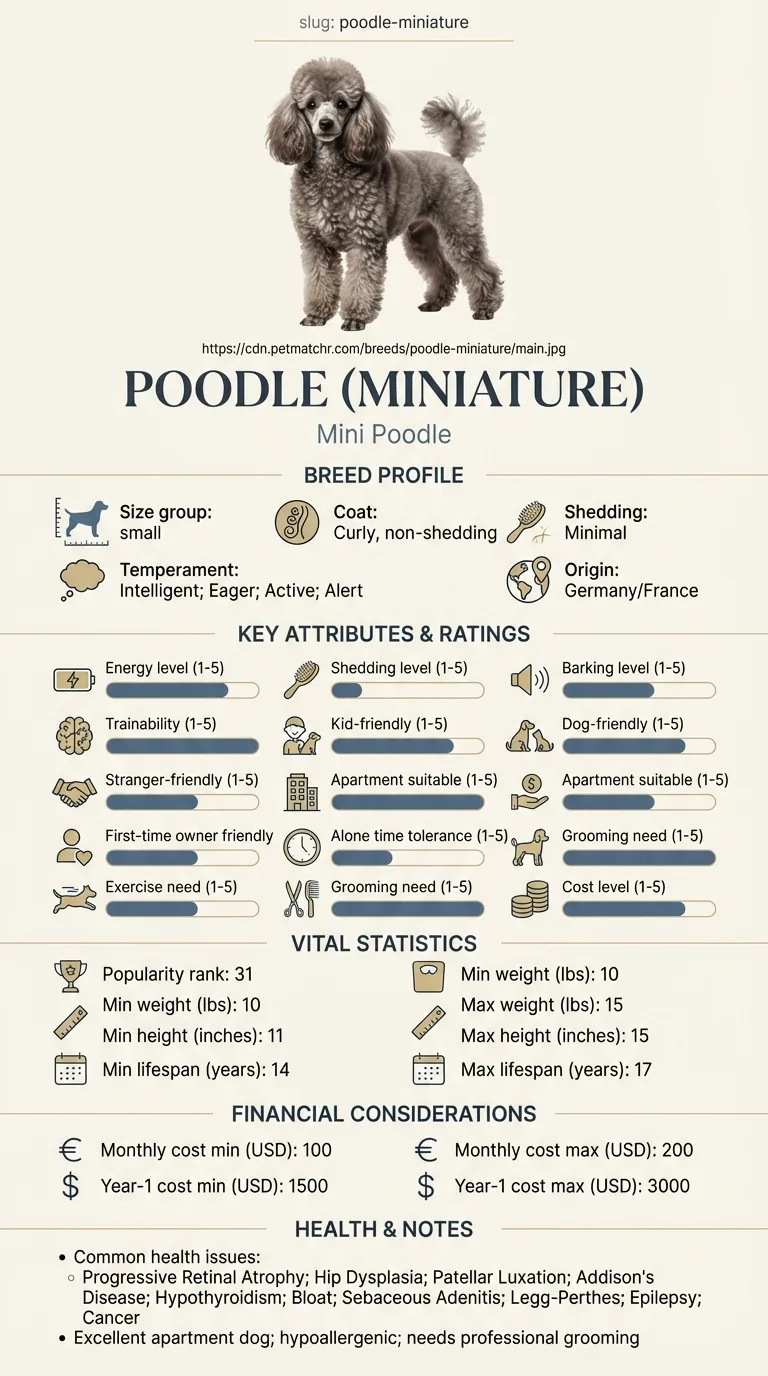
Owners of Mini Poodles often face this issue, especially first-time dog parents who may be unaware of the signs of cherry eye. It can be alarming to see your furry friend with a bulging eye, causing concern about their health and well-being.
This guide is not medical advice. If your dog shows pain, sudden behavior change, or worsening symptoms, consult a licensed veterinarian.
Some links may be affiliate links. We may earn a commission at no extra cost to you. We only suggest products we believe are helpful for dog owners.
We research and check what we publish, but we do not warrant that any figure, date, price, or statement is accurate, complete, or current, and we accept no liability for any loss, cost, injury, or other harm arising from the use of this site. Use it as one reference among several. You remain responsible for your own decisions and for your dog's care - confirm anything that matters with a licensed veterinarian or another qualified professional before you act on it. Full disclaimer.
Check this first
Knowing when Poodle (Miniature) cherry eye is an emergency can make a big difference in your dog's health. If your pup's cherry eye is accompanied by severe swelling, redness, or discharge, it's time to call your vet immediately. These signs indicate that the condition might be worsening and could require urgent care.
Additionally, if your Mini Poodle shows signs of pain, such as excessive blinking, pawing at the eye, or avoiding light, this is a red flag. These symptoms often suggest that the cherry eye may be causing discomfort or leading to more serious issues.
On the other hand, if your Poodle (Miniature) has a cherry eye but is not showing any pain or distress, you can monitor the situation at home. Mild cases can sometimes resolve on their own or with simple interventions. Keep an eye on the eye; if it does not improve or worsens, definitely consult your vet.
If any of these apply, call your vet or an emergency clinic now. The rest of this page is for the cases that are not an emergency.
Poodle (Miniature) cherry eye is a condition where the gland in the eyelid prolapses, causing a visible red mass. This can be distressing for both the dog and the owner. Commonly, it appears as a small, cherry-like bump at the inner corner of the eye, affecting the dog's appearance and comfort.
Cherry eye is relatively common in Poodle (Miniature) breeds, with some estimates suggesting up to 10% may experience this issue at some point in their lives. While not all cases require surgery, owners should be vigilant and consult a vet if symptoms arise.
Poodle (Miniature) cherry eye is often influenced by the breed's unique anatomy. Their small size and specific eyelid structure can make them more prone to this condition. Additionally, genetics may play a role, as some Mini Poodles are more likely to experience cherry eye than others.
Environmental factors can also contribute to cherry eye. Allergens in the home, such as dust or pollen, can irritate the eyes. Stressful situations, like loud noises or changes in routine, might increase the likelihood of this condition developing.
If cherry eye persists or worsens, it’s essential to consult a veterinarian. They can determine if medical treatment or surgery is necessary to address the issue and prevent further complications.
Avoiding common mistakes can help manage your Poodle (Miniature) cherry eye more effectively. Here are some behaviors to watch out for.
Start here: Miniature Poodle Most Common Genetic Disorders: Screening
See all Poodle Miniature health problems, which breeds are prone to cherry eye, or the full Poodle Miniature breed guide for temperament, exercise needs and ownership costs.
You can expect to see improvement within 4 to 8 weeks with consistent care and follow-up with your vet.
Success means your Poodle (Miniature) shows significantly reduced eye irritation and improved comfort, with the cherry eye either resolving on its own or becoming manageable.
Emily, a first-time dog owner in Austin, noticed her Mini Poodle, Max, developing a cherry eye shortly after she adopted him. Concerned about his comfort, she consulted her vet, who suggested a combination of eye drops and a specialized training plan. With patience and regular follow-ups, Emily learned how to manage Max's condition while ensuring he felt secure and loved. After several weeks of diligent care, Max's cherry eye improved, allowing him to play happily without discomfort.
Key takeaway: Seeking veterinary advice and committing to a consistent care routine can greatly improve your dog's quality of life when dealing with cherry eye.
Cherry eye occurs when the gland in the third eyelid prolapses, leading to a noticeable red mass. This condition can be due to genetic factors or a lack of supportive tissue. It's important to consult your vet to determine the best treatment options.
While you can't fully prevent cherry eye, maintaining your dog's overall health can help. Regular vet check-ups and a balanced diet may strengthen connective tissues. Additionally, avoid breeding dogs with a history of eye issues.
Treatment typically involves surgical correction to reposition the gland. Non-surgical methods, like eye drops, may provide temporary relief but won't fix the issue permanently. Always discuss with your vet for the best approach.
Yes, untreated cherry eye can lead to chronic irritation or infection. This can cause discomfort and might affect your dog's vision. Early intervention is key to avoiding further complications.
Recovery from cherry eye surgery usually takes about two weeks. During this time, your dog may need to wear an Elizabethan collar to prevent rubbing. Follow your vet's post-operative care instructions closely for a smooth recovery.
While some home remedies like warm compresses may soothe irritation, they won't fix the prolapse. It's best to consult your vet for proper treatment options. Home remedies should not replace veterinary care.
The cost for cherry eye treatment can vary, with surgical options typically ranging from $300 to $1,000. It's important to factor in consultation fees and any post-operative care. Discuss costs with your vet to plan accordingly.
In some cases, cherry eye may resolve temporarily, but it's unlikely to disappear completely without treatment. It's essential to address it sooner rather than later to avoid complications.
While some people may suggest home remedies, it's crucial to consult a vet. Only a professional can provide effective treatment options and ensure your dog's eye health is not compromised.
If left untreated, cherry eye can lead to chronic irritation and potential vision issues. It's essential to monitor your dog and seek veterinary advice to prevent long-term health problems.
Cherry eye can occur at any age but is most commonly seen in younger dogs, usually under two years old. If you have a younger Mini Poodle, keep an eye out for signs of this condition.
Keep your Poodle's eyes clean and monitor for signs of irritation. Regular vet visits can help catch issues early. Consider nutritional supplements that support eye health.
Focus on positive reinforcement training to reduce stress, which can exacerbate health problems. Regular exercise and mental stimulation help keep their overall health in check.
Contact your vet immediately for an evaluation. Early treatment can prevent further complications and ensure your Poodle's comfort.
Yes, cherry eye is relatively common in Mini Poodles and other breeds with similar eye structures. Awareness and prompt action are crucial.
A one-page prep sheet for this condition: the signs, the questions to ask, what to get priced. Unlocks here.
You get: Vet visit prep sheet
No spam. One-click unsubscribe. See our privacy policy.
Preview page 1 before you decide.