Health
What are some Poodle (Miniature) cataracts quick tips?
Keep an eye on your dog's vision and schedule regular vet visits. A balanced diet and exercise can also help maintain eye health.

Quick answer
What are some Poodle (Miniature) cataracts quick tips?
Keep an eye on your dog's vision and schedule regular vet visits. A balanced diet and exercise can also help maintain eye health.
Poodle (Miniature) cataracts are a common eye condition that can cloud your dog's vision, affecting their quality of life.
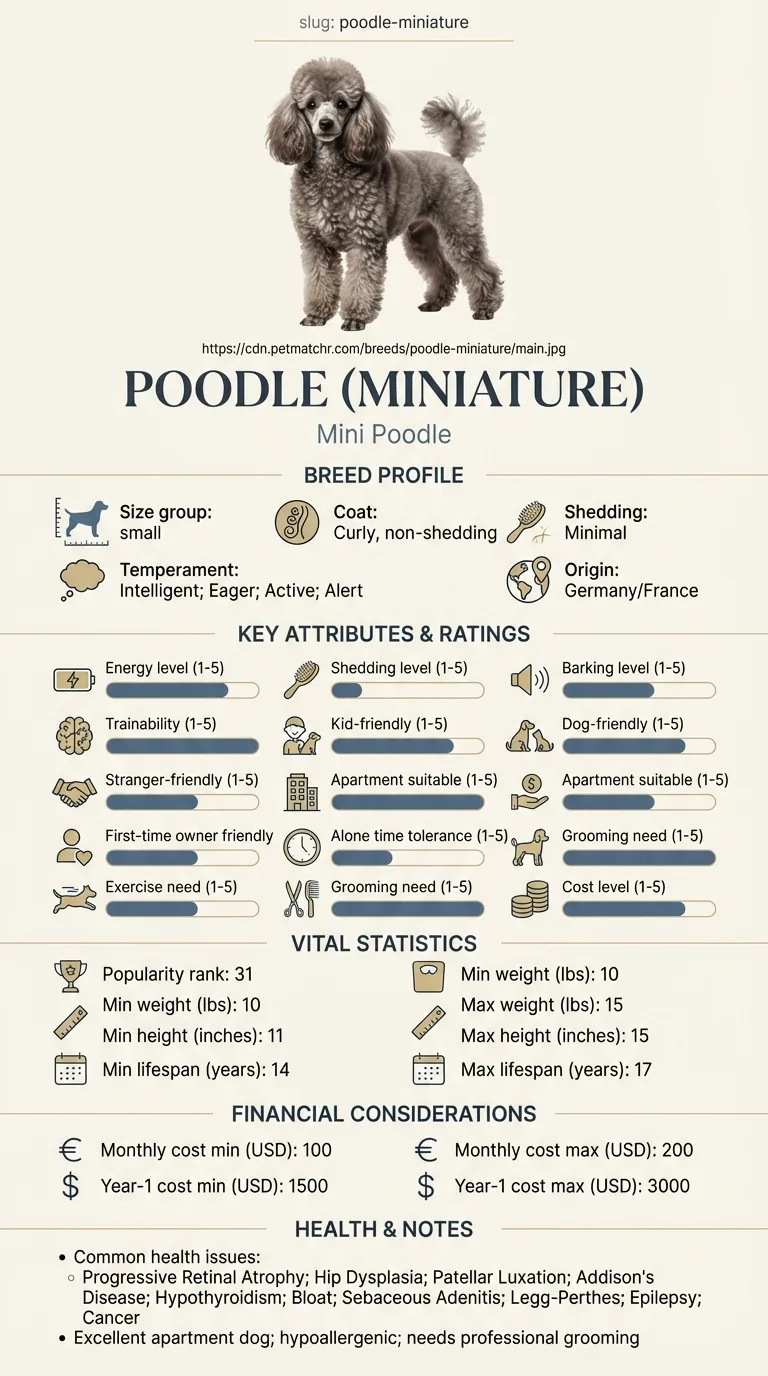
Owners of Poodle (Miniature) dogs often notice cataracts developing as their pet ages. This issue can be particularly challenging for first-time dog owners or those who are unprepared for the health concerns that come with aging pets.
This guide is not medical advice. If your dog shows pain, sudden behavior change, or worsening symptoms, consult a licensed veterinarian.
Some links may be affiliate links. We may earn a commission at no extra cost to you. We only suggest products we believe are helpful for dog owners.
We research and check what we publish, but we do not warrant that any figure, date, price, or statement is accurate, complete, or current, and we accept no liability for any loss, cost, injury, or other harm arising from the use of this site. Use it as one reference among several. You remain responsible for your own decisions and for your dog's care - confirm anything that matters with a licensed veterinarian or another qualified professional before you act on it. Full disclaimer.
Check this first
Cataracts can seriously affect your Poodle (Miniature)'s vision, but not every case requires immediate veterinary care. It's crucial to know when to act fast and when to observe. If your dog shows signs of sudden blindness, excessive squinting, or signs of pain like pawing at their eyes, call your vet immediately. These are red flags that indicate a serious issue requiring urgent attention.
On the other hand, if you notice mild cloudiness in the eyes without any discomfort, it may be a case to monitor. Check if your Poodle (Miniature) is still able to navigate their surroundings and isn't bumping into things. Set up a plan to track any changes over the next few weeks. Regular veterinary check-ups will help keep an eye on the situation.
In summary, look for these signs of emergency: - Sudden vision loss or blindness - Excessive squinting or tearing - Signs of eye pain, like pawing or whining If your Poodle (Miniature) only has mild cataracts without these symptoms, keep a watchful eye and consult your vet during routine appointments.
If any of these apply, call your vet or an emergency clinic now. The rest of this page is for the cases that are not an emergency.
Poodle (Miniature) cataracts are a common eye issue that can lead to cloudy vision or blindness. This problem usually appears as a cloudiness in the eyes, affecting how your dog sees their surroundings. Owners might notice their Mini Poodle bumping into things or having difficulty navigating familiar spaces.
Cataracts are relatively common in Poodle (Miniature) dogs, especially as they age. Many Mini Poodles will experience some degree of lens clouding by the time they are seniors, making regular vet check-ups essential for early detection.
Poodle (Miniature) cataracts can be influenced by genetic factors. Certain breeds, including Mini Poodles, are predisposed to developing cataracts due to inherited traits. This breed's eye health is crucial, as they may experience age-related changes that lead to cataracts.
Environmental factors can also play a role in the development of cataracts. Prolonged exposure to UV light, poor nutrition, or underlying health conditions can contribute to eye problems. Keeping your Mini Poodle in a healthy environment is essential to reducing risks.
If you observe signs of cataracts, such as cloudy eyes or changes in vision, consult your vet. They can assess the severity and recommend treatments, including potential surgical options if necessary.
Avoiding common pitfalls can help your Poodle (Miniature) with cataracts. Here are some mistakes to watch out for, along with safer alternatives.
Start here: Miniature Poodle Most Common Genetic Disorders: Screening
See all Poodle Miniature health problems, which breeds are prone to cataracts, or the full Poodle Miniature breed guide for temperament, exercise needs and ownership costs.
Most Poodle (Miniature) cataracts develop gradually, often taking several months to notice significant changes. Treatment options can vary, but success usually comes within 6 to 12 months with proper care and vet guidance.
Success means your Poodle (Miniature) shows improved vision, is comfortable, and can engage in regular activities without hesitation. You should see a reduction in any discomfort and an increase in their overall quality of life.
Sarah, a busy nurse in Atlanta, noticed her Mini Poodle, Bella, was bumping into furniture and seemed hesitant during walks. After a vet visit, she learned Bella had cataracts. Determined to help her furry friend, Sarah researched treatment options and found a local veterinary ophthalmologist. They decided on surgery, which was successful. Post-surgery, Bella regained her vision, and Sarah followed a strict eye-care routine to prevent further issues. Now, Bella happily plays fetch in the park again.
Key takeaway: Addressing Poodle (Miniature) cataracts early with professional guidance can lead to successful outcomes and a better quality of life for your dog.
Symptoms of cataracts in your Poodle (Miniature) may include cloudy or opaque eyes, difficulty seeing in low light, and bumping into objects. You might also notice changes in their behavior, like hesitance to play or explore. If you see these signs, it's best to consult your vet.
Preventing cataracts involves regular vet visits and a healthy diet. Keeping your Poodle (Miniature) active and managing any underlying health issues can also help. If cataracts do develop, consult your vet about treatment options.
Yes, cataracts can be treated through surgery, which is often successful. Your vet will assess the severity and recommend the best course of action. Post-surgery care is crucial for recovery.
Yes, cataracts can be hereditary in Poodle (Miniature) dogs. If you have a Poodle from a breeder, ask about the health history of the parents. This information can help assess the risk for your dog.
Cataract surgery for Poodle (Miniature) can range from $2,000 to $4,000 per eye. Costs may vary based on your location and the vet's experience. It's important to discuss financing options if needed.
While cataracts can often be surgically removed, they cannot be reversed naturally. Early detection is crucial, so if you suspect your Poodle (Miniature) has cataracts, schedule an appointment with your veterinarian to discuss treatment options.
Yes, Poodle (Miniature) dogs may have a genetic predisposition to cataracts, especially as they age. Regular eye check-ups are important for this breed, particularly for older dogs, to catch any issues early.
To help your Poodle (Miniature) cope with vision loss, keep their environment consistent by minimizing changes in furniture layout. Use voice commands and tactile cues to guide them. Patience and understanding are key as they adjust.
If you notice any signs of cataracts, such as cloudy eyes or changes in behavior, it's important to see your vet as soon as possible. Early intervention can prevent complications and improve treatment outcomes for your Poodle (Miniature).
Keep an eye on your dog's vision and schedule regular vet visits. A balanced diet and exercise can also help maintain eye health.
It's best to take your Poodle (Miniature) for an eye check-up at least once a year, especially as they age.
If you notice cataracts, contact your vet as soon as possible for an evaluation and treatment options.
Yes, a nutritious diet rich in antioxidants can support eye health and potentially slow cataract progression.
Some supplements, like Omega-3 fatty acids and vitamins, may promote overall eye health. Always consult your vet before starting any new supplements.
A one-page prep sheet for this condition: the signs, the questions to ask, what to get priced. Unlocks here.
You get: Vet visit prep sheet
No spam. One-click unsubscribe. See our privacy policy.
See a sample page before you decide.
Early access list
The free prep sheet covers the same-day warning signs, a symptom log and the questions to ask. We are considering a fuller kit that adds a cost worksheet for the usual tests and treatments (US price ranges with their sources) and a plain-English guide to ways of covering the bill. It is not built yet; this list tells us whether it is worth building.
One email, no spam, unsubscribe anytime. Information only, not veterinary advice.