Behavior
What are quick tips for Poodle (All Sizes) anesthesia sensitivity?
Always discuss your Poodle's health history with the vet before anesthesia. Ensure they receive pre-anesthetic blood work for safer medication choices.

Quick answer
What are quick tips for Poodle (All Sizes) anesthesia sensitivity?
Always discuss your Poodle's health history with the vet before anesthesia. Ensure they receive pre-anesthetic blood work for safer medication choices.
Poodle (All Sizes) anesthesia sensitivity can be a serious concern for many dog owners. It refers to how some Poodles react to anesthetic drugs during procedures.
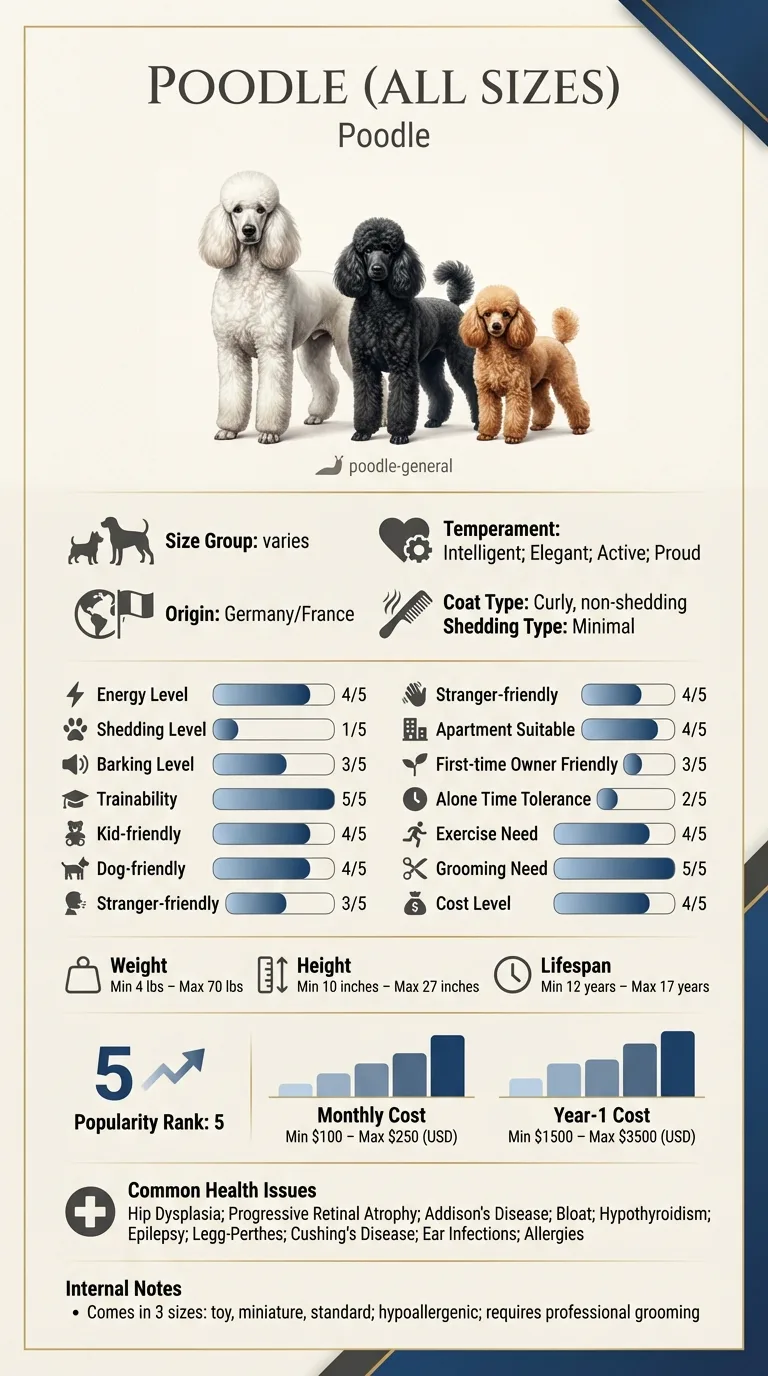
Owners of Poodles, especially those who have undergone surgery or medical procedures, often face this challenge. First-time Poodle owners or those with older pups may find this particularly stressful.
This guide is not medical advice. If your dog shows pain, sudden behavior change, or worsening symptoms, consult a licensed veterinarian.
Some links may be affiliate links. We may earn a commission at no extra cost to you. We only suggest products we believe are helpful for dog owners.
We research and check what we publish, but we do not warrant that any figure, date, price, or statement is accurate, complete, or current, and we accept no liability for any loss, cost, injury, or other harm arising from the use of this site. Use it as one reference among several. You remain responsible for your own decisions and for your dog's care - confirm anything that matters with a licensed veterinarian or another qualified professional before you act on it. Full disclaimer.
Check this first
Understanding when your Poodle (All Sizes) is experiencing anesthesia sensitivity is crucial. Some signs indicate a serious problem that needs immediate veterinary attention. Other cases may be mild and can be monitored at home with a proper plan. Knowing the difference can save your dog's life.
If any of these apply, call your vet or an emergency clinic now. The rest of this page is for the cases that are not an emergency.
Poodles of all sizes can experience anesthesia sensitivity, which may lead to complications during surgeries or procedures requiring sedation. This sensitivity can manifest as extended recovery times, unusual reactions to medications, or difficulty waking up after anesthesia. Owners often notice that their Poodles seem more lethargic or disoriented than expected after such procedures.
Anesthesia sensitivity is quite common in Poodles compared to other breeds. Many Poodle owners report concerns regarding their dog's reaction to anesthesia, especially during elective surgeries. Due to their unique genetic makeup, it's essential for owners to discuss any potential risks with their veterinarian before procedures.
Poodles, regardless of size, can inherit a sensitivity to anesthesia due to their genetic makeup. This breed may metabolize drugs differently, making them more prone to reactions. Additionally, their active and intelligent nature can lead to stress-related responses during veterinary procedures.
Environmental factors can also contribute to anesthesia sensitivity in Poodles. Stressful vet visits, lack of familiarity with the environment, or previous negative experiences can heighten their anxiety. A calm and supportive atmosphere can help mitigate these reactions.
If you notice unusual reactions or prolonged recovery times after anesthesia, it’s important to talk to your vet. They can assess your Poodle's health and determine if further evaluation or alternative approaches are necessary.
Avoiding these common mistakes can help manage your Poodle's anesthesia sensitivity more effectively.
Start here: Poodle (All Sizes) Genetic Disorders: What to Screen For
See all Poodle General health problems, which breeds are prone to anesthesia sensitivity, or the full Poodle General breed guide for temperament, exercise needs and ownership costs.
It may take several weeks to months to see significant improvements in your Poodle's anesthesia sensitivity through consistent care and desensitization techniques.
Success looks like your Poodle being more relaxed and less fearful during vet visits, ultimately leading to a smoother experience with anesthesia when necessary.
If your Poodle shows any of these severe symptoms, it’s time to call your vet immediately:

In less severe situations, you can monitor your Poodle at home. Look for these signs that indicate a less serious case of anesthesia sensitivity:

If your Poodle experiences any of these symptoms, keep an eye on them but don't panic:
Emily, a busy nurse in Boston, noticed that her Poodle, Max, had tremendous anxiety whenever it was time for a vet visit. His fear of anesthesia made Emily anxious, too. After several stressful trips, she decided to tackle Max's anesthesia sensitivity head-on. She worked with a trainer to create a desensitization plan, introducing Max to the vet's office environment slowly. Over time, with positive reinforcement and patience, Max learned that the vet visits weren't as scary as he thought. By the time he needed surgery, he was calm and collected, making the process much easier for both of them.
Key takeaway: With dedication and the right support, you can help your Poodle overcome anesthesia sensitivity, setting them up for a healthier and less stressful life.
Poodles can be sensitive to anesthesia due to their unique metabolism and health conditions. Factors like age, weight, and pre-existing health issues may contribute to this sensitivity. A thorough veterinary evaluation can help identify any risks before procedures.
While you can't completely eliminate anesthesia sensitivity, you can reduce risks by discussing your Poodle's health history with your vet. Consider pre-anesthetic blood work to check for any underlying issues and ensure the safest medications are used.
Training can help reduce anxiety related to vet visits but won't change anesthesia sensitivity. Focus on desensitization techniques, such as gradual exposure to the vet's office, to help your Poodle feel more comfortable during procedures.
Signs of anesthesia sensitivity can include prolonged recovery times, unusual behaviors post-anesthesia, or difficulty waking up. If you notice any troubling symptoms after a procedure, contact your vet immediately for advice.
Make sure your Poodle is well-hydrated and comfortably rested before surgery. Discuss with your vet the best pre-anesthetic protocols, and consider calming products like pheromone diffusers to help ease anxiety.
If your Poodle shows severe reactions, such as excessive shaking or lethargy, contact your vet immediately. They may recommend supportive care or further evaluation to address the situation.
All sizes of Poodles can experience anesthesia sensitivity, but smaller breeds may be at a higher risk due to their size. Always consult with your vet regarding the safest anesthesia options for your specific Poodle.
Signs of anesthesia sensitivity in Poodles can include prolonged recovery times, unusual behavior after anesthesia, and difficulty waking up. If your Poodle seems overly lethargic or disoriented, it's essential to contact your vet.
Yes, as Poodles age, their sensitivity to anesthesia can increase due to changes in metabolism and overall health. Older Poodles may require special considerations during procedures, so it's vital to discuss this with your veterinarian.
To prepare your Poodle, inform your vet about previous reactions and consider pre-anesthesia testing. Your vet may adjust dosages or select different anesthetic agents to ensure a safer experience.
While all Poodles can experience anesthesia sensitivity, smaller Poodles may be at a higher risk due to their size and metabolic differences. It's essential to tailor anesthesia plans based on your Poodle's size and health status.
If your Poodle experiences a bad reaction, such as difficulty breathing or seizures, seek immediate veterinary care. Quick action can be crucial in managing adverse effects and ensuring your pet's safety.
Always discuss your Poodle's health history with the vet before anesthesia. Ensure they receive pre-anesthetic blood work for safer medication choices.
Use desensitization techniques by visiting the vet's office for positive experiences. Consider calming aids like anxiety wraps or pheromone sprays.
Watch for prolonged recovery, excessive lethargy, or unusual behaviors post-anesthesia. Contact your vet if you notice these signs.
Training can reduce anxiety but won't change sensitivity. Focus on positive experiences at the vet to ease stress.
Expect costs to vary, but anesthesia can add $100 to $500 to your vet bill, depending on the procedure and any complications.
A one-page prep sheet for this condition: the signs, the questions to ask, what to get priced. Unlocks here.
You get: Vet visit prep sheet
No spam. One-click unsubscribe. See our privacy policy.
See a sample page before you decide.
Early access list
The free prep sheet covers the same-day warning signs, a symptom log and the questions to ask. We are considering a fuller kit that adds a cost worksheet for the usual tests and treatments (US price ranges with their sources) and a plain-English guide to ways of covering the bill. It is not built yet; this list tells us whether it is worth building.
One email, no spam, unsubscribe anytime. Information only, not veterinary advice.