DogBreedCompass
← Back to breed profile

Pembroke Welsh Corgi Wobbler Syndrome: Causes and Solutions

Pembroke Welsh Corgi wobbler syndrome is a serious condition that affects your dog's mobility and quality of life.

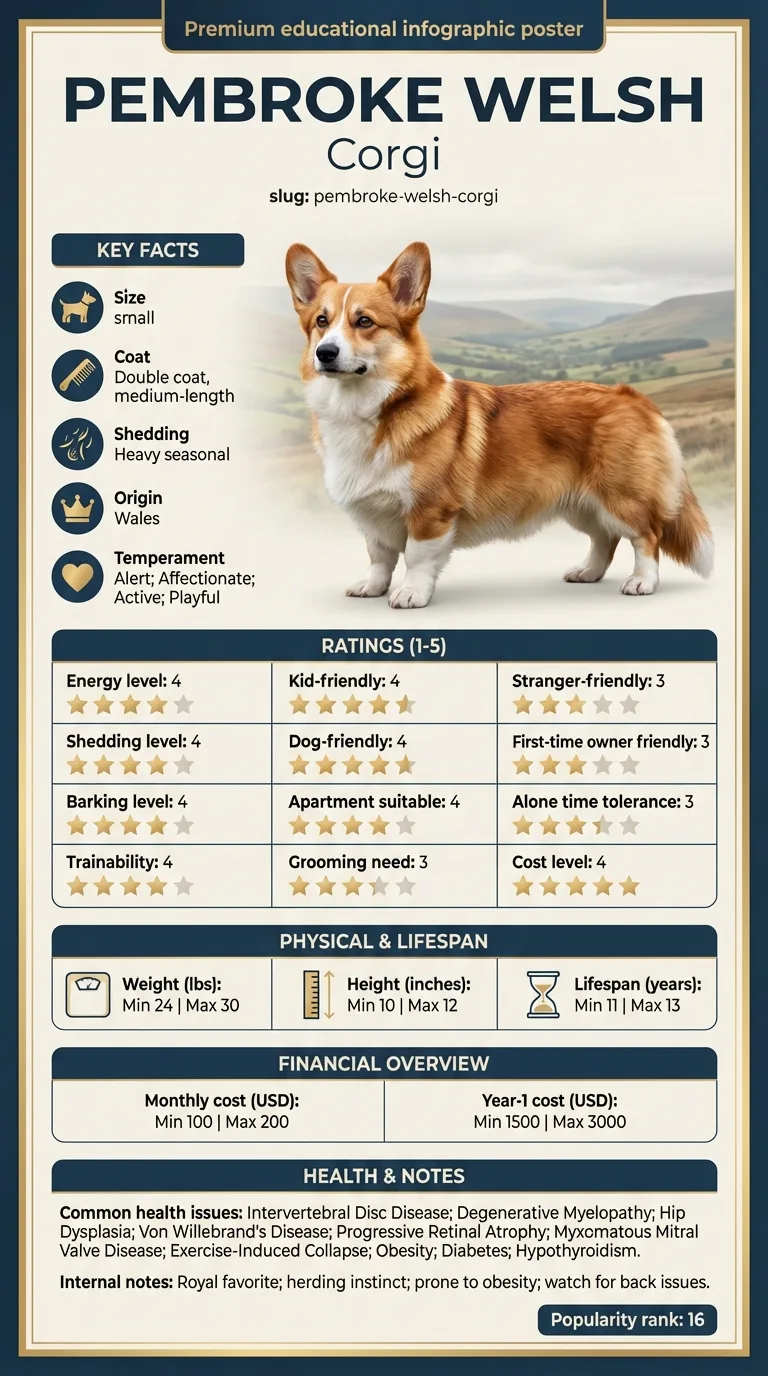
Pembroke Welsh Corgi Wobbler Syndrome: Causes and Solutions infographic

Owners of Pembroke Welsh Corgis, especially those who are first-time pet parents or live in busy households, often face challenges dealing with this issue. It can be particularly stressful for dog lovers who want to ensure their furry friends are healthy and active.

Important reminder

This guide is not medical advice. If your dog shows pain, sudden behavior change, or worsening symptoms, consult a licensed veterinarian.

Some links may be affiliate links. We may earn a commission at no extra cost to you. We only suggest products we believe are helpful for dog owners.

What this problem looks like

Pembroke Welsh Corgi wobbler syndrome is a serious condition affecting their neck and spine. This syndrome causes instability in the cervical vertebrae, leading to a range of mobility issues. Owners may notice their Corgi stumbling, having difficulty standing, or exhibiting a wobbly gait, especially after exercise.

Common triggers

  • Genetics, as certain lines of Corgis may be more prone to this condition.
  • Age, since older Corgis are more likely to develop symptoms.
  • Injury or trauma to the neck, which can exacerbate existing instability.

Wobbler syndrome is relatively common in Pembroke Welsh Corgis, particularly those over the age of five. While not every Corgi will develop it, many owners report noticing symptoms in their pets. It's important for Corgi owners to be aware of this issue and seek veterinary advice if they observe any signs.

Why this happens

Breed factors

Pembroke Welsh Corgis are prone to genetic conditions that can lead to wobbler syndrome, such as intervertebral disc disease. Their unique body structure, with a long torso and short legs, can contribute to spinal issues. This breed's herding background may also lead to high energy levels, increasing the risk of injury.

Environment factors

Inadequate exercise or improper training techniques can exacerbate wobbler syndrome. If your Corgi is overweight, this additional strain on their spine may worsen their condition. Stressful environments or lack of mental stimulation can also trigger anxiety, which can lead to wobbly behavior.

What you can try

At-home strategies

  • Create a safe space for your Corgi to rest and recover. Use soft bedding and avoid stairs or slippery floors.
  • Implement a controlled exercise routine. Short, gentle walks can help maintain mobility without overexerting them.
  • Use positive reinforcement training techniques to encourage good behavior while avoiding any physical strain.

When to consider a trainer

If your Pembroke Welsh Corgi shows persistent wobbly behavior despite your efforts, consider seeking a professional dog trainer. A trainer can assess their behavior and tailor a training plan to improve mobility and confidence.

When to talk to your vet

It's important to consult a vet if you notice significant changes in your Corgi's mobility, such as increased wobbling or difficulty standing. If your dog is in pain or you suspect wobbler syndrome, early veterinary intervention can help manage their condition effectively.

Realistic expectations

Managing Pembroke Welsh Corgi wobbler syndrome typically takes several weeks to months, depending on the severity and your dog's responsiveness to treatment. Regular vet visits and consistent training are essential during this time.

Success means noticeable improvement in your Corgi's mobility and comfort. Your dog should show reduced wobbling, increased stability, and an overall better quality of life.

Mistakes that make this worse

Avoiding common mistakes can help improve your Pembroke Welsh Corgi's wobbler syndrome. Here are some behaviors to steer clear of and their safer alternatives.

  • Ignoring early symptoms: If you notice your Corgi wobbling or having trouble walking, don’t dismiss it. Early intervention can lead to better outcomes. Consult your vet right away.
  • Over-exercising your dog: Too much physical activity can worsen wobbler syndrome. Instead, focus on short, controlled walks and gentle play to keep your dog active without overexertion.
  • Using harsh training methods: Negative reinforcement can create anxiety and worsen behavior issues. Opt for positive reinforcement techniques to promote confidence and better behavior.
  • Neglecting weight management: Keeping your Corgi at a healthy weight is crucial. Overweight dogs face additional strain on their neck and spine. Work with your vet on a balanced diet and portion control.
  • Delaying veterinary visits: If you suspect wobbler syndrome, don’t wait too long for an appointment. Early diagnosis and treatment can significantly improve your dog’s quality of life.

When Pembroke Welsh Corgi Wobbler Syndrome is an Emergency

Wobbler syndrome can be a serious issue for Pembroke Welsh Corgis. It's important to recognize when you should call your vet immediately versus when you can monitor your dog more closely at home. Immediate veterinary attention is crucial if your Corgi shows severe symptoms such as loss of coordination, inability to stand or walk, or sudden paralysis. These are red flags that indicate a potentially serious condition that needs urgent care.

On the other hand, if your Corgi shows mild symptoms, like slight wobbling or occasional stumbling, you might not need to rush to the vet. Instead, keep a close eye on your pet and monitor any changes in their behavior or mobility. It’s advisable to have a plan in place for regular check-ups if your dog has been diagnosed with wobbler syndrome but is stable at the moment. However, if you notice the symptoms worsening or new symptoms developing, don’t hesitate to reach out to your vet for guidance.

Pembroke Welsh Corgi Wobbler Syndrome: Causes and Solutions - When Pembroke Welsh Corgi Wobbler Syndrome is an Emergency

Jenna and Max: Overcoming Wobbler Syndrome

Jenna, a busy nurse in Seattle, adopted Max, a lively Pembroke Welsh Corgi. Shortly after bringing him home, she noticed he had trouble walking steadily. After a vet visit, Jenna learned Max had wobbler syndrome. Determined to help him, she followed a treatment plan that included special exercises and training techniques. Within a few months, Max showed improvement in his stability, and Jenna felt relieved to see him play energetically again.

Key takeaway: With the right care and commitment, you can help your Pembroke Welsh Corgi manage wobbler syndrome and lead a happy, active life.

Frequently asked questions

Why does my Pembroke Welsh Corgi have wobbler syndrome?

Pembroke Welsh Corgi wobbler syndrome is often caused by cervical vertebral instability. This condition can lead to pain and mobility issues. Genetics and age can increase the risk of developing this syndrome.

How can I stop my Pembroke Welsh Corgi from wobbling?

To help manage Pembroke Welsh Corgi wobbler syndrome, consult with your vet for tailored treatment options. Physical therapy and weight management can be crucial. Medication may also be prescribed to alleviate pain and inflammation.

What training methods are effective for wobbler syndrome?

Training methods for a Pembroke Welsh Corgi with wobbler syndrome should focus on gentle exercises that improve stability. Positive reinforcement can encourage your dog to engage in low-impact activities. Always consult your vet before starting any new exercise regimen.

What are the signs of wobbler syndrome in Pembroke Welsh Corgis?

Signs include unsteady gait, difficulty walking, and neck pain. Your Corgi may also become less active or show reluctance to jump or play. Noticing these symptoms early can lead to more effective management.

Is surgery necessary for Pembroke Welsh Corgi wobbler syndrome?

Surgery may be necessary for severe cases of wobbler syndrome. Your vet can evaluate the severity and recommend an appropriate course of action. Many dogs can manage the condition with non-surgical treatments.

What is the cost of treating wobbler syndrome in Pembroke Welsh Corgis?

Treatment costs for Pembroke Welsh Corgi wobbler syndrome can range from $500 to $7,000 depending on the severity. Regular vet visits and potential surgeries can add to the overall expense. Budgeting for ongoing care is important.

What are the early signs of Pembroke Welsh Corgi wobbler syndrome?

Early signs of Pembroke Welsh Corgi wobbler syndrome include weakness in the hind legs, difficulty walking, and wobbling when moving. You may also notice stiffness or reluctance to exercise. If you see these symptoms, it's essential to consult your vet promptly.

Can wobbler syndrome develop in older Pembroke Welsh Corgis?

Yes, wobbler syndrome can develop in older Pembroke Welsh Corgis, especially as they age and their spine undergoes changes. Older dogs may show more pronounced symptoms, like difficulty balancing or sudden falls. Regular vet check-ups are crucial to monitor their health.

What treatments are available for Pembroke Welsh Corgi wobbler syndrome?

Treatment options for Pembroke Welsh Corgi wobbler syndrome vary and may include medications, physical therapy, or surgery. Your vet will help determine the best approach based on your dog's specific condition and symptoms. Early intervention can significantly improve their quality of life.

How can I help my Pembroke Welsh Corgi cope with wobbler syndrome at home?

To help your Pembroke Welsh Corgi cope with wobbler syndrome at home, create a safe environment by removing obstacles and providing supportive bedding. Regular, gentle exercise is essential, but avoid overly strenuous activities. Consult your vet for tailored exercises or rehabilitation options.

Why does my Pembroke Welsh Corgi have wobbler syndrome?

Wobbler syndrome in Pembroke Welsh Corgis is often due to cervical vertebral instability, which can be influenced by genetics, age, and weight. It’s important to monitor your dog's health and discuss any concerns with your vet, as early intervention can help manage this condition.

Quick answers

View more answers
Behavior

What are quick tips for managing Pembroke Welsh Corgi wobbler syndrome?

Keep your Corgi at a healthy weight and ensure they get moderate exercise. Regular vet check-ups are essential for monitoring their condition. Consider physical therapy if recommended by your vet.

Living

How can I help my Pembroke Welsh Corgi with mobility issues?

Provide supportive bedding and easy access to food and water. Use ramps to help them navigate stairs or vehicles. Always encourage gentle play to keep them active without overexertion.

Health

Are there special diets for Pembroke Welsh Corgis with wobbler syndrome?

A balanced diet is vital for maintaining a healthy weight. Consult your vet for specific dietary recommendations that support joint health and overall well-being.

Related DogBreedCompass guides

  • how to stop Pembroke Welsh Corgi wobbler syndromeLearn about training methods to help manage wobbler syndrome in Pembroke Welsh Corgis.
  • Pembroke Welsh Corgi behavior problemsExplore common behavior issues in Pembroke Welsh Corgis and how to address them effectively.
  • Pembroke Welsh Corgi cost breakdownGet insights on the costs associated with owning a Pembroke Welsh Corgi, including health issues like wobbler syndrome.
  • wobbler syndrome overviewUnderstand the signs and symptoms of wobbler syndrome to ensure your Corgi receives timely care.
  • Pembroke Welsh Corgi separation anxiety guideCheck out tips on managing separation anxiety, which can be common in Pembroke Welsh Corgis.

Related guides