Behavior
How to stop Pembroke Welsh Corgi myotonia congenita?
There’s no cure for myotonia congenita, but regular exercise and a healthy diet can help manage symptoms.

Quick answer
How to stop Pembroke Welsh Corgi myotonia congenita?
There’s no cure for myotonia congenita, but regular exercise and a healthy diet can help manage symptoms.
Myotonia congenita can cause muscle stiffness in Pembroke Welsh Corgis, impacting their daily life.
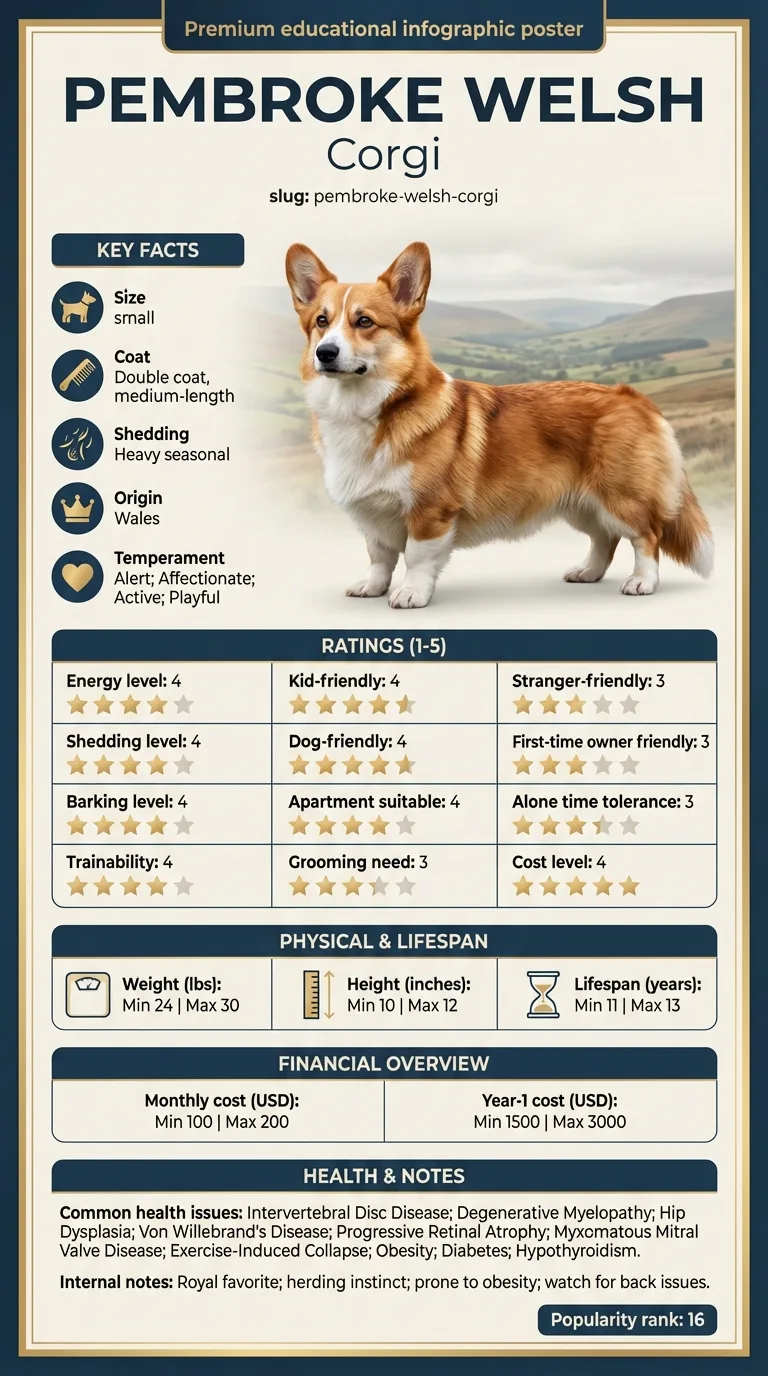
Owners of Pembroke Welsh Corgis may face challenges if their dog shows signs of muscle stiffness. Those who are first-time dog owners or have busy lifestyles may find it particularly difficult to manage this condition effectively.
This guide is not medical advice. If your dog shows pain, sudden behavior change, or worsening symptoms, consult a licensed veterinarian.
Some links may be affiliate links. We may earn a commission at no extra cost to you. We only suggest products we believe are helpful for dog owners.
We research and check what we publish, but we do not warrant that any figure, date, price, or statement is accurate, complete, or current, and we accept no liability for any loss, cost, injury, or other harm arising from the use of this site. Use it as one reference among several. You remain responsible for your own decisions and for your dog's care - confirm anything that matters with a licensed veterinarian or another qualified professional before you act on it. Full disclaimer.
Check this first
Call your vet immediately if your Corgi shows severe muscle stiffness that prevents them from moving. Other red flags include difficulty breathing, excessive drooling, or signs of pain. If your dog collapses or has seizures, these are emergencies that need prompt action.
In less severe cases, monitor your Corgi for mild muscle stiffness after exercise or during play. If they seem to recover quickly or show no signs of distress, you likely can wait and observe. Keeping a log of their episodes can help you identify patterns and share this information with your vet during check-ups.
Remember, it's always better to err on the side of caution. If you're unsure whether your Corgi is experiencing a true emergency, it's best to call your vet for advice. They can guide you on whether to bring your pet in for an evaluation or suggest at-home monitoring strategies.
If any of these apply, call your vet or an emergency clinic now. The rest of this page is for the cases that are not an emergency.
Pembroke Welsh Corgi myotonia congenita is a condition causing muscle stiffness that can affect your dog's daily life. Imagine your Corgi struggling to move after resting or having difficulty getting up. This condition can be frustrating for both the dog and the owner, as it may lead to decreased mobility and activity levels.
Myotonia congenita is relatively rare in Pembroke Welsh Corgis. While not every Corgi will experience this issue, it's important for owners to be aware of the signs and symptoms, especially if their dog shows unusual stiffness or difficulty moving.
Myotonia congenita in Pembroke Welsh Corgis is primarily a genetic condition. This breed tends to inherit muscle stiffness due to a mutation in the chloride channel gene. As a result, affected Corgis may experience delayed muscle relaxation after contraction, leading to stiffness and difficulty moving.
Environmental factors can also play a role in exacerbating myotonia congenita symptoms. Stressful situations, lack of proper exercise, or inadequate warm-up routines may worsen muscle stiffness. Additionally, changes in temperature or humidity can impact your Corgi's comfort and mobility.
It's essential to consult your vet if you notice any new symptoms, such as severe stiffness or difficulty moving. Your vet can assess your Corgi's condition and recommend additional treatments or therapies, including medications that may help manage symptoms.
Avoiding these common mistakes can help improve your Pembroke Welsh Corgi's myotonia congenita symptoms.
Start here: Pembroke Welsh Corgi Most Common Genetic Disorders
See all Pembroke Welsh Corgi health problems, which breeds are prone to myotonia congenita, or the full Pembroke Welsh Corgi breed guide for temperament, exercise needs and ownership costs.
You can expect to see improvements in your Pembroke Welsh Corgi's myotonia congenita within a few weeks to months of consistent care and management.
Success means your Corgi will have increased mobility and reduced muscle stiffness. You'll notice they can play more freely and respond better to commands.
Emma, a busy nurse in Seattle, adopted Max, her Pembroke Welsh Corgi, who was diagnosed with myotonia congenita. Initially, Max had difficulty moving after resting, making it tough for Emma to play with him. After consulting a vet and starting a tailored exercise routine, Emma gradually introduced daily stretching and low-impact activities. Within a few months, Max was much more active and happier. Emma learned to recognize his limits and adjusted expectations, which helped them both enjoy their time together more.
Key takeaway: With the right support and a structured routine, you can significantly improve your Corgi's quality of life despite myotonia congenita.
Myotonia congenita in Pembroke Welsh Corgis is typically caused by a genetic mutation. This condition leads to muscle stiffness and delayed relaxation after contractions. If you notice unusual stiffness, consult your veterinarian for a proper diagnosis. This answer relates to Pembroke Welsh Corgi myotonia congenita.
To help a Pembroke Welsh Corgi with myotonia congenita, regular, gentle exercise is crucial. Avoid intense activities that could exacerbate stiffness. Additionally, consult a vet for targeted training and possible medication to manage symptoms.
Positive reinforcement training works best for Corgis with myotonia congenita. Use treats and praise to encourage desired behaviors. Keep training sessions short and fun to avoid overwhelming your dog.
Yes, consider creating a comfortable, low-stress environment for your Pembroke Welsh Corgi. Ensure they have a soft resting area and avoid exposing them to extreme temperatures. Consistency in routine can also help reduce anxiety.
Watch for signs such as difficulty moving, excessive panting, or reluctance to engage in play. If you notice any of these symptoms, it’s important to consult your veterinarian. Early intervention can make a difference.
A balanced diet can support overall health and possibly ease some symptoms. Discuss with your vet about the best food options that may help manage weight and muscle health for your Corgi.
If your Pembroke Welsh Corgi shows signs of muscle stiffness, it's important to consult a veterinarian. They can perform a thorough examination and suggest treatments or lifestyle changes to help manage the condition.
Yes, older Pembroke Welsh Corgis can develop myotonia congenita. While this condition is often genetic, aging can exacerbate symptoms. Regular vet check-ups are essential for older dogs.
Training a Pembroke Welsh Corgi with myotonia congenita requires patience and positive reinforcement. Short training sessions are best to avoid fatigue, and it's crucial to monitor their comfort level during activities.
Gentle, low-impact exercises are ideal for Pembroke Welsh Corgis with myotonia congenita. Activities like short walks or playtime in a controlled environment can help maintain muscle health without causing strain.
Yes, myotonia congenita is often hereditary in Pembroke Welsh Corgis. If you're considering breeding, consult with a vet to understand the risks and ensure healthy breeding practices.
There’s no cure for myotonia congenita, but regular exercise and a healthy diet can help manage symptoms.
Provide gentle exercise, maintain a stress-free environment, and ensure they have regular vet check-ups.
Consult your vet for the best diet, focusing on balanced nutrition to support muscle health.
Yes, positive reinforcement training can be effective and should be tailored to accommodate their condition.
A one-page prep sheet for this condition: the signs, the questions to ask, what to get priced. Unlocks here.
You get: Vet visit prep sheet
No spam. One-click unsubscribe. See our privacy policy.
Preview page 1 before you decide.