Health
What are quick tips for Pembroke Welsh Corgi cruciate ligament injuries?
Keep your Corgi at a healthy weight and avoid high-impact activities. Regular vet check-ups can help identify potential issues early.

Quick answer
What are quick tips for Pembroke Welsh Corgi cruciate ligament injuries?
Keep your Corgi at a healthy weight and avoid high-impact activities. Regular vet check-ups can help identify potential issues early.
Cruciate ligament injuries can be a serious issue for Pembroke Welsh Corgis.
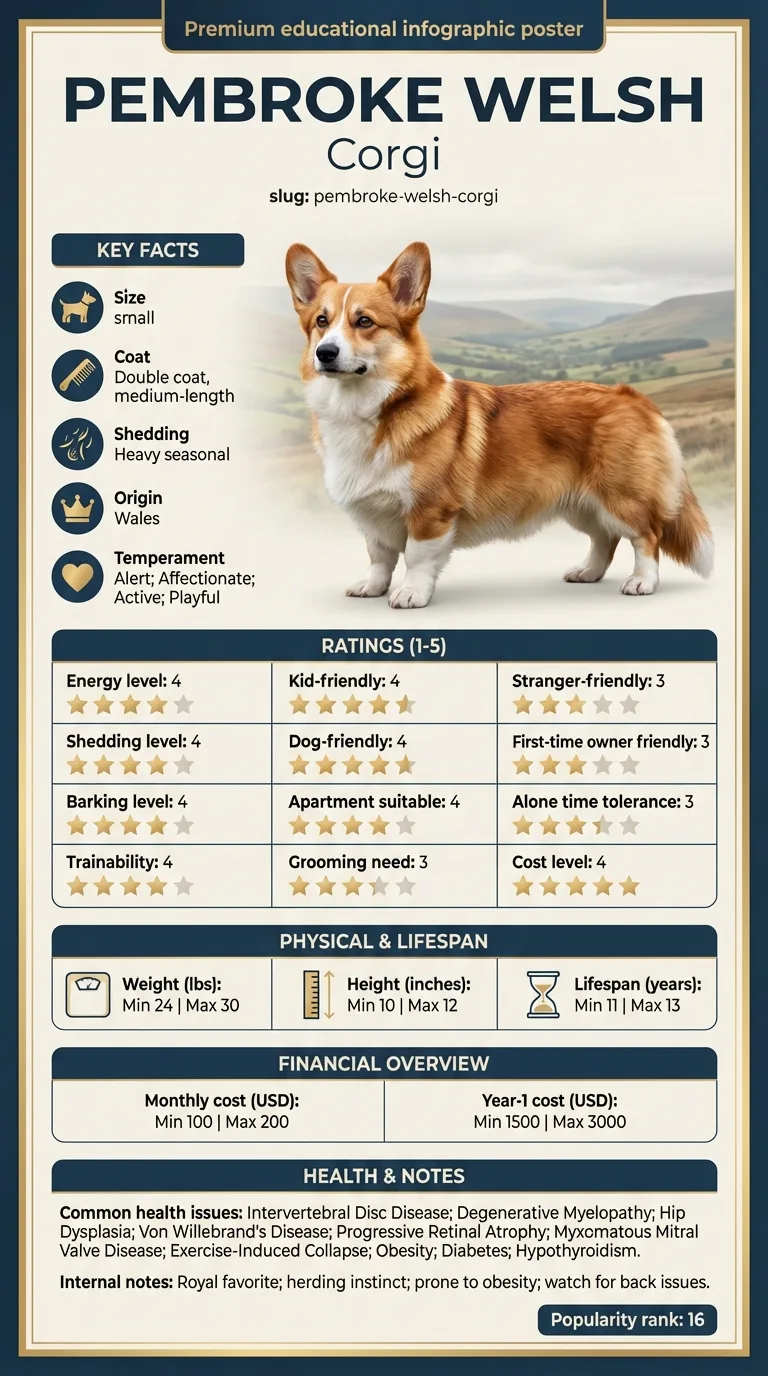
Owners of Pembroke Welsh Corgis, especially those with active dogs or older pets, often face these injuries. Corgis are playful and energetic, which can increase their risk of ligament damage.
This guide is not medical advice. If your dog shows pain, sudden behavior change, or worsening symptoms, consult a licensed veterinarian.
Some links may be affiliate links. We may earn a commission at no extra cost to you. We only suggest products we believe are helpful for dog owners.
We research and check what we publish, but we do not warrant that any figure, date, price, or statement is accurate, complete, or current, and we accept no liability for any loss, cost, injury, or other harm arising from the use of this site. Use it as one reference among several. You remain responsible for your own decisions and for your dog's care - confirm anything that matters with a licensed veterinarian or another qualified professional before you act on it. Full disclaimer.
Check this first
Understanding when a cruciate ligament injury in your Pembroke Welsh Corgi is an emergency is crucial for their health. Look for red flags that indicate immediate veterinary attention is needed. These signs include severe limping, inability to bear weight on the affected leg, and sudden swelling around the knee joint. If your dog shows any of these symptoms, you should call your vet right away.
On the other hand, some cases may not require immediate action. If your Corgi is showing mild limping or stiffness after exercise but is still able to walk and play, it's best to monitor them for a few days. You can manage their activity level and consider applying ice to the affected area. Keep an eye on their behavior and mobility.
In general, if you notice any worsening of symptoms or if your dog seems to be in pain while resting, it’s wise to consult your veterinarian. Always err on the side of caution when it comes to your pet's health, as timely intervention can prevent further complications.
If any of these apply, call your vet or an emergency clinic now. The rest of this page is for the cases that are not an emergency.
Pembroke Welsh Corgi cruciate ligament injuries are a common issue that can greatly affect your dog's quality of life. These injuries often manifest as limping, reluctance to exercise, or difficulty in jumping. Daily activities, like getting up from a nap or playing, may become painful for your Corgi.
These injuries are notably prevalent among Pembroke Welsh Corgis, especially as they age. Many owners report experiencing this issue, particularly in dogs that are overweight or lead a very active lifestyle.
Pembroke Welsh Corgis are small dogs that are active and playful. Their natural herding instincts drive them to engage in high-energy activities, which can put stress on their joints. Additionally, Corgis are prone to obesity, which can further increase the risk of cruciate ligament injuries.
Injuries can also stem from environmental factors. Slippery floors, uneven surfaces, or excessive jumping can contribute to knee injuries. Lack of proper exercise or inadequate warm-up before vigorous play can make these injuries more likely.
If your Corgi shows signs of pain, limping, or reluctance to move, consult your vet. They can assess any potential injuries and recommend treatment options. Preventative care, including regular check-ups, can also help catch issues early.
Avoiding certain behaviors can help your Pembroke Welsh Corgi recover from cruciate ligament injuries. Here are common mistakes that owners make and safer alternatives to consider.
Start here: Pembroke Welsh Corgi Most Common Genetic Disorders
See all Pembroke Welsh Corgi health problems, which breeds are prone to cruciate ligament injuries, or the full Pembroke Welsh Corgi breed guide for temperament, exercise needs and ownership costs.
Addressing Pembroke Welsh Corgi cruciate ligament injuries may take several weeks to months. Early intervention and consistent care under your vet's plan can lead to noticeable improvements within 6 to 8 weeks.
Success means your Corgi can move comfortably without pain, regains full mobility, and is less prone to future injuries. You'll also notice improved behavior during exercise and play.
Emily, a busy nurse, had a Pembroke Welsh Corgi named Max who loved to run but frequently limped after play. After a vet visit, she learned that Max had a cruciate ligament injury. Determined to help him, Emily started a careful rehabilitation plan that included controlled exercise, weight management, and targeted training to strengthen his legs. Within two months, Max was back to his playful self, and Emily learned to recognize signs of discomfort early.
Key takeaway: With the right guidance and a structured approach, addressing cruciate ligament injuries in Pembroke Welsh Corgis is possible, leading to happier and healthier pets.
Cruciate ligament injuries in Pembroke Welsh Corgis can occur due to a combination of genetics, obesity, and high activity levels. Their small, sturdy build can put stress on their knees, especially if they are overweight. Regular vet check-ups and maintaining a healthy weight can help prevent these injuries.
To prevent cruciate ligament injuries, focus on maintaining your Corgi's healthy weight and providing low-impact exercises. Avoid high-pressure activities like jumping or excessive running on hard surfaces. Strengthening their muscles through controlled exercise can also help stabilize their knees.
Signs of cruciate ligament injuries include limping, difficulty standing up, and reluctance to play. You may notice swelling around the knee or your Corgi being less active than usual. If you see these symptoms, consult your vet for an evaluation.
Treatment options for cruciate ligament injuries can range from rest and anti-inflammatory medications to surgical intervention. Your vet will recommend the best course of action based on the severity of the injury. Post-treatment rehabilitation is crucial for recovery.
Yes, training can help prevent cruciate ligament injuries by focusing on proper movement and strengthening exercises. Incorporating low-impact activities like swimming can build muscle without putting stress on the knees. Always consult with a trainer experienced in canine rehabilitation.
There are several factors that can contribute to repeated cruciate ligament injuries in Pembroke Welsh Corgis. These include genetics, obesity, and inadequate exercise. Keeping your Corgi at a healthy weight and providing proper training can help reduce the risk.
Recovery for older Corgis may require a more gentle approach. Focus on low-impact exercises, physical therapy, and a balanced diet to support their healing. Always follow your vet's advice for the best recovery plan.
Yes, proper training can help prevent injuries. Focus on strengthening your Corgi's muscles and improving their agility through controlled exercises. Avoid high-impact activities that could stress their knees.
If your Corgi shows persistent limping, swelling, or pain in the knee, it's time to see the vet. Early diagnosis and treatment can prevent further complications and improve recovery outcomes.
Keep your Corgi at a healthy weight and avoid high-impact activities. Regular vet check-ups can help identify potential issues early.
Aim for 30 to 60 minutes of moderate exercise daily, divided into shorter sessions. This will help maintain their health without overexerting their joints.
A balanced diet that maintains a healthy weight is key. Consult your vet for specific dietary recommendations tailored to your Corgi's needs.
You should be able to feel your Corgi's ribs without excess fat covering. A visible waistline when viewed from above is also a good indicator.
A one-page prep sheet for this condition: the signs, the questions to ask, what to get priced. Unlocks here.
You get: Vet visit prep sheet
No spam. One-click unsubscribe. See our privacy policy.
Preview page 1 before you decide.