Behavior
What are quick tips for managing Pembroke Welsh Corgi corneal dystrophy?
Consult your vet for regular check-ups and treatment options. Use commands to guide your dog and create a safe environment. Keep their eyes clean and monitor changes.

Quick answer
What are quick tips for managing Pembroke Welsh Corgi corneal dystrophy?
Consult your vet for regular check-ups and treatment options. Use commands to guide your dog and create a safe environment. Keep their eyes clean and monitor changes.
Pembroke Welsh Corgi corneal dystrophy can lead to cloudiness in your dog's eyes, affecting their vision.
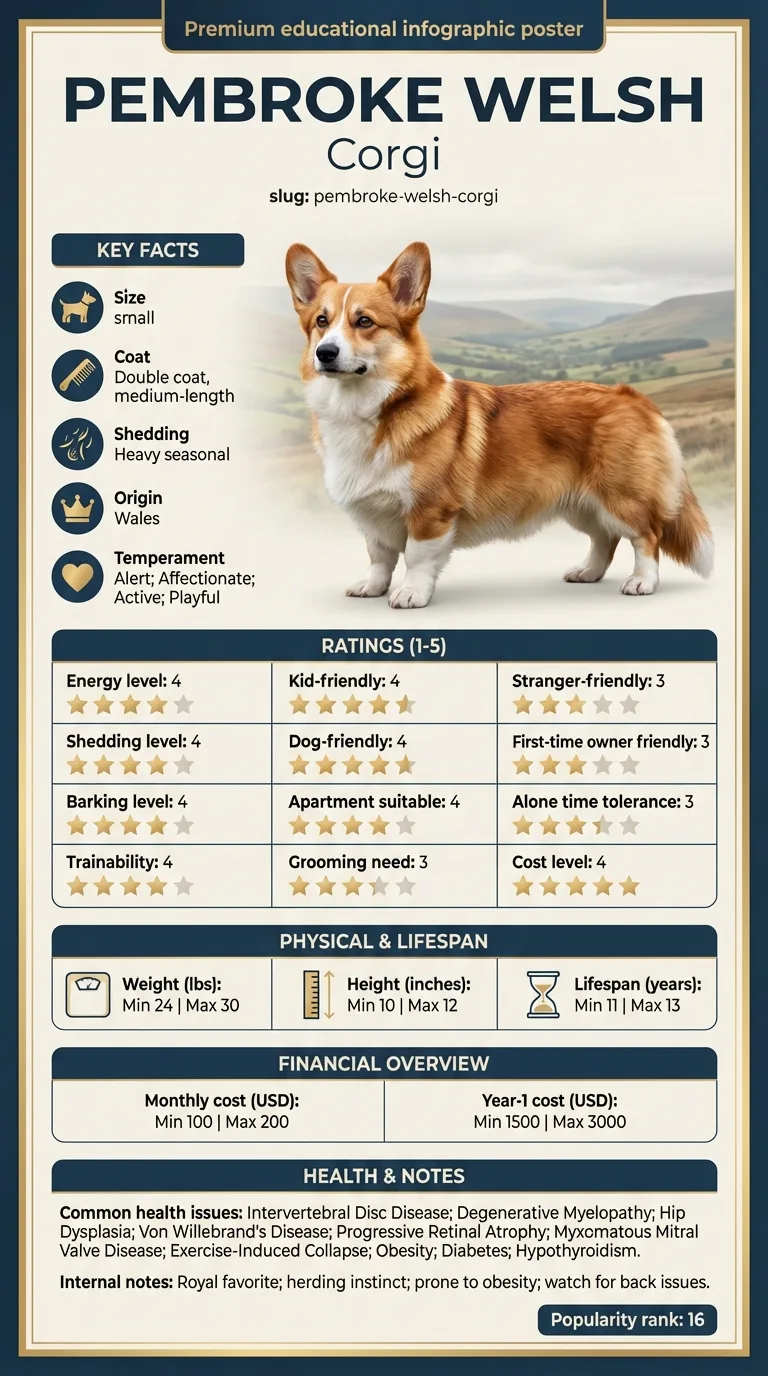
Owners of Pembroke Welsh Corgis, especially those with a family history of eye problems, often face challenges with corneal dystrophy. This issue can be particularly concerning for first-time dog owners who may not be familiar with the symptoms or treatment options.
This guide is not medical advice. If your dog shows pain, sudden behavior change, or worsening symptoms, consult a licensed veterinarian.
Some links may be affiliate links. We may earn a commission at no extra cost to you. We only suggest products we believe are helpful for dog owners.
We research and check what we publish, but we do not warrant that any figure, date, price, or statement is accurate, complete, or current, and we accept no liability for any loss, cost, injury, or other harm arising from the use of this site. Use it as one reference among several. You remain responsible for your own decisions and for your dog's care - confirm anything that matters with a licensed veterinarian or another qualified professional before you act on it. Full disclaimer.
Check this first
Recognizing the signs of Pembroke Welsh Corgi corneal dystrophy is crucial for your dog's health. There are specific situations where you should call your vet immediately. If you notice severe squinting, excessive tearing, or visible redness in the eyes, these may indicate a more serious issue. Additionally, if your Corgi seems to be in pain or is avoiding bright light, it's time to seek veterinary help.
On the other hand, if your dog's corneal dystrophy appears mild—such as slight cloudiness without any other symptoms—you can monitor the condition at home. Keep an eye on their behavior and appetite, and consider scheduling a vet visit for a thorough check-up. Regular check-ups can ensure that the condition isn't worsening.
Watch for these signs that require immediate action: - Severe squinting or closing of the eyes - Excessive tearing or discharge - Visible redness or swelling in the eyes - Signs of pain, like pawing at the face or avoiding light.
If your Corgi has mild cloudiness but shows no other symptoms, it's generally safe to wait. Maintain a plan to monitor their eye health and consult with your vet during routine visits. It's essential to stay proactive, as corneal dystrophy can vary in severity and impact your dog's quality of life.
If any of these apply, call your vet or an emergency clinic now. The rest of this page is for the cases that are not an emergency.
Pembroke Welsh Corgi corneal dystrophy is a common eye issue that causes cloudiness in the cornea. This can lead to discomfort and vision problems for your dog. Owners may notice symptoms like squinting, tearing, or rubbing their eyes.
Corneal dystrophy is relatively common in Pembroke Welsh Corgis, affecting a significant number of dogs in the breed. Regular check-ups can help catch this condition early.
Pembroke Welsh Corgis are susceptible to corneal dystrophy due to their genetic makeup. This breed often inherits conditions that lead to cloudiness in the cornea, affecting their vision. Understanding this genetic predisposition can help you anticipate and manage the issue.
Environmental factors such as exposure to allergens and irritants can worsen corneal dystrophy symptoms. Dry air, smoke, or dust may irritate their eyes more than in other breeds. Keeping your Corgi's environment clean and minimizing exposure to such irritants can aid in their comfort.
Talk to your vet if you notice significant cloudiness in your Corgi's eyes or if they are showing signs of pain, such as squinting or excessive tearing. A vet can provide specific treatments and advice based on your Corgi's condition.
Avoiding these common mistakes can help manage your Pembroke Welsh Corgi's corneal dystrophy effectively.
Start here: Pembroke Welsh Corgi Most Common Genetic Disorders
See all Pembroke Welsh Corgi health problems, which breeds are prone to corneal dystrophy, or the full Pembroke Welsh Corgi breed guide for temperament, exercise needs and ownership costs.
You can expect to see improvements in your Pembroke Welsh Corgi's corneal dystrophy within 2 to 6 months of consistent care and management.
Success means reduced symptoms, such as less cloudiness in your dog's eyes and improved comfort. Your Corgi should also show fewer signs of discomfort and be able to engage in normal activities.
Emily, a busy nurse in Seattle, noticed her Pembroke Welsh Corgi, Charlie, had cloudy eyes. At first, she thought it was just aging, but after a vet visit, she learned it was corneal dystrophy. Determined to help Charlie, she researched treatment options and started him on a special eye drop regimen. Emily also adjusted Charlie's diet to support his overall health. Over several months, she saw significant improvement in his eye condition, and Charlie was much more comfortable. Emily learned to keep an eye on his symptoms and adjust care as needed, which made a big difference in his quality of life.
Key takeaway: With the right treatment and attention, managing Pembroke Welsh Corgi corneal dystrophy can lead to a happier, healthier dog.
Pembroke Welsh Corgi corneal dystrophy is a genetic condition that causes cloudiness in the cornea. It can affect your dog's vision, leading to discomfort and potential vision loss over time. Early detection and treatment are crucial for managing this issue.
Consult your veterinarian for an accurate diagnosis and treatment plan. Depending on severity, treatment may include medications or surgery to improve vision and comfort. Regularly monitoring your dog's eye health is essential.
While training won't cure corneal dystrophy, positive reinforcement can help your Corgi adjust to vision changes. Use commands and cues to guide them, especially in new environments. Consistency is key.
Long-term, corneal dystrophy can lead to progressive vision impairment. Some dogs may adapt well, but others might require more help as their vision changes. Regular vet visits are important to keep track of their condition.
As it's primarily genetic, prevention is challenging. However, responsible breeding practices can help reduce the incidence of this condition in future generations. Always choose a reputable breeder who tests for genetic issues.
Symptoms of corneal dystrophy often include cloudiness in the eyes, excessive tearing, and sensitivity to light. You might also notice your Corgi squinting or having difficulty seeing in bright conditions.
While corneal dystrophy is generally not a direct cause of blindness, it can affect your Corgi's vision. Regular check-ups with your vet are crucial to monitor the condition and manage any complications that may arise.
A veterinarian can diagnose corneal dystrophy through a thorough eye examination. They may use special dyes and tools to observe the cornea and identify any cloudiness or other abnormalities.
If your older Corgi shows signs of corneal dystrophy, it's important to consult your vet as soon as possible. They can recommend treatment options and help you manage your dog's comfort and vision.
Caring for a Pembroke Welsh Corgi with corneal dystrophy includes keeping their environment safe and well-lit. You should also monitor their eyes for any changes and follow your vet's advice on treatment and management.
Consult your vet for regular check-ups and treatment options. Use commands to guide your dog and create a safe environment. Keep their eyes clean and monitor changes.
Schedule a veterinary appointment as soon as possible to assess their condition. Early intervention can significantly improve outcomes.
Treatment costs can vary but typically range from $500 to $2,000 depending on the severity and type of treatment required. Always discuss costs with your vet beforehand.
Yes, use positive reinforcement and verbal cues to assist them. Training can help compensate for their vision impairment, making your dog more confident.
Provide a stable environment and plenty of affection. Keeping a routine can help your Corgi feel more secure despite their vision loss.
A one-page prep sheet for this condition: the signs, the questions to ask, what to get priced. Unlocks here.
You get: Vet visit prep sheet
No spam. One-click unsubscribe. See our privacy policy.
Preview page 1 before you decide.