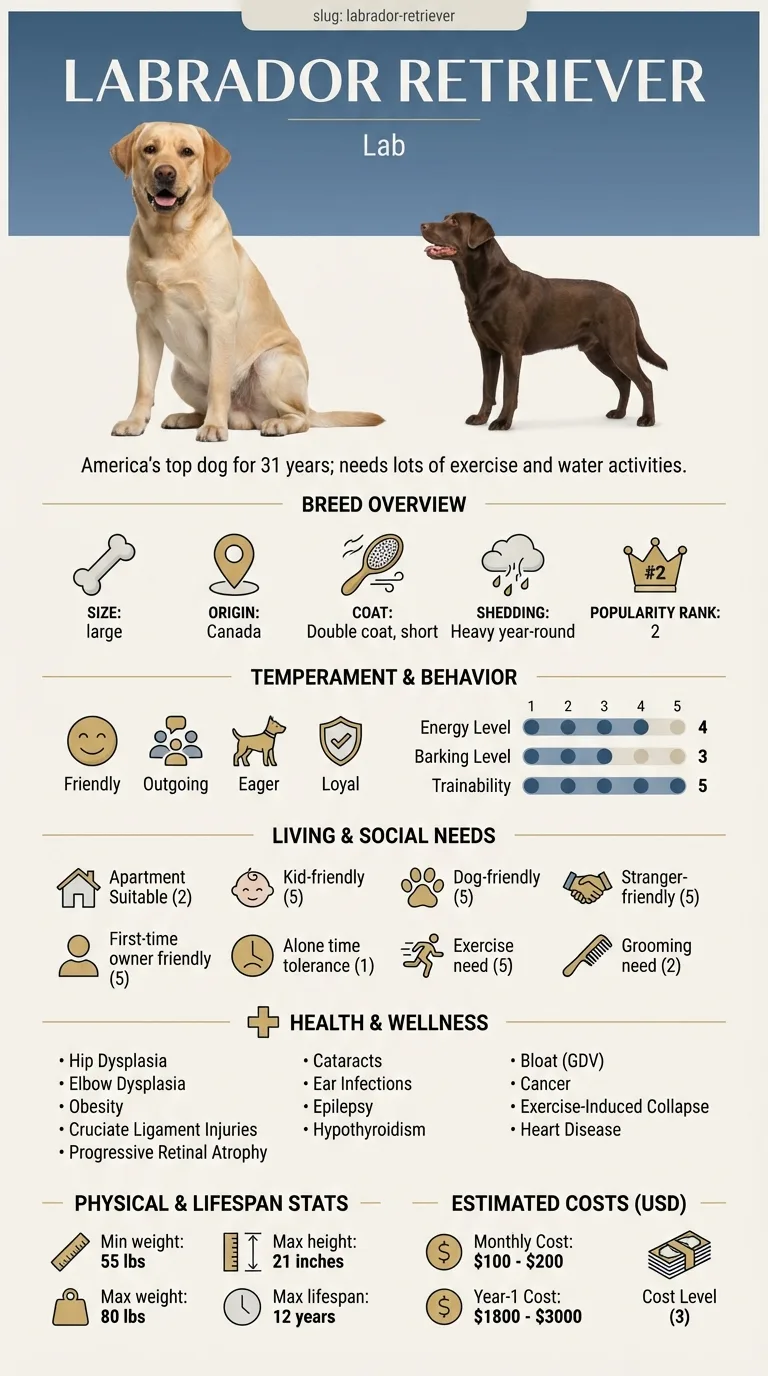
Labrador Retriever Most Common Genetic Disorders: What Owners Should Know
Quick answer
What are quick tips for Labrador Retriever genetic disorders?
Keep a simple record of changes in movement, energy, vision, appetite, and activity tolerance, then share it with your veterinarian. Do not try to diagnose a genetic condition at home.
A Labrador Retriever's genetic background is one part of their health picture; it does not predict every dog's future.
This guide is for Labrador Retriever owners who are planning for a puppy, caring for an adult Lab, or trying to understand a new change in mobility, stamina, vision, or general wellbeing.
Important reminder
This guide is not medical advice. If your dog shows pain, sudden behavior change, or worsening symptoms, consult a licensed veterinarian.
Some links may be affiliate links. We may earn a commission at no extra cost to you. We only suggest products we believe are helpful for dog owners.
We research and check what we publish, but we do not warrant that any figure, date, price, or statement is accurate, complete, or current, and we accept no liability for any loss, cost, injury, or other harm arising from the use of this site. Use it as one reference among several. You remain responsible for your own decisions and for your dog's care - confirm anything that matters with a licensed veterinarian or another qualified professional before you act on it. Full disclaimer.
What this problem looks like
When owners ask about Labrador Retriever most common genetic disorders, they are usually looking for a sensible way to plan, observe, and respond rather than a prediction. The breed data for Labrador Retrievers includes joint, eye, neurologic, endocrine, and heart-related concerns. An individual dog's signs, examination, and history are what determine the next step.
Common triggers
A new limp, stiffness, or reluctance to use stairs or play
A noticeable drop in exercise tolerance or an episode of weakness or collapse
Changes in vision or confidence in unfamiliar spaces
A seizure or other sudden change in awareness or coordination
Questions about a puppy's family health history or an adult dog's ongoing care
Labrador Retrievers can be affected by the health issues listed for the breed, but this page does not estimate prevalence. Not every Labrador Retriever will develop a genetic or inherited condition.
Why this happens
Breed factors
Some conditions can have inherited or genetic influences, which is why breed and family health history may be relevant to a veterinarian. Genetic influence is not the same as a diagnosis, and it does not explain every health change in a Labrador Retriever.
Environment factors
Daily factors such as age, activity, body condition, injury, and home environment can also shape how a health problem appears or how comfortable a dog feels. These factors should be considered alongside breed background.
What you can do at home (once it is not an emergency)
When to talk to your vet
Talk to a veterinarian about persistent or recurring changes in mobility, endurance, vision, appetite, weight, coat, or behavior. Seek urgent veterinary care for collapse, seizures, breathing difficulty, severe pain, sudden weakness, or abrupt vision changes.
At home, alongside your vet's plan
Keep a dated note of symptoms, including what your Lab was doing when they occurred and how long they lasted.
Use sensible, regular exercise that matches your dog's current comfort and fitness; pause activity if you see pain, weakness, or an unusual change.
Maintain routine preventive and veterinary care, and bring your notes to appointments.
Ask before starting or stopping supplements, medications, or major diet changes for a health concern.
Use calm, reward-based handling so your dog is more comfortable with routine checks and veterinary visits.
Labrador Retriever Most Common Genetic Disorders: Mistakes to Avoid
Owners cannot prevent every inherited risk, but they can avoid common delays and assumptions that make it harder to evaluate a Labrador Retriever's health.
Treating a breed list as a diagnosis: Hip dysplasia, elbow dysplasia, progressive retinal atrophy, cataracts, exercise-induced collapse, epilepsy, hypothyroidism, and heart disease are all concerns listed for Labrador Retrievers, but a list alone cannot tell you what is affecting an individual dog.
Waiting on persistent changes: Ongoing lameness, reluctance to exercise, collapse, seizures, vision changes, or a sudden change in energy deserve a veterinary conversation rather than an online guess.
Pushing through discomfort: Do not assume a normally energetic Lab should keep exercising through pain, stiffness, weakness, or unusual fatigue. Pause the activity and ask a veterinarian how to proceed.
Making treatment changes without guidance: Diet changes, supplements, exercise restrictions, and medication can all matter, but the appropriate plan depends on the dog and the condition being evaluated.
Focusing only on genetics: Weight, activity, injury, age, and everyday environment can also affect health and mobility. A complete history gives your veterinarian better context.
Skipping routine care: Regular examinations give you a baseline and an opportunity to raise questions before a change becomes harder to assess.
The right timeline depends on what your veterinarian finds. Some questions can be clarified quickly, while others may need monitoring or follow-up; avoid expecting an online guide to provide a diagnosis or a fixed schedule.
Success means your Labrador Retriever receives appropriate veterinary attention, you have a clear plan for daily care, and changes in comfort or function are addressed early.
When a Labrador Retriever Needs Prompt Veterinary Care
Some changes should not wait for a routine appointment. Seek urgent veterinary advice if your Labrador Retriever collapses, has a seizure, has trouble breathing, appears to be in significant pain, cannot use a limb normally, or develops sudden weakness or disorientation. Sudden vision changes also warrant prompt assessment.
For less urgent but persistent concerns, make an appointment if you notice recurring stiffness, limping, reluctance to play or climb, changes in endurance, repeated ear problems, weight or coat changes, or gradual changes in sight. These signs can have many causes, so a veterinarian should examine your dog rather than relying on a breed-related assumption.
Bring notes about when the change began, what activities seem to trigger it, any recent injuries, and your dog's food, medications, and supplements. That record can help the veterinary team decide what evaluation is appropriate.
Labrador Retriever Most Common Genetic Disorders: What Owners Should Know - When a Labrador Retriever Needs Prompt Veterinary Care
Using Observation and Veterinary Care to Make a Plan
After noticing that her adult Labrador Retriever was slower to rise after a long walk, Maya did not assume it was a breed-related disorder. She reduced strenuous activity for the day, wrote down when the stiffness appeared, and scheduled a veterinary appointment. The examination and history gave her a better basis for the next steps than online speculation.
Maya continued to track her dog's comfort and followed the veterinary plan for activity and follow-up. The main benefit was clarity: she could make day-to-day decisions based on professional advice and her dog's actual response.
Key takeaway: Breed information can help you ask better questions, but new or persistent symptoms need individualized veterinary assessment.
Frequently asked questions
What genetic disorders are discussed for Labrador Retrievers?
The Labrador Retriever health concerns listed in this site's breed data include hip dysplasia, elbow dysplasia, progressive retinal atrophy, cataracts, exercise-induced collapse, epilepsy, hypothyroidism, and heart disease. Some health conditions can have a genetic component, but no list can diagnose an individual dog or predict that a Lab will develop a condition.
How can I stop Labrador Retriever most common genetic disorders?
You cannot reliably stop every Labrador Retriever genetic disorder. The practical step is to use routine veterinary care, share family and health history when available, and seek advice promptly if you notice a change in movement, stamina, vision, or behavior.
When should I talk to a vet about my Labrador Retriever?
Contact a veterinarian if you notice persistent limping, stiffness, reluctance to exercise, unusual fatigue, collapse, seizures, or vision changes. Seek urgent care for collapse, a seizure, breathing difficulty, severe pain, or sudden weakness.
Will every Labrador Retriever develop a genetic disorder?
No. A breed can have health concerns associated with it without every dog developing them. Your Lab's individual health depends on many factors, and a veterinarian is the right person to interpret symptoms and history.
Can Labrador Retriever genetic disorders training help?
Training does not treat a medical condition, but it can support safe routines. A trainer can help with calm handling, cooperative care practice, and low-impact activity habits after your veterinarian has advised what is appropriate for your dog.
What should I ask about a Labrador Retriever puppy's health history?
Before bringing home a puppy, ask for clear health-history information and discuss any questions with a veterinarian. Avoid treating a single test, claim, or family detail as a guarantee; health decisions are best made with professional guidance.
What are quick tips for Labrador Retriever genetic disorders?
Keep a simple record of changes in movement, energy, vision, appetite, and activity tolerance, then share it with your veterinarian. Do not try to diagnose a genetic condition at home.
Health
What should I do if my Lab struggles during exercise?
Stop the activity and contact a veterinarian for guidance if your Lab seems painful, weak, unusually tired, or reluctant to continue. Seek urgent care if collapse or other severe signs occur.
Health
How can I plan for my Labrador Retriever's health?
Ask your veterinarian whether any screening, monitoring, activity changes, or referrals make sense for your individual dog. Recommendations depend on age, history, and examination findings.
Labrador Retriever rescue guide – Find practical adoption and health-history questions to consider when welcoming a rescued Lab.
Labrador Retriever vs. Poodle comparison – Compare the Labrador Retriever with a Poodle when considering size, care routines, and an individual dog's needs.
Labrador Retriever vs. Newfoundland comparison – Explore how Labrador Retrievers and Newfoundlands differ in size and day-to-day care considerations.
Bring the right questions to the vet
A one-page prep sheet for this condition: the signs, the questions to ask, what to get priced. Unlocks here.
You get: Vet visit prep sheet
No spam. One-click unsubscribe. See our privacy policy.