Behavior
What are Labradoodle allergies quick tips?
To manage Labradoodle allergies, keep their environment clean and bathe them regularly with hypoallergenic shampoo. Regular vet check-ups can help monitor their condition.
Labradoodle allergies can be a frustrating issue for many dog owners. These allergies often lead to discomfort and health issues for your furry friend.
Typical owners who face this issue may include families with children or first-time dog owners who may not have experience dealing with allergies. Busy professionals who love their Labradoodle but struggle to manage their allergies also often seek help.
This guide is not medical advice. If your dog shows pain, sudden behavior change, or worsening symptoms, consult a licensed veterinarian.
Some links may be affiliate links. We may earn a commission at no extra cost to you. We only suggest products we believe are helpful for dog owners.
Labradoodle allergies can manifest as skin irritations, itching, and chronic ear infections. These issues can disrupt daily life for both the dog and owner. Common triggers include certain foods, pollen, dust mites, and even cleaning products.
Allergies are fairly common in Labradoodles, often due to their genetic predisposition and exposure to various allergens. Many Labradoodles experience some form of allergy during their lives.
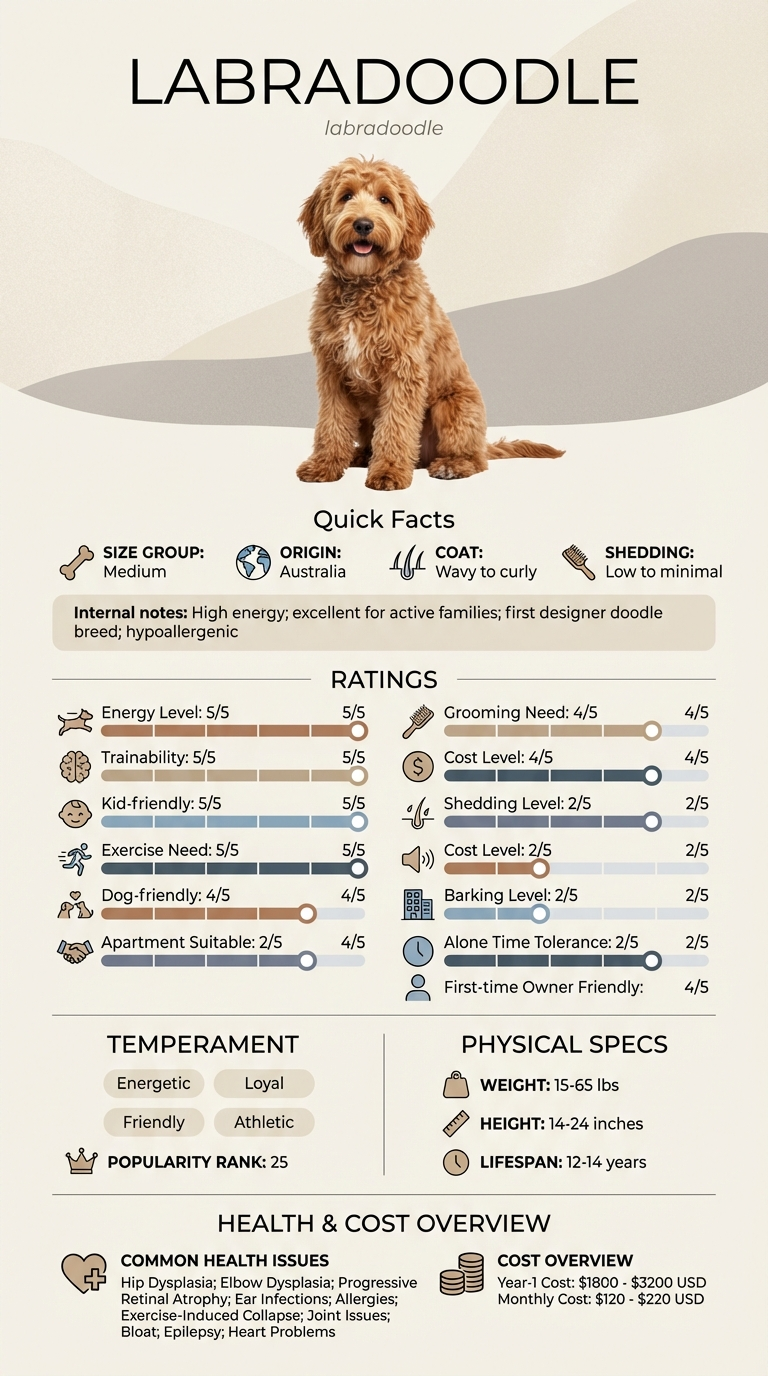
Labradoodles can inherit allergies from their Poodle or Labrador Retriever lineage. Their wavy to curly coats can trap allergens, leading to skin irritations. Additionally, their immune systems may react strongly to common environmental triggers.
Various environmental factors can cause Labradoodle allergies. Pollen, dust mites, mold, and certain foods can all trigger allergic reactions. Frequent exposure to these allergens, especially in urban areas, can worsen symptoms.
If your Labradoodle shows signs of anxiety or behavioral issues due to their allergies, consider consulting a trainer. They can help develop coping strategies and improve your dog's comfort at home.
If at-home strategies don’t alleviate your Labradoodle's symptoms, or if they show severe reactions like excessive scratching or swelling, talk to your vet. They can recommend allergy testing and treatment options to help manage their condition.
Expect to see improvements within 4 to 6 weeks of consistent management and training.
Success means fewer allergy symptoms, a more comfortable Labradoodle, and a happier home environment.
Avoiding these common mistakes can help manage Labradoodle allergies more effectively.
Recognizing when Labradoodle allergies are an emergency is crucial for your dog's health. If your Labradoodle shows severe symptoms, it’s time to call your vet. Red flags include difficulty breathing, excessive swelling, or a sudden, severe skin reaction. These signs indicate an allergic reaction that could be life-threatening.
In less severe cases, you might notice sneezing, itching, or mild skin irritation. These symptoms can often be managed at home with monitoring and a treatment plan. If your dog is still eating, drinking, and behaving normally, you can likely wait to see if the symptoms improve.
However, if the mild symptoms worsen or persist for more than a few days, consult your vet. They can help determine the next steps, which might include allergy testing or medication adjustments. Keeping a close eye on your Labradoodle's condition is essential, as allergies can sometimes lead to secondary infections or more serious health issues if left untreated.

When Sarah adopted her Labradoodle, Max, she quickly noticed he was scratching excessively and had red, inflamed skin. After consulting with her vet, they determined Max had allergies, likely from both environmental factors and certain foods. Sarah followed a strict elimination diet for Max's meals and started a routine of regular baths with hypoallergenic shampoo. She also cleaned her home more frequently to reduce allergens. After a few months, Max's symptoms improved significantly, and Sarah felt relieved to see him happier and more comfortable.
Key takeaway: Managing Labradoodle allergies takes time and consistency, but with the right approach, you can create a better quality of life for your dog.
Labradoodles can develop allergies due to various factors, including food, pollen, dust mites, and mold. Their genetic background can make them more susceptible to certain allergens. If you notice symptoms like itching or skin irritations, consult your vet for proper diagnosis and treatment.
To manage Labradoodle allergies, start by identifying allergens through an elimination diet or allergy testing. Once identified, avoid those triggers and consider hypoallergenic dog food. Regular grooming and cleaning your home can also help reduce allergens.
Common symptoms of allergies in Labradoodles include excessive itching, red or inflamed skin, watery eyes, and ear infections. You may also notice digestive issues like vomiting or diarrhea. If these symptoms persist, it's important to see a veterinarian.
While training won't cure allergies, it can help your Labradoodle cope better with the discomfort. Positive reinforcement can be useful for redirecting their focus during allergy flare-ups. Consult a trainer experienced with allergy-related behavior issues.
Treatments for Labradoodle allergies may include antihistamines, corticosteroids, or allergy shots prescribed by your vet. In some cases, topical treatments can help soothe irritated skin. Always consult your vet before starting any treatment.
Common signs of Labradoodle allergies include excessive scratching, red or inflamed skin, and ear infections. You might also notice watery eyes or sneezing. If these symptoms persist, consult your vet for proper diagnosis and treatment.
Yes, Labradoodles can develop allergies at any age, including when they are older. Changes in their immune system or exposure to new allergens can trigger allergic reactions. Regular vet check-ups are essential to monitor their health.
You can help manage Labradoodle allergies by keeping their environment clean and limiting exposure to allergens. Regular grooming and bathing can also reduce allergens on their skin and coat. Always consult your vet for the best home care strategies.
Yes, a hypoallergenic diet can be beneficial for Labradoodles suffering from allergies. Look for dog foods specifically formulated to avoid common allergens. Always transition to new foods gradually and consult your vet for personalized recommendations.
If your Labradoodle shows persistent allergy symptoms or if home remedies don’t help, it’s time to see the vet. Signs like severe itching, hair loss, or recurrent ear infections need professional evaluation. Early intervention can lead to better management of their allergies.
To manage Labradoodle allergies, keep their environment clean and bathe them regularly with hypoallergenic shampoo. Regular vet check-ups can help monitor their condition.
Diet can significantly impact Labradoodle allergies. Providing a balanced, hypoallergenic diet may reduce symptoms and improve skin health.
Yes, Labradoodles, like many other breeds, can be more prone to allergies due to their genetics. Regular vet visits can help identify and manage these issues.
Absolutely. Dust, pollen, and molds can trigger or worsen allergies in Labradoodles. Minimizing exposure to these allergens is key to managing their symptoms.