DogBreedCompass
← Back to breed profile

Understanding Jack Russell Terrier Progressive Retinal Atrophy (PRA-RCD3)

Jack Russell Terrier progressive retinal atrophy (PRA-RCD3) is a serious condition that leads to vision loss over time.

Understanding Jack Russell Terrier Progressive Retinal Atrophy (PRA-RCD3) infographic

Typically, owners of Jack Russell Terriers become concerned when their lively dogs start showing signs of vision problems. This can be particularly challenging for those who are first-time dog owners or have busy lifestyles.

Important reminder

This guide is not medical advice. If your dog shows pain, sudden behavior change, or worsening symptoms, consult a licensed veterinarian.

Some links may be affiliate links. We may earn a commission at no extra cost to you. We only suggest products we believe are helpful for dog owners.

What this problem looks like

Jack Russell Terrier progressive retinal atrophy (pra-rcd3) is a genetic condition that leads to gradual vision loss. You may notice your JRT bumping into furniture, having trouble navigating stairs, or being hesitant in unfamiliar environments. This condition typically manifests in middle age, affecting their quality of life and making daily activities more challenging.

Common triggers

  • Genetics and hereditary factors
  • Age-related changes
  • Lack of early detection and care

This condition is relatively common in Jack Russell Terriers, particularly as they age. Studies suggest that up to 20% of JRTs may be affected by some form of progressive retinal atrophy. Awareness and early intervention can help manage the impact on their lives.

Why this happens

Breed factors

Jack Russell Terriers are prone to genetic conditions like Progressive Retinal Atrophy (PRA-rcd3). This condition is inherited and affects their vision as they age. It's essential to understand that this is not due to poor care but rather a breed-specific health issue.

Environment factors

While genetics play a significant role, environmental factors can also influence the progression of PRA-rcd3. Factors like poor lighting and lack of stimulation can exacerbate the effects of vision loss. A supportive home environment is crucial for managing this condition.

What you can try

At-home strategies

  • Create a safe space for your Jack Russell Terrier by removing obstacles and ensuring good lighting. This helps them navigate more comfortably.
  • Engage them with scent-based games to stimulate their other senses. Use treats or toys to encourage them to find things around the house.
  • Maintain a consistent routine to help your dog feel secure and reduce anxiety. This includes regular feeding times and walks.

When to consider a trainer

If your dog shows signs of anxiety or difficulty adjusting to their vision loss, consider consulting a professional dog trainer. They can provide tailored strategies to help your Jack Russell Terrier manage their environment better.

When to talk to your vet

If you notice rapid changes in your dog's vision or behavior, it's vital to consult your veterinarian. They can offer advice on managing PRA-rcd3 and discuss possible treatments or supportive care options.

Realistic expectations

You can expect to see gradual changes in your Jack Russell Terrier's vision over several months to a few years. Early detection and consistent care can help manage the condition effectively.

Success involves maintaining a good quality of life for your dog, adapting their environment to minimize risks, and ensuring they remain active and engaged despite vision challenges.

Mistakes that make this worse

Here are common mistakes that can worsen Jack Russell Terrier progressive retinal atrophy (pra-rcd3) and safer alternatives to help your dog manage this condition.

  • Ignoring symptoms: Many owners overlook early signs of vision loss. Instead, keep an eye out for changes in behavior, like bumping into objects or hesitance in new environments.
  • Lack of environmental adjustments: Not modifying your home can lead to more accidents. Use gates or barriers to block off areas that might be hazardous for a dog with limited vision.
  • Over-restriction: Keeping your dog from exploring out of fear can lead to anxiety. Gradually introduce new experiences while ensuring a safe space for them to navigate.
  • Neglecting mental stimulation: Assuming they don’t need playtime can lead to boredom. Engage your dog with scent games or puzzle toys that challenge their mind without relying solely on vision.
  • Inconsistent training: Using different commands or signals can confuse your dog. Stick to a consistent set of cues to help them understand and adapt better to their environment.
  • Not seeking veterinary advice: Some owners might delay consulting a vet for behavioral changes. Always consult your vet for tailored advice and to explore potential treatments.
  • Ignoring support tools: Many owners think their dog can manage on their own. Consider using harnesses or GPS trackers that can help keep your dog safe while allowing them some independence.

When Jack Russell Terrier Progressive Retinal Atrophy (PRA-rcd3) is an Emergency

It's important to recognize when Jack Russell Terrier progressive retinal atrophy (PRA-rcd3) becomes an emergency. If your dog shows sudden signs of blindness, such as bumping into objects or difficulty navigating familiar spaces, it’s time to call your vet immediately. Other red flags include persistent watering of the eyes, unusual eye movements, or if your dog appears to be in pain. These symptoms could indicate a more serious condition that requires urgent care.

On the other hand, if your dog is showing mild signs of vision impairment, such as hesitance in low light or slight disorientation, you might be able to monitor the situation. Create a safe environment by removing obstacles and keeping furniture in place. Regular vet check-ups can help track any progression of the condition. Keeping a close eye on any changes in behavior or vision will allow you to act quickly if symptoms worsen.

Understanding Jack Russell Terrier Progressive Retinal Atrophy (PRA-RCD3) - When Jack Russell Terrier Progressive Retinal Atrophy (PRA-rcd3) is an Emergency

Navigating PRA with Max the Jack Russell

Sarah, a devoted owner in San Diego, noticed her Jack Russell Terrier, Max, struggling to navigate familiar spaces. After a vet visit confirmed he had progressive retinal atrophy (PRA-rcd3), she felt overwhelmed. However, Sarah adapted Max's environment by removing obstacles and using sound cues to help him navigate. She also enrolled in a training program focused on dogs with vision impairments. Over time, Max learned to adjust, and Sarah found new ways to engage him, like scent games and interactive toys. Their bond grew stronger through this journey.

Key takeaway: With patience and creativity, you can help your Jack Russell Terrier adapt to progressive retinal atrophy and maintain a fulfilling life.

Frequently asked questions

Why does my Jack Russell Terrier have progressive retinal atrophy (pra-rcd3)?

Jack Russell Terrier progressive retinal atrophy (pra-rcd3) is primarily a genetic condition. It leads to slowly progressive vision loss due to degeneration of the retina. If your JRT is diagnosed, it's crucial to consult with a vet for guidance and management options.

How can I help my Jack Russell Terrier with progressive retinal atrophy (pra-rcd3)?

While there is no cure for Jack Russell Terrier progressive retinal atrophy (pra-rcd3), you can help your dog adapt. Keep their environment consistent to avoid confusion, and use commands or cues to guide them safely. Regular vet check-ups are also essential to monitor their condition.

What are the signs of progressive retinal atrophy (pra-rcd3) in Jack Russell Terriers?

You might notice signs like difficulty navigating in low light, bumping into objects, or hesitance in unfamiliar settings. Your dog may also show changes in behavior, such as increased anxiety or disorientation. If you see these signs, consult your vet for a thorough evaluation.

Can progressive retinal atrophy (pra-rcd3) be treated in Jack Russell Terriers?

Currently, there is no treatment that can reverse Jack Russell Terrier progressive retinal atrophy (pra-rcd3). Management focuses on helping your dog adjust to vision loss and ensuring their safety. Your vet can recommend support strategies tailored to your dog's needs.

Is progressive retinal atrophy (pra-rcd3) common in Jack Russell Terriers?

Yes, progressive retinal atrophy (pra-rcd3) is one of the common health issues seen in Jack Russell Terriers. Genetic predisposition plays a significant role, so it's important to discuss this risk with breeders and ensure proper health screenings.

What are the early signs of progressive retinal atrophy (PRA-rcd3) in Jack Russell Terriers?

Early signs of Jack Russell Terrier progressive retinal atrophy (PRA-rcd3) can include difficulty seeing in low light, hesitation when navigating familiar areas, and bumping into objects. You might also notice changes in their behavior, such as increased clinginess or anxiety.

Can progressive retinal atrophy (PRA-rcd3) in Jack Russell Terriers be treated?

Currently, there is no cure for Jack Russell Terrier progressive retinal atrophy (PRA-rcd3). However, managing the environment and providing guidance can help your dog adjust to their vision loss and maintain a good quality of life.

Is progressive retinal atrophy (PRA-rcd3) hereditary in Jack Russell Terriers?

Yes, progressive retinal atrophy (PRA-rcd3) is a genetic condition in Jack Russell Terriers. If you suspect your dog may have it, consult with a vet to discuss genetic testing options and potential breeding implications.

How can I help my aging Jack Russell Terrier cope with progressive retinal atrophy (PRA-rcd3)?

Helping an aging Jack Russell Terrier with progressive retinal atrophy (PRA-rcd3) involves creating a safe home environment. Use consistent pathways, minimize furniture changes, and consider using tactile markers for guidance. Regular vet check-ups are essential to monitor their condition and overall health.

When should I take my Jack Russell Terrier to the vet for signs of progressive retinal atrophy (PRA-rcd3)?

If you notice signs of vision loss or behavioral changes in your Jack Russell Terrier, you should take them to the vet promptly. Early diagnosis can help you manage their condition more effectively and improve their quality of life.

Quick answers

View more answers
Behavior

What are quick tips for managing Jack Russell Terrier progressive retinal atrophy (pra-rcd3)?

Ensure your home is safe by removing hazards and maintaining a consistent layout. Use verbal cues to guide your dog and provide them with plenty of mental stimulation to keep them engaged.

Health

How do I know if my Jack Russell Terrier is losing vision?

Watch for signs like bumping into furniture, reluctance to go outside in the dark, or ignoring visual cues. These can indicate vision loss, and it's best to consult your vet.

Costs

What should I expect in terms of costs for managing pra-rcd3 in my Jack Russell Terrier?

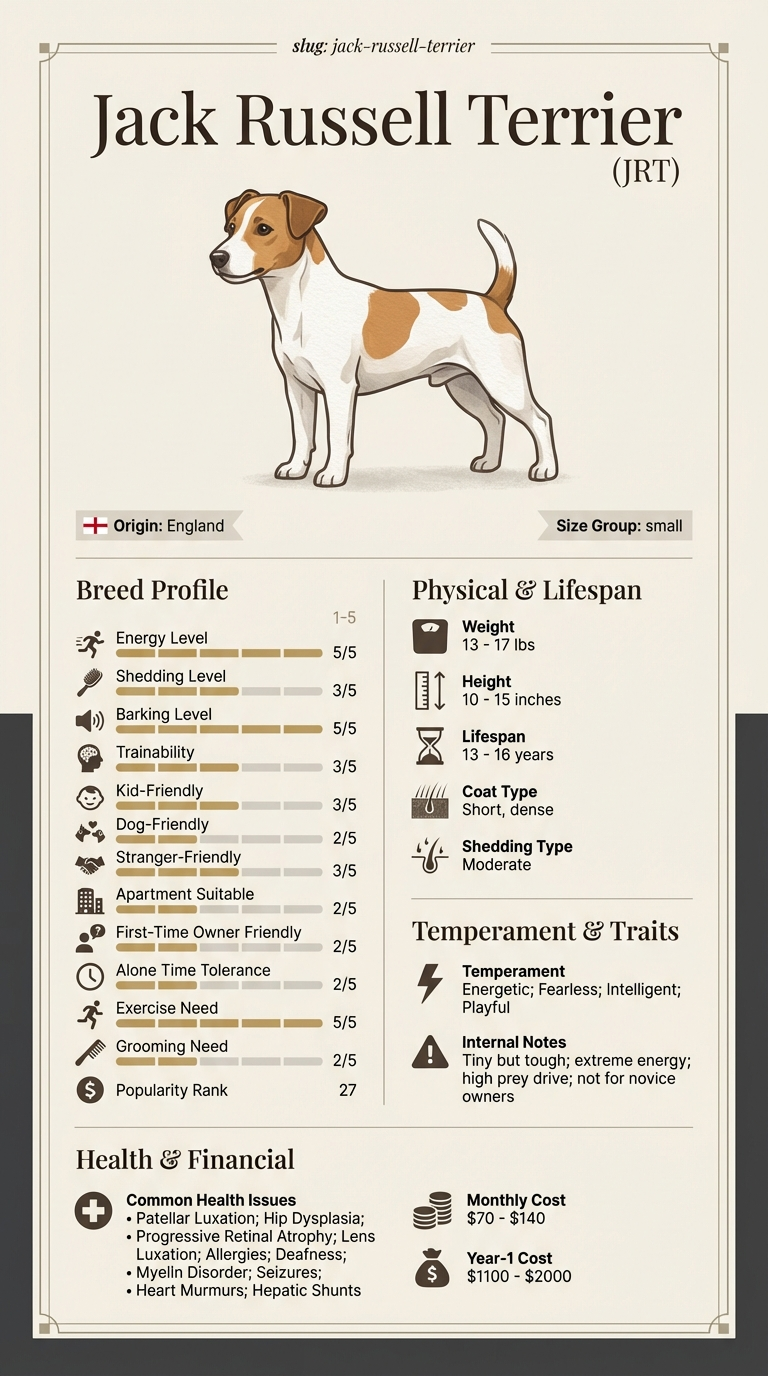
You can expect to spend between $70 to $140 monthly on routine care, including vet visits and any necessary adjustments for your dog's comfort.

Training

Are there specific training tips for Jack Russell Terriers with pra-rcd3?

Focus on positive reinforcement training and use consistent commands. Training in familiar environments can help your dog learn to navigate safely.

Related DogBreedCompass guides

Related guides


