Behavior
What are quick tips for managing Havanese PRA?
Keep your home safe and familiar to help your Havanese adjust to PRA. Regular vet visits are crucial for monitoring their condition.

Quick answer
What are quick tips for managing Havanese PRA?
Keep your home safe and familiar to help your Havanese adjust to PRA. Regular vet visits are crucial for monitoring their condition.
Havanese progressive retinal atrophy (PRA) leads to gradual vision loss, impacting your dog's quality of life.
Owners of Havanese dogs, especially those who notice changes in their pet's behavior or vision, often find themselves struggling to adapt. First-time dog owners may feel particularly overwhelmed by this diagnosis.
This guide is not medical advice. If your dog shows pain, sudden behavior change, or worsening symptoms, consult a licensed veterinarian.
Some links may be affiliate links. We may earn a commission at no extra cost to you. We only suggest products we believe are helpful for dog owners.
We research and check what we publish, but we do not warrant that any figure, date, price, or statement is accurate, complete, or current, and we accept no liability for any loss, cost, injury, or other harm arising from the use of this site. Use it as one reference among several. You remain responsible for your own decisions and for your dog's care - confirm anything that matters with a licensed veterinarian or another qualified professional before you act on it. Full disclaimer.
Check this first
Call your vet immediately if you notice any of these red-flag signs: - Sudden changes in behavior, like confusion or disorientation. - Signs of distress, such as whining or pacing. - Difficulty navigating familiar spaces or bumping into objects frequently. - Extreme eye redness or swelling, which could indicate other issues.
These symptoms suggest that your Havanese may be experiencing severe vision loss or related complications. On the other hand, if your dog shows mild symptoms, such as gradual vision decline or slight hesitance in new environments, you can monitor the situation.
Develop a plan to observe their behavior and note any changes over time. Keep their environment safe and familiar to reduce anxiety. Regular vet check-ups are essential to track the progression of PRA and adjust your care strategy accordingly. Always err on the side of caution and consult your vet if you're unsure.
If any of these apply, call your vet or an emergency clinic now. The rest of this page is for the cases that are not an emergency.
Havanese progressive retinal atrophy (PRA) is a genetic condition leading to gradual vision loss. Dogs affected by PRA may initially show signs of night blindness and difficulty navigating in dim light. Over time, this condition can progress to complete blindness, which can be distressing for both the dog and their owner.
PRA is relatively common in Havanese dogs, with estimates suggesting that up to 20% may develop this condition at some point in their lives. Early detection through regular vet check-ups can help manage the effects of PRA.
Havanese dogs are prone to certain genetic conditions, including Progressive Retinal Atrophy (PRA). This hereditary issue causes gradual vision loss, often leading to complete blindness. Due to their small size and unique genetic makeup, Havanese may be more susceptible to this condition compared to other breeds.
Environmental factors can also influence the development of PRA. Poor lighting conditions, lack of stimulation, and inadequate socialization may exacerbate the dog's symptoms. Additionally, if the dog has not been exposed to various environments, it might struggle more with vision loss.
If you notice signs of vision loss, like bumping into objects or reluctance to navigate familiar areas, it’s essential to talk to your vet. They can provide a proper diagnosis and discuss potential treatments or management plans.
Avoid these common mistakes to help manage Havanese progressive retinal atrophy (PRA) effectively.
Start here: Havanese Most Common Genetic Disorders: What to Screen For
See all Havanese health problems, which breeds are prone to progressive retinal atrophy pra, or the full Havanese breed guide for temperament, exercise needs and ownership costs.
You can expect to see noticeable changes in your Havanese's vision over several months to a few years. Regular veterinary check-ups will help monitor the condition and adjust care as needed.
Success means being proactive about your dog's health. This includes recognizing signs of vision loss early, providing a safe environment, and adapting their training to accommodate their needs.
Marissa, a busy nurse in San Francisco, noticed her Havanese, Bella, bumping into furniture more often. Concerned, she took Bella to the vet, where they diagnosed her with progressive retinal atrophy (PRA). With guidance, Marissa created a safer home environment by rearranging furniture and using tactile markers. They started training sessions that focused on verbal commands and scent work, helping Bella adapt to her vision loss. Over time, Marissa saw Bella thrive, becoming more confident in her abilities.
Key takeaway: Adapting your dog's environment and training style can significantly improve their quality of life when dealing with progressive retinal atrophy (PRA).
Havanese progressive retinal atrophy (PRA) is a genetic condition that causes gradual vision loss in dogs. It affects the retina and leads to deteriorating eyesight over time, which can ultimately result in blindness.
Supporting a Havanese with PRA involves creating a safe and familiar environment. Keep furniture in the same place, avoid sudden changes, and use verbal cues to help guide them around the house.
Currently, there is no cure for PRA. However, regular veterinary check-ups can help manage the condition and monitor your dog's eyesight as it progresses.
To help your Havanese adapt to vision loss, maintain a consistent routine and use tactile or auditory cues. Training techniques that reinforce commands can also ease their transition as their vision deteriorates.
While specific exercises aren't required, engaging your Havanese in low-impact activities that don't require vision can be beneficial. Consider scent games or gentle play to keep them mentally stimulated.
If you notice any signs of vision loss, such as bumping into objects or reluctance to navigate, take your Havanese to the vet. Early diagnosis can help in managing their condition effectively.
Early signs of Havanese progressive retinal atrophy (PRA) include difficulty seeing in low light, bumping into objects, or hesitance to navigate unfamiliar spaces. You might also notice your dog seems more cautious or avoids stairs.
Yes, older Havanese dogs may show symptoms of progressive retinal atrophy (PRA) more gradually. Their vision loss can be subtle at first, and other age-related issues may complicate the identification of PRA.
To help your Havanese adjust to vision loss from PRA, maintain a consistent environment and layout at home. Use verbal cues and tactile signals to guide them, and consider using baby gates to prevent accidents.
If you notice signs like difficulty seeing or changes in behavior, it’s a good idea to visit your vet. Early intervention can help manage the condition and improve your dog's quality of life.
Yes, you can still train your Havanese with PRA by focusing on positive reinforcement techniques. Use voice commands and incorporate smell-based cues to help them learn and navigate their environment safely.
Keep your home safe and familiar to help your Havanese adjust to PRA. Regular vet visits are crucial for monitoring their condition.
Yes, many Havanese with PRA can enjoy fulfilling lives with proper care and adjustments at home.
Training should focus on verbal cues and familiar commands to help your Havanese navigate their environment safely.
While there's no specific diet for PRA, maintaining a healthy diet supports overall eye health. Consult your vet for personalized recommendations.
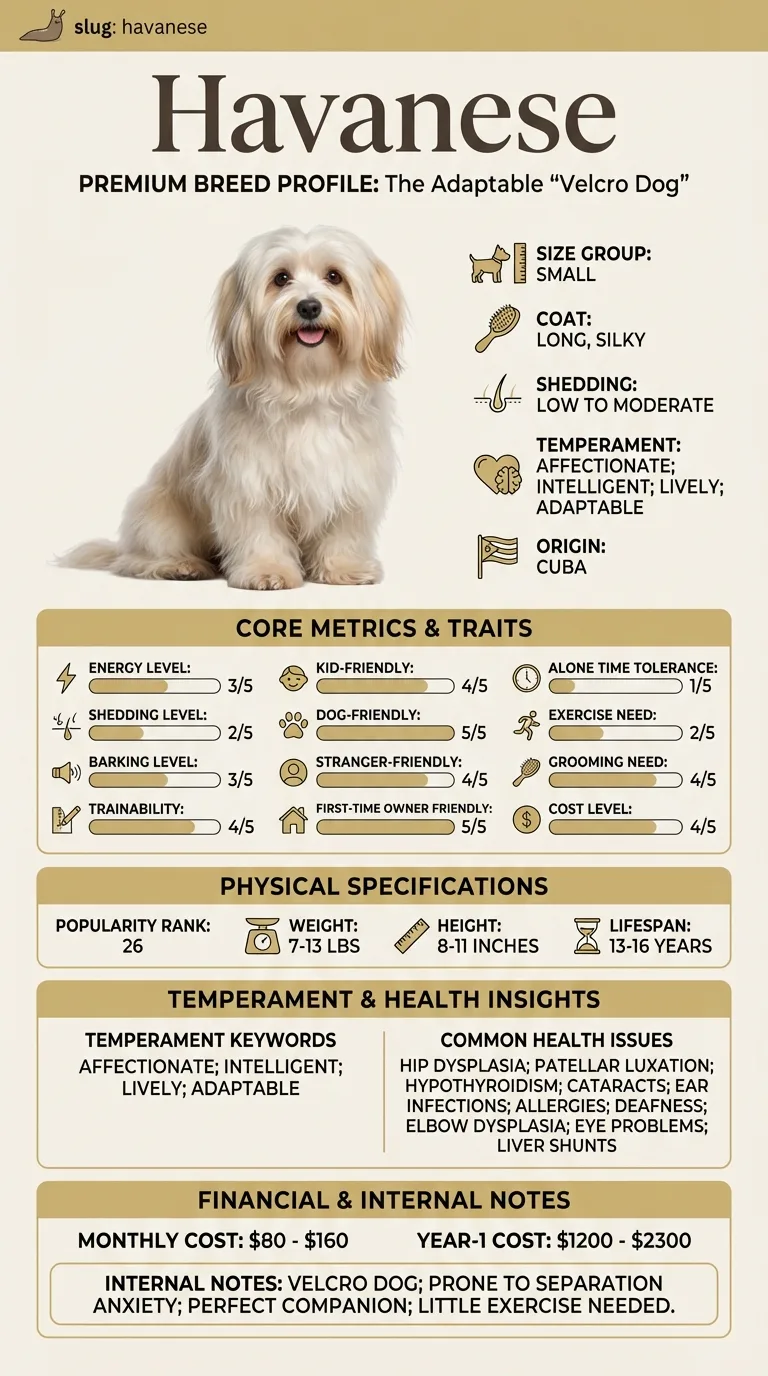
Costs will vary, but regular vet visits and potential adaptations at home could range from $80 to $160 monthly.
A one-page prep sheet for this condition: the signs, the questions to ask, what to get priced. Unlocks here.
You get: Vet visit prep sheet
No spam. One-click unsubscribe. See our privacy policy.
Preview page 1 before you decide.