Behavior
What are Havanese obesity quick tips?
To prevent Havanese obesity, feed controlled portions and avoid excessive treats. Incorporate daily walks and playtime into their routine.

Quick answer
What are Havanese obesity quick tips?
To prevent Havanese obesity, feed controlled portions and avoid excessive treats. Incorporate daily walks and playtime into their routine.
Havanese obesity is a serious concern for many dog owners, as it can lead to various health issues and reduced quality of life. Addressing this problem early is crucial for your furry friend's well-being.
Typical owners facing this issue include busy families or individuals who may not have the time to exercise their Havanese regularly. Additionally, first-time dog owners might find it challenging to recognize the signs of obesity and its impacts.
This guide is not medical advice. If your dog shows pain, sudden behavior change, or worsening symptoms, consult a licensed veterinarian.
Some links may be affiliate links. We may earn a commission at no extra cost to you. We only suggest products we believe are helpful for dog owners.
We research and check what we publish, but we do not warrant that any figure, date, price, or statement is accurate, complete, or current, and we accept no liability for any loss, cost, injury, or other harm arising from the use of this site. Use it as one reference among several. You remain responsible for your own decisions and for your dog's care - confirm anything that matters with a licensed veterinarian or another qualified professional before you act on it. Full disclaimer.
Check this first
Recognizing when Havanese obesity becomes an emergency is crucial for your dog's health. If you notice any of the following red-flag signs, it's time to call your vet immediately. These signs may include difficulty breathing, lethargy, or sudden changes in appetite. Such symptoms could indicate serious health issues, including heart disease or diabetes, which require urgent care.
On the other hand, if your Havanese is simply gaining weight without any alarming symptoms, you can monitor the situation. Look for gradual weight gain, a slightly less enthusiastic response to exercise, or minor changes in behavior. Creating a structured plan with appropriate diet adjustments and regular exercise can often help in these mild cases. Keeping track of your dog's weight and activity level can guide you in deciding whether to seek professional advice or to manage the situation at home.
If any of these apply, call your vet or an emergency clinic now. The rest of this page is for the cases that are not an emergency.
Havanese obesity is a growing concern among dog owners. Day-to-day, this problem can lead to a lethargic pet who struggles with basic activities like playing or even walking. The most common triggers include overfeeding, lack of exercise, and certain health issues that can make a dog gain weight more easily.
Obesity is a common issue for Havanese dogs, especially as they age. Many owners may not realize their pet is overweight until it becomes a health concern. Regular weigh-ins and monitoring food intake can help prevent this issue.
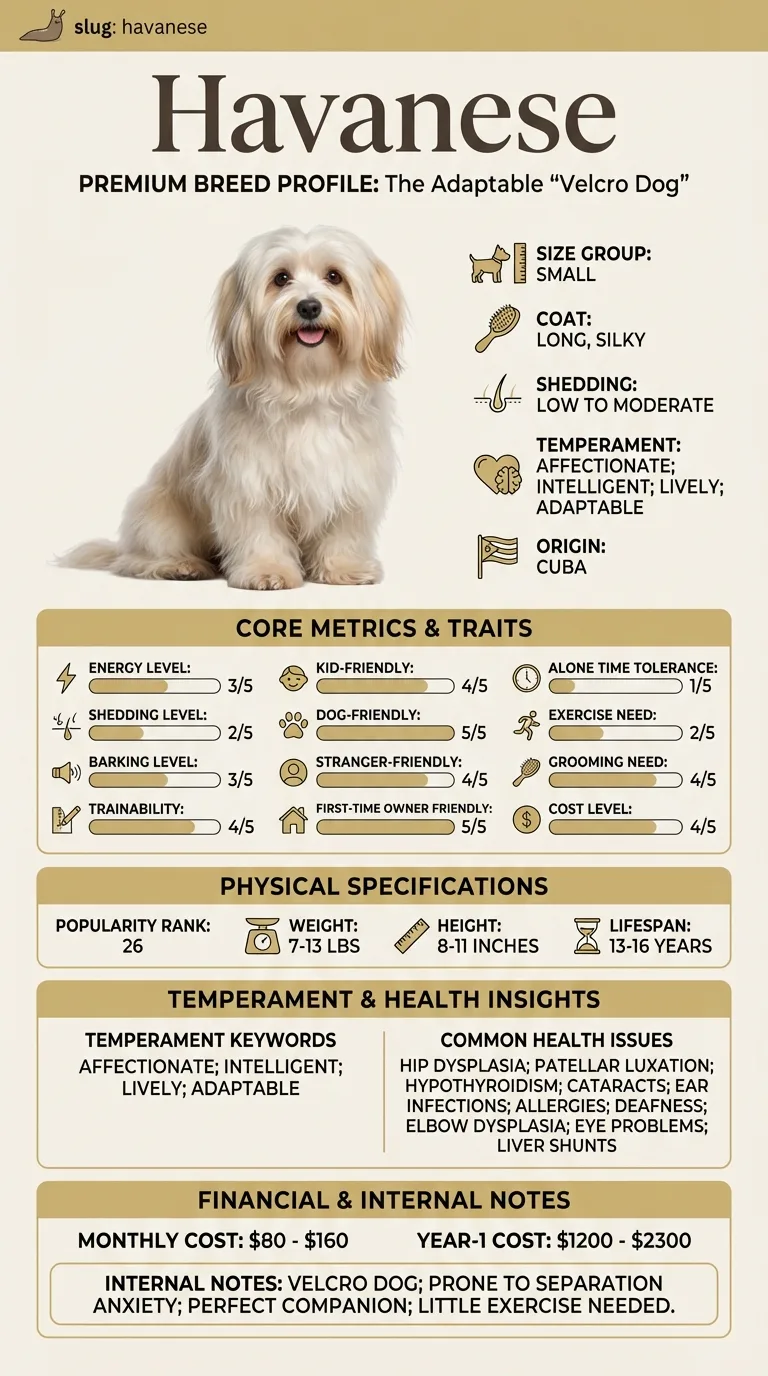
Havanese dogs are small and often have low to moderate energy levels. Their affectionate nature means they enjoy lounging with their owners, which can contribute to weight gain. Additionally, their adaptability can lead them to be less active if not encouraged to play and exercise regularly.
A sedentary lifestyle and overfeeding are common environmental factors that contribute to Havanese obesity. Many owners may not realize how much food is appropriate, especially when they see those pleading puppy eyes. Limited outdoor space or lack of structured activity can also lead to weight issues.
If you notice significant weight gain or if your Havanese has difficulty moving, it's essential to talk to your vet. They can help rule out underlying health issues and recommend a tailored diet or exercise plan.
When dealing with Havanese obesity, certain common mistakes can unintentionally worsen the situation. Here are some behaviors to avoid, along with safer alternatives.
Start here: Havanese Most Common Genetic Disorders: What to Screen For
See all Havanese health problems, which breeds are prone to obesity, or the full Havanese breed guide for temperament, exercise needs and ownership costs.
You can expect to see noticeable changes in your Havanese's weight within 4 to 6 months of implementing a proper diet and exercise routine.
Success means your Havanese reaches a healthy weight, has improved energy levels, and is more active during playtime and walks.
When Sarah adopted Bella, her adorable Havanese, she noticed Bella had been gaining weight too quickly. Confused about how to stop Havanese obesity, Sarah spoke with her vet, who recommended a balanced diet and daily exercise. With a structured meal plan and fun activities like fetch and short walks, Sarah saw Bella lose weight gradually over months. Bella became more energetic and playful, which made both of them happier.
Key takeaway: With patience and dedication, managing Havanese obesity is possible, leading to a healthier and happier dog.
Havanese obesity can stem from several factors including overfeeding, lack of exercise, and genetic predisposition. Many Havanese are 'Velcro dogs' and may not get enough physical activity if they are overly attached to their owners. Monitoring their diet and activity levels is crucial.
To stop Havanese obesity, start by adjusting their diet to include healthier, portion-controlled meals. Regular exercise, such as daily walks and playtime, is also essential. Consult a vet for a tailored plan.
Yes, training can help with Havanese obesity by incorporating exercise into their routine. Training sessions can be a fun way to engage your dog physically and mentally, which also reduces the likelihood of overeating due to boredom.
The ideal weight for a Havanese typically ranges from 7 to 13 pounds. Regular check-ups with a vet can help determine if your dog is maintaining a healthy weight.
There are diets specifically designed for small breeds like Havanese that are lower in calories but still provide essential nutrients. Consult with your vet to find a suitable diet that meets your dog's needs.
Havanese obesity often results from overeating, lack of exercise, and genetic factors. Their small size means that even a little extra weight can impact their health significantly.
You can determine if your Havanese is overweight by checking their body shape. You should be able to feel their ribs without excess fat covering them, and they should have a noticeable waist when viewed from above.
If your Havanese is already obese, consult your vet for a tailored weight loss plan. Gradually adjust their diet and increase physical activity, focusing on short, fun exercises that suit their energy level.
Yes, Havanese obesity can lead to serious health issues such as diabetes, joint problems, and heart disease. Maintaining a healthy weight is essential for their overall well-being.
Results in Havanese obesity training can typically be seen within a few weeks. Consistent diet management and regular exercise are key to achieving and maintaining a healthy weight.
To prevent Havanese obesity, feed controlled portions and avoid excessive treats. Incorporate daily walks and playtime into their routine.
Havanese typically require moderate exercise, around 30 minutes daily, including walks and play sessions.
Obesity in Havanese can lead to health issues like hip dysplasia and joint problems. Regular vet check-ups can help catch these early.
Yes, incorporating training into their daily routine not only helps with weight loss but also strengthens your bond.
A one-page prep sheet for this condition: the signs, the questions to ask, what to get priced. Unlocks here.
You get: Vet visit prep sheet
No spam. One-click unsubscribe. See our privacy policy.
Preview page 1 before you decide.