Behavior
What are some quick tips for Great Dane obesity?
Monitor food portions, ensure regular exercise, and avoid high-calorie treats. Regular vet visits will help adjust their diet as needed.

Quick answer
What are some quick tips for Great Dane obesity?
Monitor food portions, ensure regular exercise, and avoid high-calorie treats. Regular vet visits will help adjust their diet as needed.
Great Dane obesity is a serious issue that can lead to health problems. Managing your dog's weight is crucial for their overall well-being.
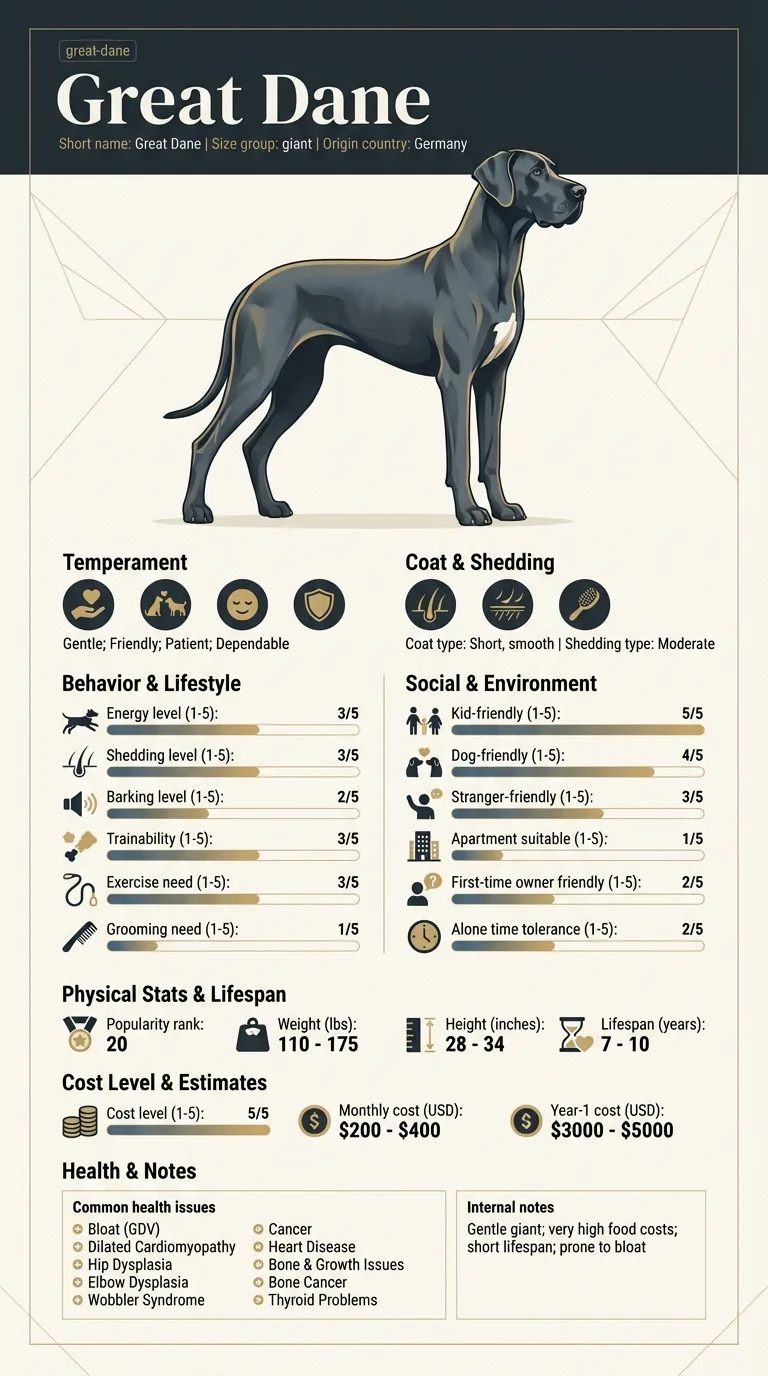
Owners of Great Danes, especially first-time dog owners or those with busy lifestyles, often struggle with obesity in their pets. High food costs and limited exercise opportunities can lead to weight management challenges.
This guide is not medical advice. If your dog shows pain, sudden behavior change, or worsening symptoms, consult a licensed veterinarian.
Some links may be affiliate links. We may earn a commission at no extra cost to you. We only suggest products we believe are helpful for dog owners.
We research and check what we publish, but we do not warrant that any figure, date, price, or statement is accurate, complete, or current, and we accept no liability for any loss, cost, injury, or other harm arising from the use of this site. Use it as one reference among several. You remain responsible for your own decisions and for your dog's care - confirm anything that matters with a licensed veterinarian or another qualified professional before you act on it. Full disclaimer.
Check this first
Recognizing when Great Dane obesity becomes an emergency is crucial for your pet's health. If your Great Dane shows significant signs of distress, such as difficulty breathing, excessive lethargy, or refusal to eat, it's time to call your vet immediately. These symptoms could indicate severe health issues resulting from obesity, like heart problems or respiratory distress.
On the other hand, if your Great Dane has gained weight but is still active, eating well, and not showing signs of illness, you may monitor the situation at home. Establish a weight management plan that includes a balanced diet and regular exercise. Watch for gradual weight gain, changes in behavior, or any new health concerns.
Keeping track of your dog's weight and behavior can help you decide when to take action. Regular check-ups with your vet can also aid in identifying any potential health risks early on. Acting promptly can prevent long-term health problems related to obesity.
If any of these apply, call your vet or an emergency clinic now. The rest of this page is for the cases that are not an emergency.
Great Dane obesity is a common issue that can lead to serious health problems. Day-to-day, you might notice your Great Dane struggling to get up, being less active, or even having difficulty breathing. This can stem from a sedentary lifestyle or overfeeding, as these gentle giants love to eat.
Obesity is a significant concern for Great Danes, with many owners reporting weight issues. It's estimated that over 50% of Great Danes are overweight or obese, making it a prevalent problem in this breed.
Great Danes are large, gentle giants that naturally have a tendency to gain weight due to their size. Their calm temperament can lead to a more sedentary lifestyle, making it easier for them to pack on the pounds. Additionally, they may have specific genetic predispositions that affect their metabolism and appetite.
Obesity in Great Danes can also stem from environmental factors. If they are not exercised regularly or if their diet is high in calories, they can easily gain weight. Living in smaller spaces can limit their activity, especially if they don't have access to outdoor areas for exercise.
If your Great Dane is already experiencing health issues related to obesity, such as difficulty breathing or joint pain, consult your vet. They can assess your dog's weight and recommend a safe diet plan and exercise regime.
Avoiding these common mistakes can help improve your Great Dane's weight management and overall health.
Start here: Great Dane Most Common Genetic Disorders: What to Screen For
See all Great Dane health problems, which breeds are prone to obesity, or the full Great Dane breed guide for temperament, exercise needs and ownership costs.
It typically takes 3 to 6 months to see significant weight loss in a Great Dane, depending on the severity of the obesity and commitment to a management plan.
Success means your Great Dane will reach a healthy weight, have increased energy levels, improved mobility, and a better overall quality of life.
Emily, a busy nurse in Seattle, noticed her Great Dane, Max, was constantly tired and struggled to keep up during walks. After a vet visit, she learned Max was 30 pounds overweight. Determined to help him, Emily started measuring his food and switched to a healthier diet. She paired this with daily walks and playtime. Slowly, over five months, Max lost the extra weight and became more energetic and playful, enjoying life like never before.
Key takeaway: With dedication and a structured plan, managing Great Dane obesity is possible, transforming their health and happiness.
Great Dane obesity can stem from several factors, including overeating, lack of exercise, and genetic predispositions. Monitor their food intake and ensure they have a regular exercise routine. Consulting your vet can help pinpoint specific causes.
To stop Great Dane obesity, start by adjusting their diet to a balanced, vet-recommended plan. Incorporate daily walks and activities to boost their energy expenditure. Regular weigh-ins can help track progress.
Great Danes benefit from low-impact exercises like walking, swimming, and gentle play sessions. Aim for at least 30 minutes of activity daily to help combat obesity. Always check with your vet before starting a new exercise program.
Yes, training can help with Great Dane obesity by incorporating physical activities into their learning. Activities like agility training or obedience classes provide mental stimulation and physical exercise, which can aid weight loss.
A healthy weight for a Great Dane typically ranges from 110 to 175 pounds, depending on their size and build. Regular vet check-ups can help determine if your dog is at a healthy weight.
To create a weight loss plan for your Great Dane, consult your vet for a tailored diet and exercise routine. Gradually reduce food portions and increase activity levels, aiming for a safe weight loss of 1-2% of body weight per week.
To prevent Great Dane obesity, maintain a balanced diet and regular exercise routine. Controlled portions and avoiding high-calorie treats are essential, along with daily walks and playtime to keep them active.
If you notice significant weight gain or if your Great Dane appears to have difficulty moving, it's time to consult a veterinarian. They can help assess your dog's weight and develop a tailored weight management plan.
Yes, obesity can significantly impact your Great Dane's lifespan by increasing the risk of serious health issues like heart disease and joint problems. Maintaining a healthy weight can help ensure a longer, healthier life.
Training can play a crucial role in managing Great Dane obesity by incorporating exercise into their routine. Teaching them commands and engaging them in active play can help burn calories and promote a healthy lifestyle.
Monitor food portions, ensure regular exercise, and avoid high-calorie treats. Regular vet visits will help adjust their diet as needed.
Great Danes need at least 30 minutes of moderate exercise daily, such as walking or swimming, to help manage their weight.
A balanced diet tailored to their size and age is essential. Choose high-quality dog food and consult your vet for specific recommendations.
It's best to avoid table scraps, as they can lead to obesity. Stick to dog treats that are healthy and low in calories.
Weigh your Great Dane monthly to monitor their weight loss or gain effectively. Adjust their diet and exercise plan based on the results.
A one-page prep sheet for this condition: the signs, the questions to ask, what to get priced. Unlocks here.
You get: Vet visit prep sheet
No spam. One-click unsubscribe. See our privacy policy.
See a sample page before you decide.
Early access list
The free prep sheet covers the same-day warning signs, a symptom log and the questions to ask. We are considering a fuller kit that adds a cost worksheet for the usual tests and treatments (US price ranges with their sources) and a plain-English guide to ways of covering the bill. It is not built yet; this list tells us whether it is worth building.
One email, no spam, unsubscribe anytime. Information only, not veterinary advice.