Behavior
What are quick tips for Great Dane dental issues?
Brush your Great Dane's teeth regularly, provide dental chews, and schedule annual vet check-ups for cleanings. Consistency is key to preventing serious dental problems.

Quick answer
What are quick tips for Great Dane dental issues?
Brush your Great Dane's teeth regularly, provide dental chews, and schedule annual vet check-ups for cleanings. Consistency is key to preventing serious dental problems.
Great Dane dental issues can lead to serious health problems if not addressed. Good dental health is crucial for your dog's overall well-being.
Owners who may struggle with Great Dane dental issues often include first-time dog parents or those unaware of the specific dental needs of this giant breed. Busy families and individuals may also find it challenging to prioritize dental care amid their hectic schedules.
This guide is not medical advice. If your dog shows pain, sudden behavior change, or worsening symptoms, consult a licensed veterinarian.
Some links may be affiliate links. We may earn a commission at no extra cost to you. We only suggest products we believe are helpful for dog owners.
We research and check what we publish, but we do not warrant that any figure, date, price, or statement is accurate, complete, or current, and we accept no liability for any loss, cost, injury, or other harm arising from the use of this site. Use it as one reference among several. You remain responsible for your own decisions and for your dog's care - confirm anything that matters with a licensed veterinarian or another qualified professional before you act on it. Full disclaimer.
Check this first
Not all dental issues in Great Danes require immediate action, but some signs should never be ignored. If your Great Dane shows symptoms like severe bleeding, difficulty eating, or constant pawing at its mouth, these are red flags. These emergencies can indicate serious conditions that need prompt veterinary attention.
On the other hand, if your Great Dane has mild bad breath, occasional plaque buildup, or slight gum irritation, you can monitor these at home. Establish a dental care routine and consider training to improve their dental hygiene. Regular brushing and dental chews can help manage these mild cases effectively.
It’s crucial to differentiate between what can wait and what can’t. If you’re unsure about a situation, it’s always better to consult with your vet for peace of mind. They can guide you on whether your dog’s condition requires immediate care or if a watch-and-wait approach is suitable.
If any of these apply, call your vet or an emergency clinic now. The rest of this page is for the cases that are not an emergency.
Great Dane dental issues can be a significant concern for owners. These giant dogs often suffer from poor dental health, leading to painful conditions like gum disease and tooth decay. Daily, you might notice your Great Dane struggling to chew their food or exhibiting bad breath, which can be signs of underlying dental problems.
Dental issues in Great Danes are relatively common compared to other breeds. Regular dental care can help mitigate these problems, but many owners overlook this aspect of their pet's health.
Great Danes are prone to dental issues due to their size and jaw structure. Their large mouths can lead to misalignment of teeth, making it easier for plaque and tartar to build up. Additionally, some Great Danes may inherit genetic conditions that affect their dental health.
Environmental factors also play a role in dental problems. A diet lacking in proper nutrients can weaken dental health. Furthermore, inadequate dental care routines, such as not brushing their teeth regularly, can lead to increased plaque and gum disease.
If you notice persistent bad breath, swollen gums, or difficulty eating, it’s essential to talk to your vet. These could be signs of more serious dental issues that require professional intervention.
Avoid these common mistakes that can worsen your Great Dane's dental issues. Making the right choices can significantly improve their dental health.
Start here: Great Dane Most Common Genetic Disorders: What to Screen For
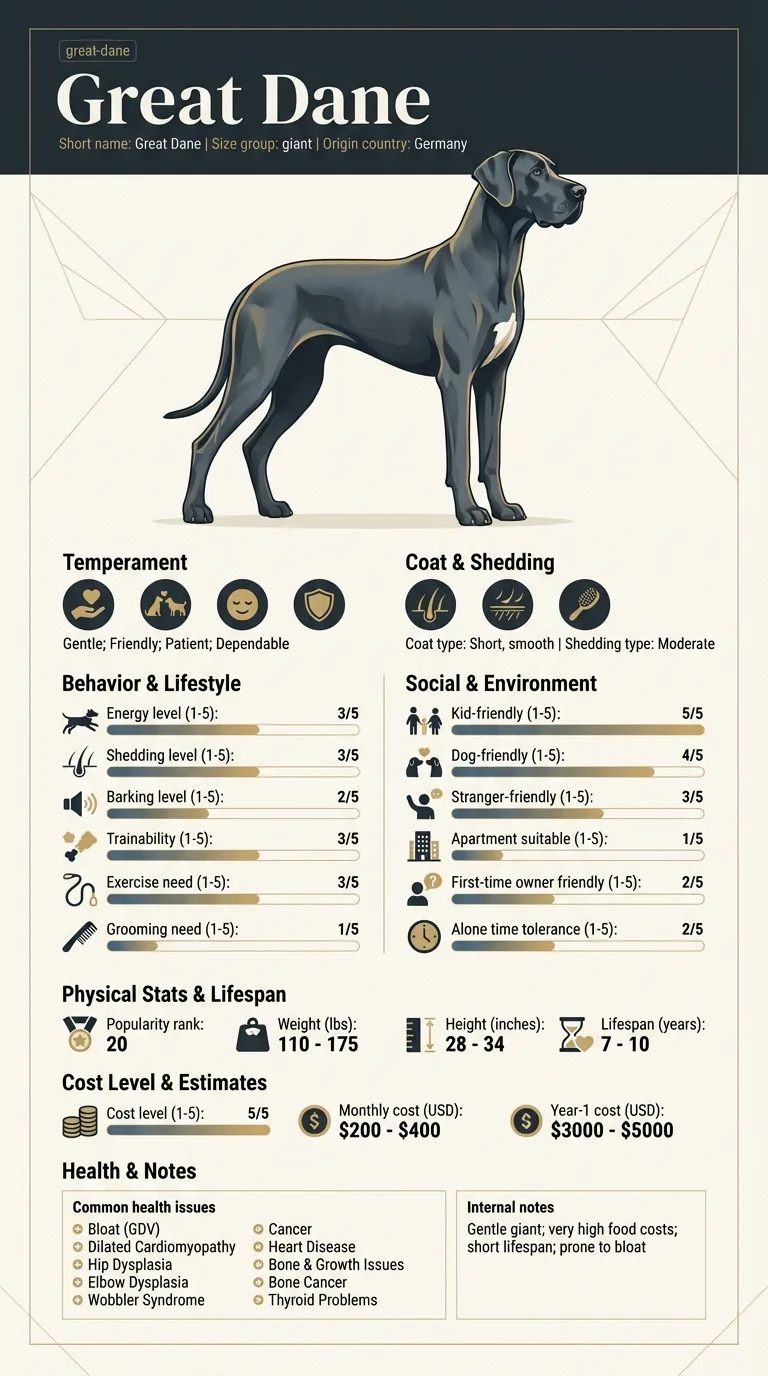
See all Great Dane health problems, which breeds are prone to dental issues, or the full Great Dane breed guide for temperament, exercise needs and ownership costs.
Expect to see improvements in your Great Dane's dental health within 4 to 6 months of consistent care and follow-up with your vet.
Success means your Great Dane has healthier teeth and gums, reduced bad breath, and fewer dental visits due to serious issues.
Mark, a first-time Great Dane owner, noticed his dog Bella had bad breath and was reluctant to chew her toys. After a vet visit confirmed dental issues, he decided to take action. Mark started brushing Bella's teeth regularly and introduced dental chews to her diet. He also worked on training Bella to accept the brushing routine. After six months, Bella's breath improved, and her vet noted healthier gums. Mark felt relieved to see Bella enjoying her toys again and was proud of his commitment to her dental care.
Key takeaway: Regular dental care and patience can significantly improve your Great Dane's dental health and overall happiness.
Great Danes can experience dental issues due to their large size and predisposition to certain health problems. Their teeth may not align properly, leading to plaque buildup and gum disease. Regular dental check-ups and proper oral care can help mitigate these issues.
To prevent dental issues, establish a routine of regular brushing and provide dental chews designed for large breeds. Schedule routine vet visits for professional cleanings, and monitor their eating habits to ensure they are using their teeth properly. Early intervention is key to avoiding severe problems.
Signs of dental issues include bad breath, difficulty eating, swollen gums, or excessive drooling. If you notice any of these symptoms, it's essential to consult your veterinarian for a thorough examination. Catching problems early can save your dog's teeth and overall health.
Yes, dental issues are relatively common in Great Danes due to their size and unique dental structure. It's important to be proactive about dental care from a young age. This includes regular brushing and providing appropriate chew toys to promote healthy teeth and gums.
Feed your Great Dane a balanced diet with kibble designed to promote dental health. Hard kibble can help reduce plaque buildup, and dental treats can also be beneficial. Consult your veterinarian for specific dietary recommendations tailored to your dog's needs.
It's best to start dental care for your Great Dane around 6 months of age when their adult teeth are coming in. Regular brushing and dental check-ups can help prevent issues later in life.
Great Danes are prone to periodontal disease due to their size and dental structure. They may also experience tooth decay and gum disease, which require regular maintenance to avoid serious health issues.
For older Great Danes, soft food can be easier on their teeth and gums. Regular veterinary check-ups are also essential to assess their dental health and provide appropriate treatments or cleanings.
You should see a vet if your Great Dane shows any signs of pain, bleeding gums, or if their breath smells unusually bad. Early intervention can prevent more severe dental problems and improve your dog's quality of life.
Brush your Great Dane's teeth regularly, provide dental chews, and schedule annual vet check-ups for cleanings. Consistency is key to preventing serious dental problems.
Aim to brush your Great Dane's teeth at least two to three times a week. Daily brushing is ideal for optimal dental health.
Dental care costs can range from $200 to $600 annually, including routine cleanings and dental treats. Unexpected dental procedures can increase this cost significantly.
Training a Great Dane for dental care can be manageable with positive reinforcement techniques. Start early and use treats to encourage good behavior during brushing.
A one-page prep sheet for this condition: the signs, the questions to ask, what to get priced. Unlocks here.
You get: Vet visit prep sheet
No spam. One-click unsubscribe. See our privacy policy.
See a sample page before you decide.
Early access list
The free prep sheet covers the same-day warning signs, a symptom log and the questions to ask. We are considering a fuller kit that adds a cost worksheet for the usual tests and treatments (US price ranges with their sources) and a plain-English guide to ways of covering the bill. It is not built yet; this list tells us whether it is worth building.
One email, no spam, unsubscribe anytime. Information only, not veterinary advice.