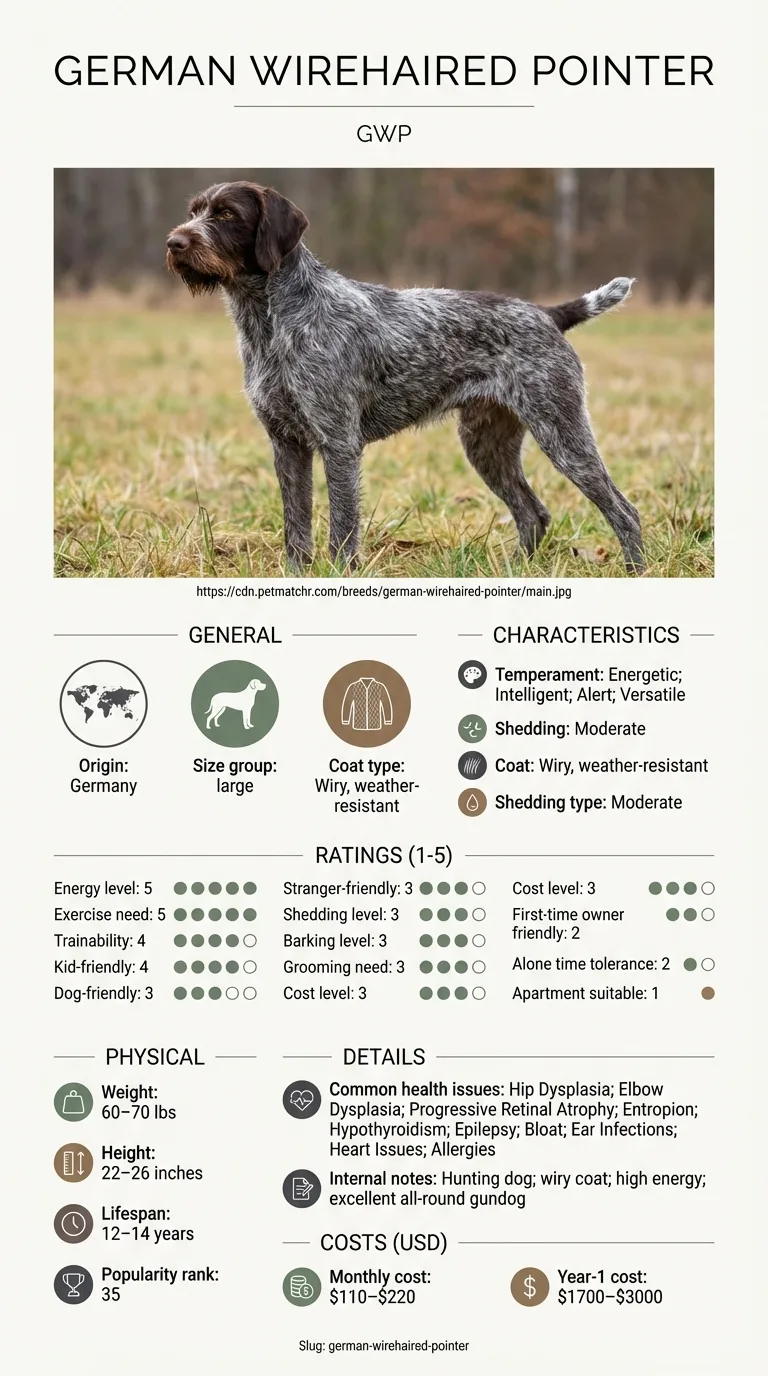
What are quick tips for managing German Wirehaired Pointer cardiac disease?
Monitor your dog's weight, maintain a low-sodium diet, and provide regular but gentle exercise. Keep an eye on their breathing and energy levels.
German Wirehaired Pointer cardiac disease is a serious health concern that can affect your dog's quality of life.

Owners of German Wirehaired Pointers, particularly those with senior dogs, often find themselves navigating the complexities of cardiac disease. This condition can be alarming, especially for first-time dog owners or those unfamiliar with breed-specific health issues.
This guide is not medical advice. If your dog shows pain, sudden behavior change, or worsening symptoms, consult a licensed veterinarian.
Some links may be affiliate links. We may earn a commission at no extra cost to you. We only suggest products we believe are helpful for dog owners.
German Wirehaired Pointer cardiac disease can manifest in various ways, affecting their energy levels and overall well-being. Symptoms may include fatigue, coughing, or difficulty breathing, which can be alarming for dog owners. Understanding the triggers and signs of this condition is essential for keeping your GWP healthy.
Cardiac disease is a notable concern for German Wirehaired Pointers, especially as they age. While not the most common health issue, it's still important for owners to be aware of this risk and monitor their dog's heart health regularly.
German Wirehaired Pointers (GWPs) can be prone to cardiac disease due to genetic factors. Certain breeds, including GWPs, are more susceptible to heart conditions. This risk can be influenced by their energy levels and overall health.
Environmental factors also play a role in cardiac disease. Poor diet, lack of exercise, and obesity can contribute to heart issues. Stress, whether from changes at home or lack of socialization, can exacerbate these conditions.
If your GWP shows signs of anxiety or behavioral issues related to their cardiac health, consider consulting a trainer. They can help address training needs and provide strategies for managing stress.
If you notice symptoms like coughing, lethargy, or difficulty breathing, contact your vet immediately. Regular check-ups are crucial for early detection and management of any heart-related problems.
Managing German Wirehaired Pointer cardiac disease typically takes several months to see improvements, especially with lifestyle changes and treatment adjustments. Regular vet check-ups every 3-6 months are essential for monitoring progress.
Success means your dog shows fewer symptoms, maintains a healthy weight, and enjoys a good quality of life. You should notice improved energy levels and less fatigue during activities, indicating better heart health.
Avoid these common mistakes that can worsen your German Wirehaired Pointer's cardiac disease and delay improvement.
Knowing when German Wirehaired Pointer cardiac disease is an emergency can save your dog's life. It's crucial to recognize the signs that require immediate veterinary attention versus those that can be monitored at home. If your dog shows any red-flag symptoms, call your vet right away.

Watch for these alarming symptoms that indicate a cardiac emergency: sudden collapse, difficulty breathing, persistent coughing, or severe lethargy. If your German Wirehaired Pointer exhibits any of these signs, don’t wait; contact your veterinarian immediately.

If your dog shows mild symptoms, such as occasional coughing or slight fatigue, you may not need to rush to the vet. Instead, monitor these signs for changes over a few days. Keep a log of any symptoms, and schedule a vet appointment if they worsen or don’t improve.

Emily, a dedicated owner from Denver, found out her German Wirehaired Pointer, Max, had cardiac disease after he struggled during a hike. Initially, she felt overwhelmed and unsure of how to help him. Emily consulted her vet and learned about dietary changes and moderate exercise. Over time, she adjusted Max’s routine, incorporating heart-healthy foods and shorter walks. Emily was relieved to see Max gaining energy back and enjoying life again.
Key takeaway: With the right guidance and adjustments, managing cardiac disease in your German Wirehaired Pointer can lead to a happier, healthier life.
German Wirehaired Pointers can develop cardiac disease due to genetics, age, and diet. Older dogs are particularly at risk, as well as those with a family history of heart problems. Regular vet check-ups are essential for catching early signs.
To help prevent cardiac disease, ensure your German Wirehaired Pointer has a balanced diet, regular exercise, and maintains a healthy weight. Routine veterinary visits can help monitor heart health and catch any issues early.
Common signs include coughing, difficulty breathing, lethargy, and a decrease in activity levels. If you notice any of these symptoms, it's crucial to consult with a veterinarian as soon as possible.
While training won't cure cardiac disease, it can help manage your dog's overall health. Engaging in low-impact exercises like walking and obedience training can keep your dog active without overexerting their heart.
Treatment options may include medications to manage symptoms, dietary changes, and lifestyle adjustments. Your vet will determine the best course based on your dog's specific condition.
Early signs of cardiac disease in a German Wirehaired Pointer may include coughing, difficulty breathing, fatigue, and decreased exercise tolerance. If you notice these symptoms, it's crucial to consult your veterinarian for a thorough evaluation.
Yes, a balanced diet can play a significant role in managing cardiac disease. A veterinarian can recommend specific dietary changes that may help support your dog's heart health.
Cardiac disease can be more common in older German Wirehaired Pointers, particularly as they approach their senior years. Regular check-ups with a vet are essential to monitor heart health as they age.
To help your German Wirehaired Pointer cope with cardiac disease, ensure they have a low-stress environment, appropriate exercise, and a healthy diet. Consulting with a vet for a tailored care plan is also vital for their well-being.
If you notice persistent coughing, lethargy, or rapid breathing in your German Wirehaired Pointer, it's time to see the vet. Early intervention can make a significant difference in managing cardiac disease effectively.
Monitor your dog's weight, maintain a low-sodium diet, and provide regular but gentle exercise. Keep an eye on their breathing and energy levels.
It's best to schedule vet visits at least twice a year, especially for older dogs, to monitor their heart health and catch any issues early.
Avoid foods high in sodium and unhealthy fats. Consult your vet for recommendations on heart-healthy dog food.
Low-impact exercises like walking or swimming are ideal. Avoid strenuous activities that can strain their heart.