Behavior
What are quick tips for managing German Wirehaired Pointer bloat (gdv)?
Feed smaller meals and use slow feeders. Avoid exercise right after meals. Monitor for symptoms like a swollen belly.

Quick answer
What are quick tips for managing German Wirehaired Pointer bloat (gdv)?
Feed smaller meals and use slow feeders. Avoid exercise right after meals. Monitor for symptoms like a swollen belly.
German Wirehaired Pointer bloat (GDV) is a serious condition that can threaten your dog's life. Understanding it is key to prevention.
Typically, owners of German Wirehaired Pointers, especially those who are first-time dog owners, may struggle with this issue. Those who are active and enjoy outdoor activities with their dogs should pay close attention to their pet's feeding habits and behaviors.
This guide is not medical advice. If your dog shows pain, sudden behavior change, or worsening symptoms, consult a licensed veterinarian.
Some links may be affiliate links. We may earn a commission at no extra cost to you. We only suggest products we believe are helpful for dog owners.
We research and check what we publish, but we do not warrant that any figure, date, price, or statement is accurate, complete, or current, and we accept no liability for any loss, cost, injury, or other harm arising from the use of this site. Use it as one reference among several. You remain responsible for your own decisions and for your dog's care - confirm anything that matters with a licensed veterinarian or another qualified professional before you act on it. Full disclaimer.
Check this first
Recognizing when German Wirehaired Pointer bloat (GDV) is an emergency can save your dog's life. If you notice any of these red-flag signs, you should call your vet immediately: rapid swelling of the abdomen, unproductive vomiting, drooling, restlessness, or signs of severe discomfort. These symptoms indicate that your dog's stomach may be twisting, which can lead to life-threatening complications.
If any of these apply, call your vet or an emergency clinic now. The rest of this page is for the cases that are not an emergency.
German Wirehaired Pointer bloat (GDV) is a serious condition that can escalate quickly. This health issue involves the stomach twisting on itself, trapping gas and food inside. Owners often see signs like a swollen belly, restlessness, and signs of pain, which can be distressing to witness.
Bloat is a significant health concern for German Wirehaired Pointers, especially due to their large size and propensity for high energy. While it's not an everyday issue, it's crucial for owners to recognize the signs and act swiftly if they suspect bloat.
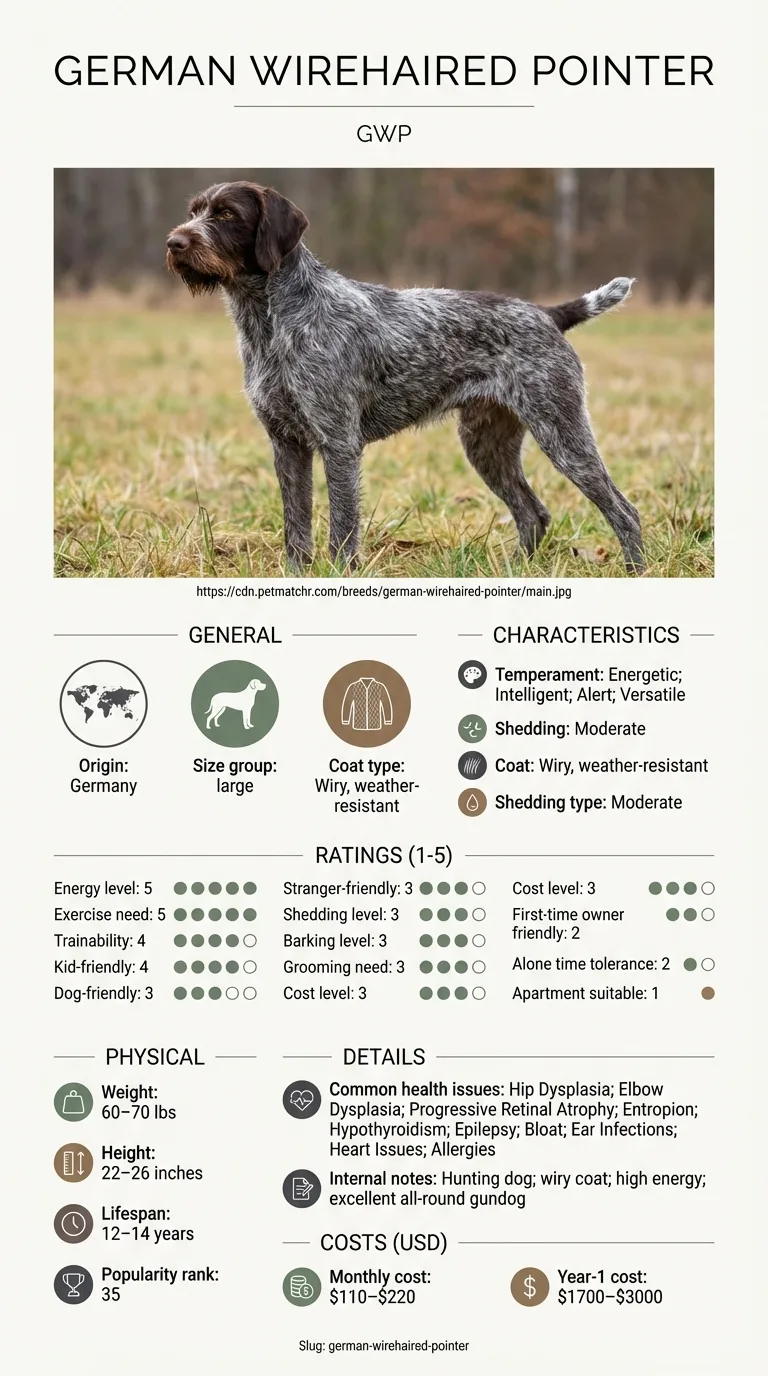
German Wirehaired Pointers (GWPs) are large, active dogs with deep chests. This breed is more prone to bloat (gastric dilatation-volvulus or GDV) due to their body structure. Their energetic nature may also lead them to eat quickly, increasing the risk of bloat.
Environmental factors can contribute to bloat in GWPs. Stressful situations, such as loud noises or changes in routine, can cause anxiety. Additionally, feeding habits, like serving large meals or exercise immediately after eating, can trigger this serious condition.
If your dog exhibits any signs of bloat, such as a distended abdomen, unproductive retching, or severe restlessness, contact your veterinarian immediately. Bloat can be life-threatening and requires urgent medical attention.
Avoiding common pitfalls can greatly help in managing German Wirehaired Pointer bloat (GDV). Here are some mistakes to avoid and safer alternatives.
Start here: German Wirehaired Pointer Most Common Genetic Disorders: Guide
See all German Wirehaired Pointer health problems, which breeds are prone to bloat gdv, or the full German Wirehaired Pointer breed guide for temperament, exercise needs and ownership costs.
Managing German Wirehaired Pointer bloat (GDV) can take several weeks of consistent care and observation. You should see improvements in your dog's eating habits and behavior within a month.
Success means your German Wirehaired Pointer eats slowly and is less prone to episodes of bloat. You’ll notice fewer signs of anxiety during feeding times and overall healthier digestion.
If your German Wirehaired Pointer shows mild signs of bloat, like slight stomach discomfort or minor bloating, you can monitor them at home. Keep an eye on their behavior, and make a note of any changes. Ensure they are resting comfortably, but don't hesitate to contact your vet if symptoms worsen or persist for more than a few hours.

Emily, a busy nurse living in Chicago, noticed her German Wirehaired Pointer, Max, was experiencing signs of bloat. After a particularly scary incident where Max seemed lethargic and uncomfortable, she rushed him to the vet, who explained the risks of bloat (GDV) in large breeds. Determined to prevent future episodes, Emily learned how to manage Max's feeding habits. She started using a slow feeder bowl and scheduled regular meal times. After a few weeks, Emily saw a significant change in Max's behavior. He was calmer during meals and showed no signs of discomfort. Emily felt relieved and more confident in her ability to care for Max.
Key takeaway: With patience and the right tools, you can effectively manage German Wirehaired Pointer bloat (GDV) and improve your dog's eating habits.
Bloat, or gastric dilatation-volvulus (GDV), occurs when the stomach fills with gas and twists. This can be triggered by eating too quickly, exercising right after meals, or stress. It's important to watch for signs like a distended abdomen or unproductive vomiting.
To help prevent bloat, feed your German Wirehaired Pointer smaller meals throughout the day instead of one large meal. Avoid vigorous exercise for at least an hour after eating. You might also consider using a slow feeder bowl to encourage slower eating.
If you suspect your dog has bloat, seek emergency veterinary care immediately. Time is crucial, as bloat can quickly become life-threatening. Do not attempt to treat it at home.
Common symptoms include a swollen abdomen, restlessness, drooling, and signs of discomfort. Your dog may also try to vomit but produce little or nothing. If you see these signs, act quickly.
While training cannot directly prevent bloat, it can help create a calm environment around mealtime. Teaching your dog to wait before eating and to remain calm after meals can reduce stress that may contribute to bloat.
Early signs of German Wirehaired Pointer bloat (GDV) may include restlessness, pacing, gagging without producing anything, and a swollen abdomen. If you notice these symptoms, it's crucial to contact your vet immediately.
Yes, older German Wirehaired Pointers can develop bloat (GDV). The risk increases with age, so it's essential to monitor their eating habits and overall health closely, especially as they get older.
To reduce the risk of bloat (GDV) in your German Wirehaired Pointer, feed them smaller meals throughout the day instead of one large meal. Additionally, avoid vigorous exercise right before and after meals.
Bloat (GDV) can have a hereditary component, especially in certain breeds, including the German Wirehaired Pointer. If you have a family history of bloat, it's wise to discuss this with your veterinarian.
If you suspect your German Wirehaired Pointer has bloat (GDV), seek emergency veterinary care immediately. This condition can escalate quickly and requires prompt treatment to save your dog's life.
Feed smaller meals and use slow feeders. Avoid exercise right after meals. Monitor for symptoms like a swollen belly.
Look for a distended abdomen, unproductive vomiting, or excessive drooling. These signs require immediate attention.
Treatment for bloat can be expensive, often ranging from $1,500 to $5,000 depending on severity and necessary interventions.
A one-page prep sheet for this condition: the signs, the questions to ask, what to get priced. Unlocks here.
You get: Vet visit prep sheet
No spam. One-click unsubscribe. See our privacy policy.
See a sample page before you decide.
Early access list
The free prep sheet covers the same-day warning signs, a symptom log and the questions to ask. We are considering a fuller kit that adds a cost worksheet for the usual tests and treatments (US price ranges with their sources) and a plain-English guide to ways of covering the bill. It is not built yet; this list tells us whether it is worth building.
One email, no spam, unsubscribe anytime. Information only, not veterinary advice.