Health
What are quick tips for managing German Shepherd ventricular arrhythmias?
Monitor your dog's heart health regularly, maintain a stress-free environment, and provide appropriate exercise. Always consult your vet for tailored advice.

Quick answer
What are quick tips for managing German Shepherd ventricular arrhythmias?
Monitor your dog's heart health regularly, maintain a stress-free environment, and provide appropriate exercise. Always consult your vet for tailored advice.
German Shepherd ventricular arrhythmias can lead to irregular heartbeats, impacting your dog's health significantly.
Owners of German Shepherds, particularly those who are first-time pet parents or have dogs with existing health issues, often face challenges managing this condition.
This guide is not medical advice. If your dog shows pain, sudden behavior change, or worsening symptoms, consult a licensed veterinarian.
Some links may be affiliate links. We may earn a commission at no extra cost to you. We only suggest products we believe are helpful for dog owners.
We research and check what we publish, but we do not warrant that any figure, date, price, or statement is accurate, complete, or current, and we accept no liability for any loss, cost, injury, or other harm arising from the use of this site. Use it as one reference among several. You remain responsible for your own decisions and for your dog's care - confirm anything that matters with a licensed veterinarian or another qualified professional before you act on it. Full disclaimer.
Check this first
Ventricular arrhythmias can be serious for your German Shepherd. It’s crucial to know when to seek immediate help from your vet. Look for red flags like fainting, severe lethargy, or difficulty breathing. These signs likely indicate a critical condition that requires prompt attention.
If your GSD is showing symptoms such as a rapid heart rate, pale gums, or collapse, don’t wait. Call your vet immediately or head to an emergency animal clinic. These symptoms can signify a life-threatening situation, and acting fast can save your dog's life.
On the other hand, if your dog occasionally seems a bit unsteady but is still eating, drinking, and playing, it may be safe to monitor the situation. Keep track of any unusual behavior or changes in energy levels. You can create a plan to observe your dog closely and consult your vet if the symptoms continue or worsen. Regular check-ups can help catch any underlying issues before they escalate.
If any of these apply, call your vet or an emergency clinic now. The rest of this page is for the cases that are not an emergency.
German Shepherd ventricular arrhythmias can significantly impact your dog's daily life. These irregular heartbeats may cause symptoms like lethargy, fainting, or even sudden collapse during exercise. If your German Shepherd shows any of these signs, it’s crucial to consult a veterinarian for guidance.
Ventricular arrhythmias are increasingly recognized in German Shepherds. While not every dog will experience this condition, it's important to be aware of the potential risks, especially as they age.
German Shepherds are prone to certain genetic conditions, including ventricular arrhythmias. Their large size and active lifestyle can also contribute to heart issues. Additionally, this breed often experiences stress and anxiety, which can exacerbate heart problems.
Environmental factors like diet, exercise level, and overall stress can lead to heart issues in German Shepherds. Poor nutrition, lack of physical activity, and high-stress situations can trigger or worsen arrhythmias. It's crucial to create a stable and healthy environment to support your dog's heart health.
If you notice symptoms like excessive panting, lethargy, or fainting, contact your vet immediately. Regular check-ups are essential for monitoring their heart health, especially for breeds like German Shepherds prone to heart issues.
When dealing with German Shepherd ventricular arrhythmias, it’s important to avoid common mistakes that can worsen the situation. Here are some behaviors that can delay improvement and what you can do instead.
Start here: German Shepherd Most Common Genetic Disorders: Screening
See all German Shepherd health problems, which breeds are prone to ventricular arrhythmias, or the full German Shepherd breed guide for temperament, exercise needs and ownership costs.
Within a few weeks to a few months, you should start noticing improvements in your German Shepherd's condition with consistent care and follow-up with your vet.
Success means your German Shepherd exhibits fewer irregular heartbeats, shows increased energy levels, and maintains a healthy lifestyle with regular vet check-ups and appropriate training.
Sarah, a busy nurse in Seattle, adopted Max, a playful German Shepherd, without knowing he had ventricular arrhythmias. After a few weeks of noticing his excessive panting and fatigue during playtime, she took him to the vet. The vet confirmed the diagnosis and suggested a mix of medication and gradual training to manage his condition. Sarah dedicated time each day to train Max with gentle exercises and monitored his heart rate. Over time, she noticed him becoming more active and less lethargic. It wasn't a perfect solution, but Max was happier and healthier.
Key takeaway: With patience and proper care, it’s possible to manage German Shepherd ventricular arrhythmias effectively, improving both the dog's well-being and the owner's peace of mind.
Ventricular arrhythmias in German Shepherds can be caused by several factors, including genetic predisposition, heart disease, or other underlying health issues. It's important to consult a veterinarian for a proper diagnosis and treatment plan. This answer relates to German Shepherd ventricular arrhythmias.
To manage ventricular arrhythmias, start by scheduling regular vet check-ups to monitor your dog's heart health. Depending on the cause, your vet may recommend medication, a specific diet, or lifestyle changes to reduce stress and promote overall well-being.
Common signs include lethargy, fainting, or unusual breathing patterns. If you notice any of these symptoms, contact your veterinarian immediately for a thorough evaluation.
Training can help by reducing anxiety and stress, which may contribute to heart issues. Consider working with a professional trainer to implement positive reinforcement techniques that promote calm behavior.
Ensure your German Shepherd gets regular, moderate exercise without overexertion. A balanced diet and avoiding stressful environments can also support heart health and minimize episodes of arrhythmias.
While any dog can develop ventricular arrhythmias, certain breeds, including German Shepherds, may have a higher risk due to genetic factors. It's essential to be aware of your dog's health history and consult with your vet.
If your German Shepherd faints, stay calm and check for breathing. If there's no breathing, perform CPR and contact your vet immediately. Regular check-ups will help you understand your dog's specific health needs.
Yes, ventricular arrhythmias can often be treated in older German Shepherds, but the treatment may vary depending on the dog's overall health and the severity of the condition. Regular check-ups and a tailored treatment plan from your vet are essential for managing the condition effectively.
To help your German Shepherd with ventricular arrhythmias feel more comfortable, create a calm environment and limit stressful situations. Regular, gentle exercise and adhering to your vet's recommendations for diet and medication can also improve their quality of life.
Exercise can be beneficial but should be approached with caution. Consult your veterinarian to determine the appropriate level and type of activity for your German Shepherd, as too much exertion could exacerbate their condition.
Monitor your dog's heart health regularly, maintain a stress-free environment, and provide appropriate exercise. Always consult your vet for tailored advice.
Yes, training can reduce anxiety and stress, which may help manage arrhythmias. Positive reinforcement techniques are especially effective.
Regular vet check-ups, ideally every six months, are crucial for monitoring heart health and catching any issues early.
A balanced diet rich in omega-3 fatty acids can support heart health. Consult your vet for specific dietary recommendations.
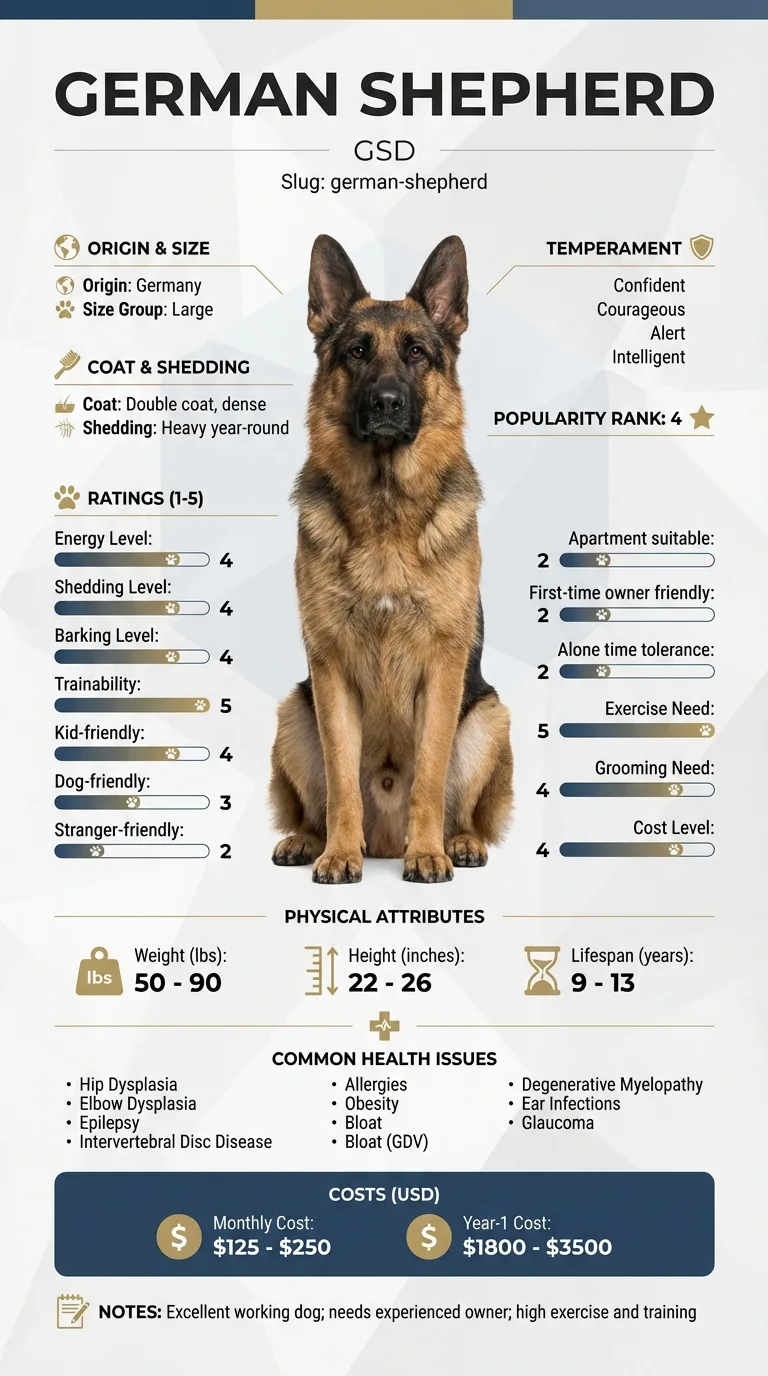
Costs can vary widely, but expect to spend around $125 to $250 monthly for check-ups, medications, and proper care.
A one-page prep sheet for this condition: the signs, the questions to ask, what to get priced. Unlocks here.
You get: Vet visit prep sheet
No spam. One-click unsubscribe. See our privacy policy.
See a sample page before you decide.
Early access list
The free prep sheet covers the same-day warning signs, a symptom log and the questions to ask. We are considering a fuller kit that adds a cost worksheet for the usual tests and treatments (US price ranges with their sources) and a plain-English guide to ways of covering the bill. It is not built yet; this list tells us whether it is worth building.
One email, no spam, unsubscribe anytime. Information only, not veterinary advice.