What are quick tips for managing French Spaniel elbow dysplasia?
Maintain a healthy weight for your French Spaniel and limit high-impact activities. Regular vet check-ups can help track joint health. Consider joint supplements as recommended by your vet.
French Spaniel elbow dysplasia is a painful condition affecting their joints. It can lead to discomfort and mobility issues, making it crucial for owners to address it early.
New and experienced dog owners alike may struggle with managing elbow dysplasia in their French Spaniels. Those who lead active lifestyles or have high-energy dogs may find it especially challenging when their pets experience joint pain.
Important reminder
This guide is not medical advice. If your dog shows pain, sudden behavior change, or worsening symptoms, consult a licensed veterinarian.
Some links may be affiliate links. We may earn a commission at no extra cost to you. We only suggest products we believe are helpful for dog owners.
We research and check what we publish, but we do not warrant that any figure, date, price, or statement is accurate, complete, or current, and we accept no liability for any loss, cost, injury, or other harm arising from the use of this site. Use it as one reference among several. You remain responsible for your own decisions and for your dog's care - confirm anything that matters with a licensed veterinarian or another qualified professional before you act on it. Full disclaimer.
Check this first
When is French Spaniel Elbow Dysplasia an Emergency?
Elbow dysplasia in French Spaniels can range from mild to severe. It's crucial to know when to call your vet immediately versus when you can monitor the condition at home. If your dog shows severe signs, such as extreme pain, inability to move the affected leg, or visible swelling, these are red flags that require urgent veterinary attention.
If any of these apply, call your vet or an emergency clinic now. The rest of this page is for the cases that are not an emergency.
What this problem looks like
French Spaniel elbow dysplasia can be a challenging issue for both dogs and their owners. This condition involves malformation in the elbow joints, leading to pain and mobility problems. Daily life for an affected French Spaniel may include difficulty in activities like running, jumping, or even walking comfortably.
Common triggers
Genetic predisposition from breeding
Rapid growth during puppyhood
Obesity or excessive weight
Injury or trauma to the elbow
Elbow dysplasia is relatively common in French Spaniels, particularly in larger dogs. It's important to monitor their growth and weight to help prevent or manage this condition effectively.
Why this happens
Breed factors
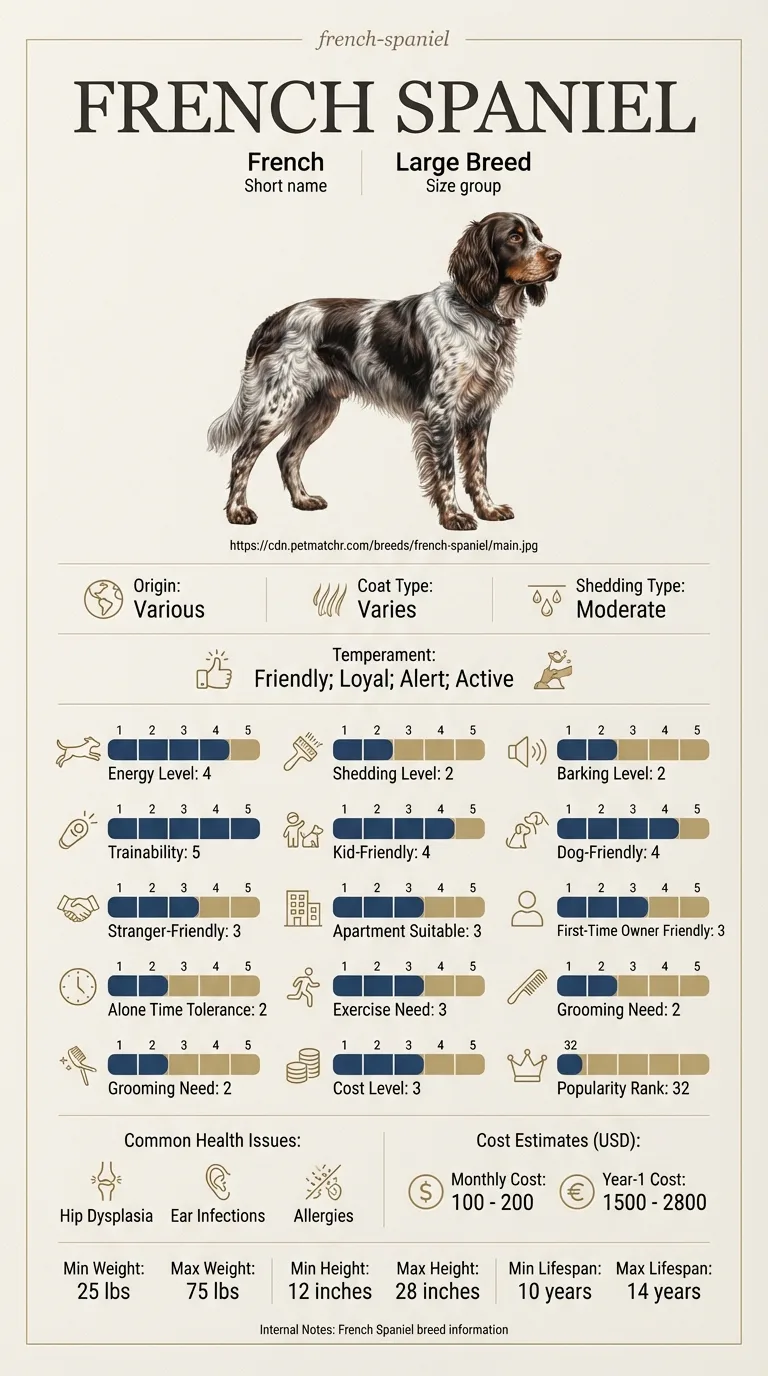
French Spaniels are large dogs with a genetic predisposition to joint issues, including elbow dysplasia. Their size and weight can put extra strain on their joints, especially during their growth phases. Additionally, certain lines of this breed may have a higher risk due to inherited traits.
Environment factors
Elbow dysplasia can also be influenced by factors in the dog’s environment. Overweight conditions from improper diet or lack of exercise can exacerbate joint problems. Furthermore, high-impact activities or frequent jumping on hard surfaces during their developmental stages can contribute to the development of elbow dysplasia.
What you can do at home (once it is not an emergency)
When to talk to your vet
If you notice persistent limping, swelling, or reluctance to engage in normal activities, it's essential to talk to your vet. They can provide a proper diagnosis and discuss treatment options, which may include medication or physical therapy.
At home, alongside your vet's plan
Monitor your dog's weight closely. Keeping your French Spaniel at a healthy weight can reduce stress on their elbows. Measure their food portions and consider low-calorie treats.
Implement a balanced exercise routine. Short, controlled walks and gentle play can help maintain muscle strength without putting too much stress on their joints. Avoid excessive running and jumping, especially on hard surfaces.
Incorporate joint supplements if recommended by your vet. Omega-3 fatty acids or glucosamine can support joint health and reduce inflammation. Always consult your vet before starting any new supplements.
Mistakes that make Elbow Dysplasia worse
Here are some common mistakes owners make that can worsen French Spaniel elbow dysplasia, along with safer alternatives.
Ignoring weight management: Excess weight puts extra stress on your dog's joints. Instead, monitor your French Spaniel's diet and ensure they maintain a healthy weight to reduce strain.
Over-exercising too soon: Jumping into intense exercise can exacerbate joint issues. Gradually introduce exercise and consult your vet for a suitable routine.
Neglecting rest periods: Continuous activity without breaks can lead to increased pain. Schedule regular rest times during play and walks to allow recovery.
Using harsh training methods: Punitive training can increase anxiety and stress, making the condition worse. Use positive reinforcement techniques to encourage good behavior.
Skipping vet check-ups: Failing to have regular veterinary exams can delay necessary treatments. Schedule check-ups to monitor your dog's joint health and adjust care as needed.
Ignoring signs of discomfort: Dismissing limping or reluctance to move can worsen the condition. Be attentive to your dog's behavior and seek veterinary advice when you notice changes.
You can expect to see improvements in your French Spaniel's elbow dysplasia symptoms within 4 to 6 weeks of starting a treatment plan.
Success looks like reduced pain during movement, increased activity levels, and a happier, more comfortable dog. Regular check-ins with your vet can help track progress.
When to Monitor and Wait
In less severe cases, you might notice mild symptoms like occasional limping or stiffness after exercise. If your French Spaniel seems to be in moderate discomfort but still engages in daily activities, you can monitor their condition. Create a plan with your vet for regular check-ups and pain management, as it’s important to keep an eye on any changes in their mobility.
Understanding French Spaniel Elbow Dysplasia - When to Monitor and Wait
Emily's Journey with Max's Elbow Dysplasia
Emily, a busy nurse from Atlanta, adopted Max, a lively French Spaniel. Shortly after bringing him home, she noticed he was limping and hesitant to jump. After a vet visit, Emily learned Max had elbow dysplasia. Determined to help him, she followed a tailored treatment plan that included medication, specific exercises, and regular vet check-ups. Gradually, Max regained his enthusiasm for playtime and even joined Emily on her morning runs, though they kept it short at first.
Key takeaway: With the right support and dedication, managing French Spaniel elbow dysplasia can lead to a happy, active life for your dog.
Frequently asked questions
Why does my French Spaniel have elbow dysplasia?
French Spaniel elbow dysplasia is often caused by genetic factors that affect joint development. Environmental influences, such as rapid growth and excess weight, can also contribute. Regular vet check-ups are essential to catch and manage this condition early.
How can I stop my French Spaniel from developing elbow dysplasia?
To reduce the risk of elbow dysplasia, ensure your French Spaniel maintains a healthy weight and gets regular, moderate exercise. Avoid over-exercising puppies, as their joints are still developing. Consult with a veterinarian for tailored dietary and exercise recommendations.
What training methods can help with French Spaniel elbow dysplasia?
Training should focus on low-impact activities that promote joint health without overstraining. Obedience training can help in controlling movements, reducing the risk of injury. Positive reinforcement methods work best for teaching your French Spaniel gentle play and exercise routines.
Are there specific symptoms of elbow dysplasia in French Spaniels?
Common symptoms include limping, reduced activity, and difficulty in movement or jumping. Your French Spaniel may also exhibit signs of pain when their elbows are touched. If you notice any of these symptoms, consult a vet for an assessment.
What treatments are available for French Spaniel elbow dysplasia?
Treatment options range from weight management and physical therapy to medications for pain relief. In severe cases, surgical intervention may be necessary. A veterinarian can help determine the best course of action based on your dog's specific needs.
Can elbow dysplasia develop in older French Spaniels?
Yes, elbow dysplasia can develop in older French Spaniels, even if they appeared healthy earlier in life. Age-related wear and tear can exacerbate the condition, so it's important to monitor their activity and comfort levels as they age.
How can I help my French Spaniel with elbow dysplasia?
To help your French Spaniel, consider weight management, controlled exercise, and joint supplements. Regular vet check-ups can also lead to early interventions, like pain management or physical therapy.
Is surgery necessary for elbow dysplasia in French Spaniels?
Surgery may be necessary for severe cases of elbow dysplasia in French Spaniels. A veterinarian can assess the situation and recommend the best course of action based on your dog's specific needs.
What are quick tips for managing French Spaniel elbow dysplasia?
Maintain a healthy weight for your French Spaniel and limit high-impact activities. Regular vet check-ups can help track joint health. Consider joint supplements as recommended by your vet.
Costs
How much does it cost to treat elbow dysplasia in French Spaniels?
Treatment costs can vary widely, with initial vet visits ranging from $100 to $300. Long-term management may add up to $200 monthly depending on medications and therapies.
Health
Can elbow dysplasia be hereditary in French Spaniels?
Yes, elbow dysplasia can be hereditary, so it's important to choose a reputable breeder who screens for this condition in their breeding dogs.
Behavior
What are some signs of elbow pain in French Spaniels?
Look for limping, reluctance to play or exercise, and signs of discomfort when touched around the elbows. Early detection is key to managing the condition effectively.
A fuller vet-visit kit for French Spaniel Elbow Dysplasia
The free prep sheet covers the same-day warning signs, a symptom log and the questions to ask. We are considering a fuller kit that adds a cost worksheet for the usual tests and treatments (US price ranges with their sources) and a plain-English guide to ways of covering the bill. It is not built yet; this list tells us whether it is worth building.
One email, no spam, unsubscribe anytime. Information only, not veterinary advice.