Behavior
What are some quick tips for managing French Spaniel chondrodystrophy (cddy)?
Regular vet visits, maintaining a healthy weight, and providing joint supplements can help manage cddy. Gentle exercise is also important to support mobility.

Quick answer
What are some quick tips for managing French Spaniel chondrodystrophy (cddy)?
Regular vet visits, maintaining a healthy weight, and providing joint supplements can help manage cddy. Gentle exercise is also important to support mobility.
French Spaniel chondrodystrophy (cddy) is a developmental disorder affecting your dog's bones. This condition can lead to various health issues and impact your pup's quality of life.
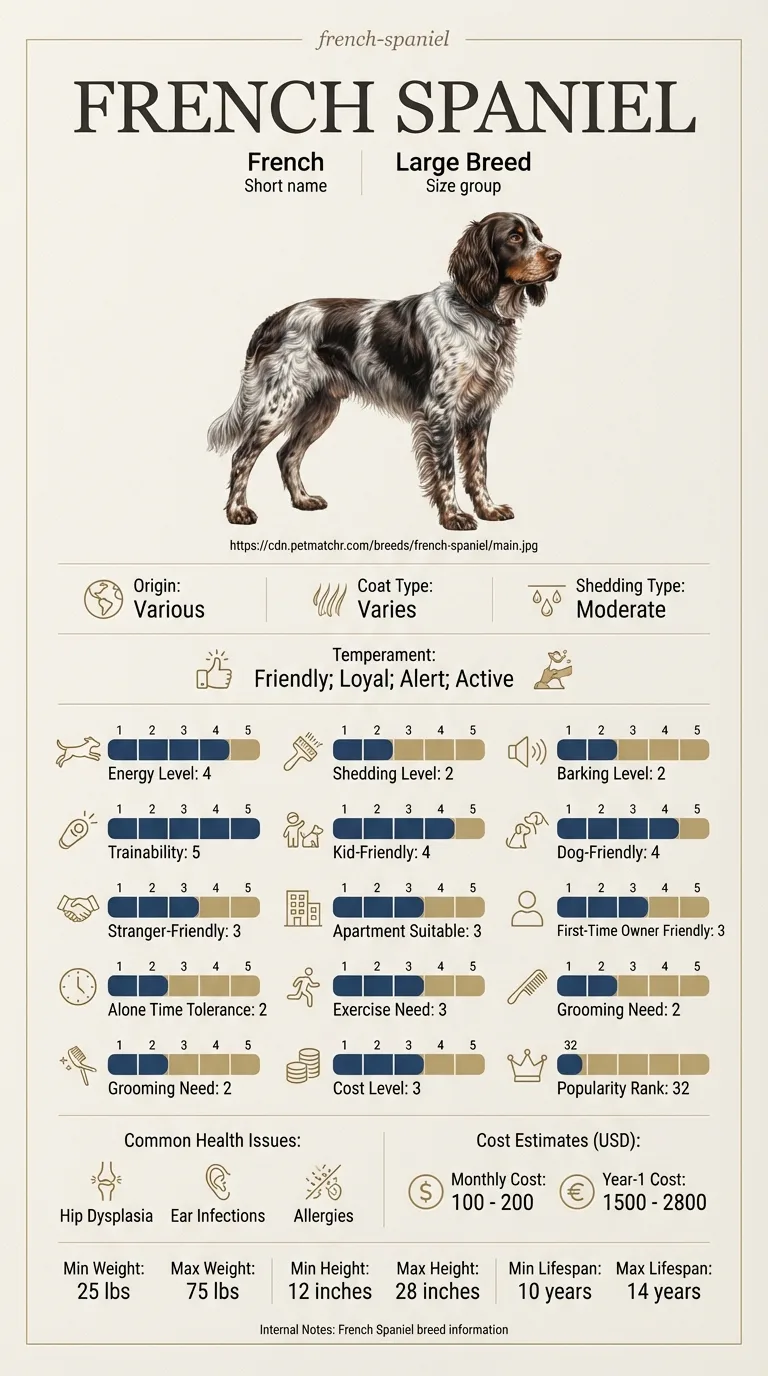
Owners of French Spaniels often face the challenge of managing cddy, especially those who are new to dog ownership or those who have active, playful pets. If your French Spaniel shows signs of discomfort or difficulty moving, this topic is especially relevant to you.
This guide is not medical advice. If your dog shows pain, sudden behavior change, or worsening symptoms, consult a licensed veterinarian.
Some links may be affiliate links. We may earn a commission at no extra cost to you. We only suggest products we believe are helpful for dog owners.
We research and check what we publish, but we do not warrant that any figure, date, price, or statement is accurate, complete, or current, and we accept no liability for any loss, cost, injury, or other harm arising from the use of this site. Use it as one reference among several. You remain responsible for your own decisions and for your dog's care - confirm anything that matters with a licensed veterinarian or another qualified professional before you act on it. Full disclaimer.
Check this first
Recognizing when French Spaniel chondrodystrophy (cddy) becomes an emergency is crucial for your dog's well-being. There are clear signs that indicate you should call your vet immediately. Conversely, some symptoms can be monitored with appropriate care and a plan.
If any of these apply, call your vet or an emergency clinic now. The rest of this page is for the cases that are not an emergency.
French Spaniel chondrodystrophy (cddy) is a developmental disorder that affects bone growth, leading to mobility issues. Owners may notice their dog having a shorter stature or disproportionate limbs, which can hinder their ability to run and play. This condition can be frustrating for both the dog and the owner, as it impacts daily activities and quality of life.
Chondrodystrophy is relatively common in French Spaniels, especially in certain bloodlines. Many owners report observing symptoms as early as six months old, making it crucial to monitor their dog's growth and health closely.
French Spaniels are prone to chondrodystrophy (cddy) due to their genetic makeup. This condition affects bone development, particularly in the limbs. Breeds with shorter legs and longer bodies, like the French Spaniel, are often more susceptible to this disorder.
Environmental factors can also contribute to cddy in French Spaniels. Poor nutrition during growth stages can exacerbate bone development issues. Additionally, lack of exercise or improper physical activity can lead to stress on their bones, worsening the condition.
If you notice signs of discomfort, limping, or changes in mobility, it's time to consult your vet. A vet can provide a thorough examination and recommend treatments or medications. Early intervention can make a significant difference in managing chondrodystrophy.
Avoid these common mistakes to help manage your French Spaniel's chondrodystrophy (cddy) effectively.
Start here: French Spaniel Most Common Genetic Disorders: Screening
See all French Spaniel health problems, which breeds are prone to chondrodystrophy cddy, or the full French Spaniel breed guide for temperament, exercise needs and ownership costs.
You can expect to see improvements in your French Spaniel's chondrodystrophy (cddy) symptoms within 3 to 6 months of consistent care and follow-up with your vet.
Success means your dog shows better mobility, reduced discomfort, and improved overall behavior. Regular vet check-ups and adjustments to their routine will also support their health.
If your French Spaniel shows any of the following symptoms, seek veterinary help right away: - Severe pain or difficulty walking - Sudden inability to stand or move - Swelling in the limbs or joints - Noticeable lethargy or lack of appetite - Any signs of distress, such as whining or panting excessively

In less severe instances, you can monitor your dog's condition at home. Consider the following signs that might not require immediate vet visits: - Mild limping or stiffness after exercise - Occasional reluctance to jump or climb stairs - Slight changes in activity level or playfulness

When Sarah adopted Bella, her French Spaniel, she quickly noticed Bella struggled with mobility due to chondrodystrophy (cddy). Sarah felt overwhelmed trying to understand how to help Bella. After consulting with a vet and joining a local training class, Sarah learned effective exercises and how to manage Bella's diet. With patience and dedication, Bella began to move more comfortably and even enjoyed her daily walks again.
Key takeaway: Understanding your dog's condition is vital. With the right support and training, you can improve your dog's quality of life significantly.
Chondrodystrophy (cddy) is often a genetic condition in French Spaniels. It occurs due to inherited traits, so if your dog has it, it might be worth discussing with your veterinarian about potential genetic testing.
Managing cddy involves regular vet check-ups, maintaining a healthy weight, and providing joint supplements if recommended. Gentle exercise is also important to keep their muscles strong without overexerting their joints.
While there is no cure for cddy, treatment focuses on symptom management and improving quality of life. This may include physical therapy, weight management, and pain relief options.
Yes, cddy is a hereditary condition. Responsible breeding practices can help reduce the incidence of this disorder in future litters, so it's essential to choose reputable breeders.
To help alleviate discomfort from cddy, ensure your dog maintains a healthy weight and consult your vet about pain management strategies. Regular, gentle exercise can also help keep your French Spaniel comfortable.
Signs of French Spaniel chondrodystrophy (cddy) can include short limbs, a hunched back, and difficulty moving. You might also notice your dog being less active or having trouble jumping. If you see these signs, it's important to consult your vet for a proper diagnosis.
Yes, chondrodystrophy (cddy) can be hereditary in French Spaniels. This means that the condition can be passed down from parent dogs to their puppies. Responsible breeding practices can help reduce the likelihood of this condition appearing in future generations.
To help your French Spaniel manage pain from chondrodystrophy (cddy), consider working with your vet to create a care plan. This may include pain medications, weight management, and gentle exercise. Regular vet visits are essential to monitor your dog's condition.
Chondrodystrophy (cddy) typically develops at a young age, but older dogs can experience worsening symptoms. If your older French Spaniel shows signs of discomfort or mobility issues, consult your vet to determine the best course of action.
Lifestyle changes for a French Spaniel with chondrodystrophy (cddy) may include a balanced diet to maintain a healthy weight and low-impact exercise to avoid strain. Creating a comfortable resting area and providing supportive gear, like orthopedic beds, can also help improve their quality of life.
Regular vet visits, maintaining a healthy weight, and providing joint supplements can help manage cddy. Gentle exercise is also important to support mobility.
It's best to schedule vet check-ups at least twice a year to monitor your French Spaniel’s condition and adjust care as needed.
Yes, training can improve your dog’s confidence and reduce anxiety. Focus on positive reinforcement techniques that encourage gentle movements.
Expect to spend around $100 to $200 monthly on veterinary care, medications, and supplements for managing cddy symptoms.
Look for joint supplements and orthopedic beds designed to support dogs with mobility issues. These products can make a significant difference in your dog's comfort.
A one-page prep sheet for this condition: the signs, the questions to ask, what to get priced. Unlocks here.
You get: Vet visit prep sheet
No spam. One-click unsubscribe. See our privacy policy.
See a sample page before you decide.
Early access list
The free prep sheet covers the same-day warning signs, a symptom log and the questions to ask. We are considering a fuller kit that adds a cost worksheet for the usual tests and treatments (US price ranges with their sources) and a plain-English guide to ways of covering the bill. It is not built yet; this list tells us whether it is worth building.
One email, no spam, unsubscribe anytime. Information only, not veterinary advice.