Behavior
What quick tips can help with English Cocker Spaniel bone & growth issues?
Ensure a balanced diet and regular vet check-ups to monitor growth. Avoid high-impact exercises until they are fully grown.

Quick answer
What quick tips can help with English Cocker Spaniel bone & growth issues?
Ensure a balanced diet and regular vet check-ups to monitor growth. Avoid high-impact exercises until they are fully grown.
Bone and growth issues can be a significant concern for English Cocker Spaniels. Addressing these problems early is crucial for your dog's long-term health.
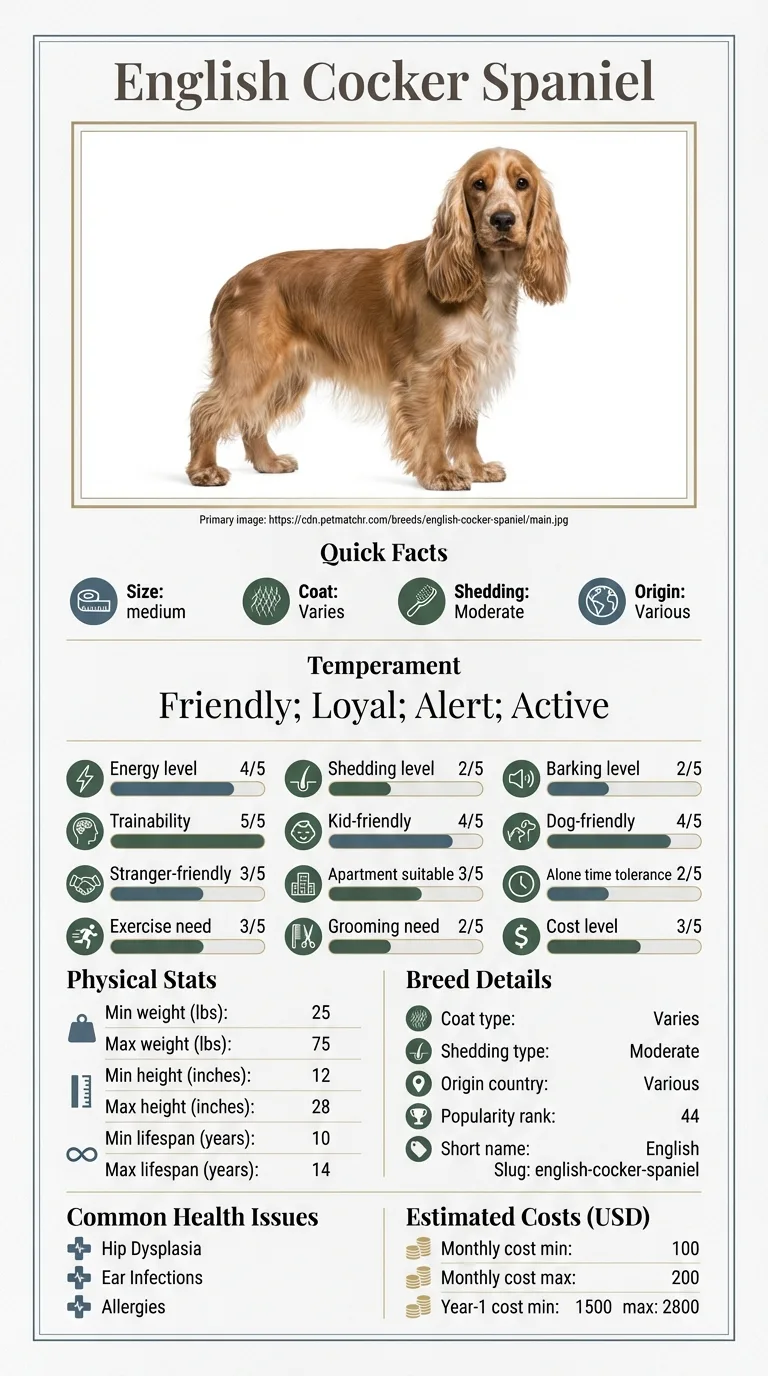
Typically, first-time dog owners or busy families may face challenges in recognizing and addressing bone and growth issues. These owners want the best for their pets but may lack the experience to spot early signs of discomfort.
This guide is not medical advice. If your dog shows pain, sudden behavior change, or worsening symptoms, consult a licensed veterinarian.
Some links may be affiliate links. We may earn a commission at no extra cost to you. We only suggest products we believe are helpful for dog owners.
We research and check what we publish, but we do not warrant that any figure, date, price, or statement is accurate, complete, or current, and we accept no liability for any loss, cost, injury, or other harm arising from the use of this site. Use it as one reference among several. You remain responsible for your own decisions and for your dog's care - confirm anything that matters with a licensed veterinarian or another qualified professional before you act on it. Full disclaimer.
Check this first
Recognizing when bone and growth issues in your English Cocker Spaniel are an emergency is crucial. Watch for signs that indicate immediate veterinary attention is necessary. If your dog shows severe limping, inability to put weight on a leg, or visible swelling in bones or joints, these are red flags.
Additionally, if your English Cocker Spaniel experiences sudden changes in behavior, such as excessive whining or aggression, it's time to call your vet right away.
Mild cases can often be monitored at home. If your dog shows slight limping or intermittent discomfort after exercise, keep a close eye on them. A change in their activity level or a minor reluctance to engage in play may not require immediate action.
Instead, you can create a plan to manage their activity and check in with your vet during your next visit. It's important to note that any ongoing concerns should not be ignored, and regular check-ups can help catch issues early.
If any of these apply, call your vet or an emergency clinic now. The rest of this page is for the cases that are not an emergency.
English Cocker Spaniel bone & growth issues often manifest as joint pain, limping, or awkward movement. These problems can stem from their medium size and rapid growth during puppyhood. Owners may notice their pups struggling with stairs or playing, which can be concerning.
Bone and growth issues are relatively common in English Cocker Spaniels, especially if they experience rapid growth or improper care. This breed is prone to certain conditions like hip dysplasia, making awareness essential for owners.
English Cocker Spaniels are medium-sized dogs that can be prone to bone and growth issues, particularly due to their rapid development in early life. This breed may inherit genetic predispositions that affect their bone health, leading to conditions like hip dysplasia.
Environmental factors can also contribute significantly to bone growth issues. Lack of proper nutrition, inadequate exercise, or overexertion during their growth phase can lead to problems. A poor diet lacking in essential vitamins and minerals can weaken bones, making them more susceptible to issues.
If you notice any unusual limping, reluctance to exercise, or swelling in their joints, schedule a vet appointment. Early intervention is crucial for diagnosing growth issues and preventing long-term problems.
Avoiding these common mistakes can help your English Cocker Spaniel overcome bone and growth issues more effectively.
Start here: English Cocker Spaniel Most Common Genetic Disorders
See all English Cocker Spaniel health problems, which breeds are prone to bone growth issues, or the full English Cocker Spaniel breed guide for temperament, exercise needs and ownership costs.
You can expect to see improvements in your English Cocker Spaniel's bone and growth issues within 3 to 6 months of consistent care and follow-up with your vet.
Success looks like your dog showing fewer signs of discomfort, maintaining a healthy weight, and developing stronger bones and muscles, which will allow them to enjoy a more active lifestyle.
Emily, a young veterinarian in Atlanta, adopted Max, her English Cocker Spaniel, when he was just a puppy. She noticed early on that he had some bone growth issues, which were concerning due to his rapid growth rate. After some research and consultations with fellow vets, she implemented a tailored diet rich in nutrients and started a gentle exercise regimen. Over the next few months, Emily closely monitored Max's progress and adjusted his routines as needed. Gradually, Max became more active and playful, and his bone strength improved significantly.
Key takeaway: With the right support and adjustments, managing bone growth issues in an English Cocker Spaniel is achievable, leading to a happier and healthier dog.
English Cocker Spaniels can face bone and growth issues due to their rapid growth during puppyhood. This breed is prone to certain genetic conditions, including hip dysplasia, which can affect bone development. Ensuring proper nutrition and regular vet check-ups can help detect these issues early.
To address bone and growth issues, focus on a balanced diet rich in calcium and phosphorus. Regular, moderate exercise will help strengthen bones without putting too much strain on growing joints. Consult your veterinarian for tailored advice on dietary needs and activity levels.
Look for signs like limping, reluctance to play, or difficulty standing up. Swelling around joints or noticeable discomfort can also indicate bone issues. If you notice these symptoms, visiting your vet for an evaluation is crucial.
Gentle training that focuses on basic obedience can help manage your English Cocker Spaniel's energy without overexerting their developing bones. Incorporating low-impact activities, like swimming or short walks, can be beneficial. Always adjust training intensity according to your dog's comfort level.
A balanced diet is crucial for healthy bone development. Nutritional deficiencies, especially in calcium and phosphorus, can lead to growth issues. Always consult your vet about the best diet for your English Cocker Spaniel to support their specific growth needs.
If you observe persistent limping, swelling in the joints, or signs of pain that last more than a couple of days, it's time to visit the vet. Early intervention can prevent more severe complications and help manage any underlying conditions effectively.
Yes, puppies are particularly susceptible to bone growth issues as their bones are still developing. However, adult English Cocker Spaniels can also experience problems due to factors like obesity or injury. Regular check-ups with your vet can help catch issues early in both age groups.
While training cannot directly fix bone or growth issues, it can help manage your dog's lifestyle. For example, teaching commands to avoid jumping or excessive running can reduce stress on their bones. Proper training can also support weight management, which is vital for maintaining healthy bones.
Ensure a balanced diet and regular vet check-ups to monitor growth. Avoid high-impact exercises until they are fully grown.
Aim for 30 minutes of moderate exercise each day, adjusting based on their growth and comfort levels.
Choose high-quality puppy food with appropriate calcium and phosphorus levels to support healthy bone growth.
If you notice limping, reluctance to exercise, or any discomfort, it's best to consult your vet immediately.
Yes, gentle training can help manage energy levels and ensure your dog gets the right type of exercise without overdoing it.
A one-page prep sheet for this condition: the signs, the questions to ask, what to get priced. Unlocks here.
You get: Vet visit prep sheet
No spam. One-click unsubscribe. See our privacy policy.
Preview page 1 before you decide.