Behavior
What are quick tips for Doberman Pinscher degenerative myelopathy (dm)?
Focus on low-impact exercises, use supportive harnesses, and ensure a safe home environment to prevent falls.

Quick answer
What are quick tips for Doberman Pinscher degenerative myelopathy (dm)?
Focus on low-impact exercises, use supportive harnesses, and ensure a safe home environment to prevent falls.
Doberman Pinscher degenerative myelopathy (DM) is a serious condition that affects their mobility and quality of life.
Typically, owners of Doberman Pinschers who are older or have a genetic predisposition to this condition face the greatest challenges. Those unaware of the symptoms may struggle to provide the necessary care and support.
This guide is not medical advice. If your dog shows pain, sudden behavior change, or worsening symptoms, consult a licensed veterinarian.
Some links may be affiliate links. We may earn a commission at no extra cost to you. We only suggest products we believe are helpful for dog owners.
We research and check what we publish, but we do not warrant that any figure, date, price, or statement is accurate, complete, or current, and we accept no liability for any loss, cost, injury, or other harm arising from the use of this site. Use it as one reference among several. You remain responsible for your own decisions and for your dog's care - confirm anything that matters with a licensed veterinarian or another qualified professional before you act on it. Full disclaimer.
Check this first
Recognizing when Doberman Pinscher degenerative myelopathy (DM) becomes an emergency is crucial for your dog's health. While many symptoms can be monitored, some red flags require immediate veterinary attention. If your Doberman suddenly loses coordination, struggles to stand, or shows severe signs of pain, call your vet right away. These symptoms could indicate advanced stages of DM or other serious conditions.
If any of these apply, call your vet or an emergency clinic now. The rest of this page is for the cases that are not an emergency.
Doberman Pinscher degenerative myelopathy (DM) is a progressive spinal cord disease that affects mobility. Owners may notice their Doberman having difficulty walking, dragging their back legs, or showing signs of weakness. This condition typically begins in middle-aged dogs and can lead to complete paralysis over time.
Degenerative myelopathy is relatively common in Doberman Pinschers, especially as they age. It's essential for owners to be aware of this condition, as early detection can help manage symptoms and improve their dog's quality of life.
Doberman Pinschers are genetically predisposed to degenerative myelopathy (DM), a progressive spinal cord disease. This condition often arises from inherited traits that affect the nervous system's ability to function properly. The breed's strong, muscular build may also mask early signs, leading to delayed recognition of the issue.
Environmental factors can exacerbate the progression of DM in Dobermans. Lack of exercise, obesity, and poor nutrition can contribute to muscle atrophy and joint problems. Additionally, a stressful environment may intensify symptoms like anxiety, which can further affect mobility.
If you notice signs of weakness, stumbling, or loss of coordination in your Doberman, it's crucial to consult your vet. They can provide a proper diagnosis and discuss treatment options. Regular check-ups will help monitor the progression of DM and adjust care as necessary.
Avoid these common mistakes to help manage your Doberman Pinscher's degenerative myelopathy (DM) effectively.
Start here: Doberman Pinscher Most Common Genetic Disorders: Screening
See all Doberman Pinscher health problems, which breeds are prone to degenerative myelopathy dm, or the full Doberman Pinscher breed guide for temperament, exercise needs and ownership costs.
You may notice symptoms of Doberman Pinscher degenerative myelopathy (DM) developing over several months, with a typical progression lasting from 6 months to a few years.
Success means managing your dog's mobility and quality of life through supportive care, including physical therapy and lifestyle adjustments.
In less severe cases, you may notice gradual weakness in the hind legs or slight difficulty in walking. These signs can be monitored with a plan. Keep a daily log of your dog's mobility and behavior, and consult your vet for a tailored management strategy. Regular check-ins can help you adjust care as needed, ensuring your Doberman stays comfortable and happy.

When Sarah adopted Jake, her energetic Doberman, she was excited for their adventures together. However, a year later, Jake began showing signs of degenerative myelopathy (DM). At first, he stumbled occasionally, but over time, his back legs weakened significantly. Sarah was heartbroken but determined to help him. She consulted a vet and started Jake on a physical therapy routine, focusing on strengthening his muscles. They also made changes to their home, like adding carpets for better traction. With patience and love, Jake adjusted to his new lifestyle, and Sarah learned to celebrate the little victories, like his ability to enjoy their daily walks, even if they were shorter than before.
Key takeaway: Managing Doberman Pinscher degenerative myelopathy (DM) requires a proactive approach, including vet consultations and lifestyle adaptations, to maintain your dog's quality of life.
Doberman Pinscher degenerative myelopathy (dm) is a progressive spinal cord disease that affects the dog's ability to walk. It typically starts with weakness in the hind legs, leading to paralysis over time. Early detection and management can help maintain their quality of life.
Management includes physical therapy, assistive devices like harnesses, and a well-planned exercise routine. Keeping your dog active but not overexerted is crucial. A vet can provide guidance tailored to your dog's condition.
While training cannot cure dm, it can help reinforce commands and maintain mental stimulation. Focus on low-impact activities that engage your dog without putting too much strain on their body. Consider consulting a professional trainer familiar with dm.
Signs include uncoordinated walking, dragging of the hind legs, and difficulty getting up. If you notice these symptoms, it's essential to consult your veterinarian for a proper diagnosis and management plan.
Currently, there is no cure for degenerative myelopathy. However, with proper management, you can help your dog maintain a good quality of life for as long as possible. Work closely with your veterinarian for the best strategies.
Early signs of degenerative myelopathy (DM) in Doberman Pinschers often include difficulty in coordination, dragging of the back legs, and a decreased ability to jump. If you notice these symptoms, it's important to consult your vet to discuss potential tests and next steps.
Yes, older Doberman Pinschers may experience more severe symptoms of degenerative myelopathy (DM) as their bodies are already weakened by age. Regular vet check-ups are crucial for older dogs to monitor their health and manage any complications associated with DM.
To keep your Doberman comfortable with degenerative myelopathy (DM), provide a soft, supportive bed and avoid slippery floors. Assistive devices like dog wheelchairs can also help them maintain mobility and independence as the condition progresses.
While there's no specific diet to cure degenerative myelopathy (DM), a balanced diet rich in antioxidants and omega fatty acids may support overall health. Always consult your vet for personalized dietary recommendations for your Doberman.
If your Doberman is diagnosed with degenerative myelopathy (DM), work closely with your vet to develop a care plan. This may include physical therapy, mobility aids, and regular assessments to monitor progression and adjust care as needed.
Focus on low-impact exercises, use supportive harnesses, and ensure a safe home environment to prevent falls.
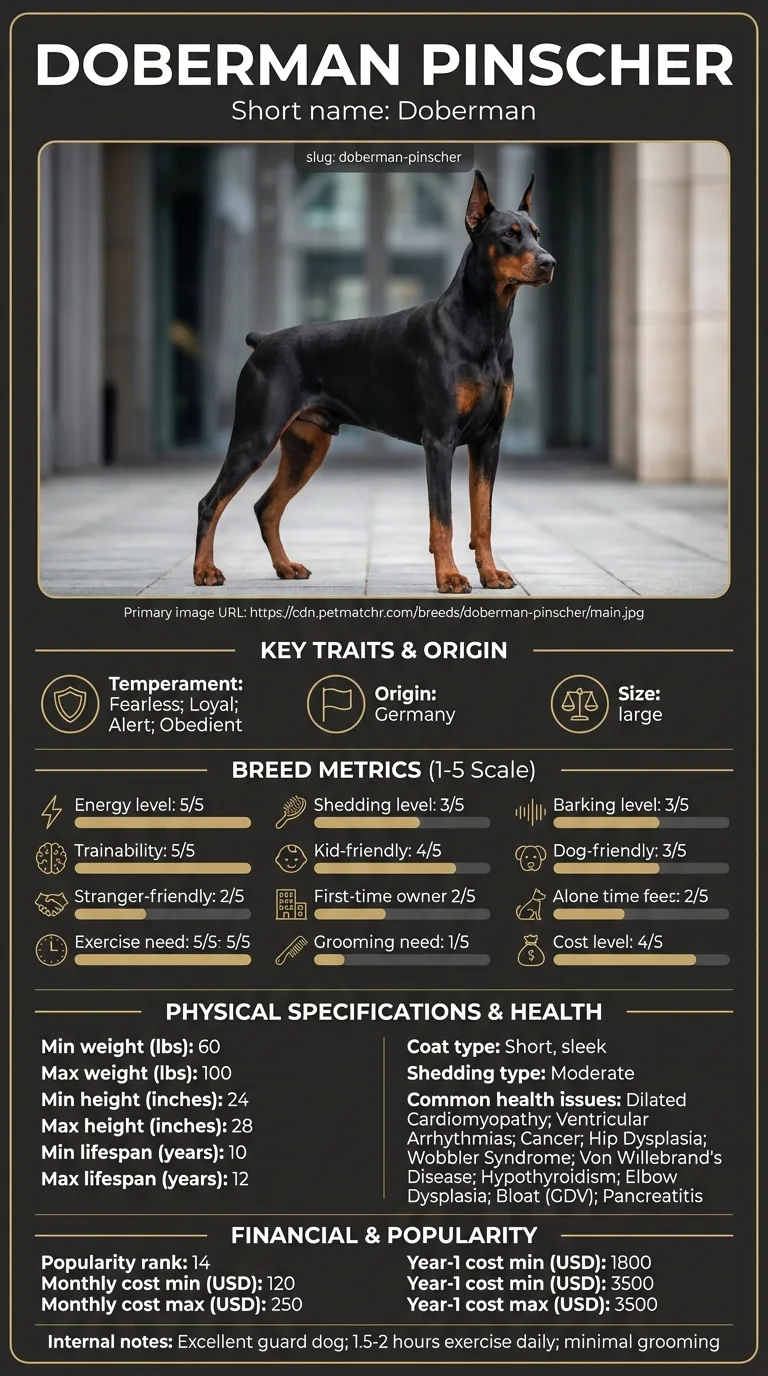
Managing Doberman Pinscher degenerative myelopathy can range from $120 to $250 monthly, depending on therapy and care needs.
Provide a balanced diet rich in nutrients, focusing on joint health and overall wellness. Consult your vet for specific dietary recommendations.
A one-page prep sheet for this condition: the signs, the questions to ask, what to get priced. Unlocks here.
You get: Vet visit prep sheet
No spam. One-click unsubscribe. See our privacy policy.
Preview page 1 before you decide.