Health
How to stop Dachshund corneal dystrophy?
There isn't a way to stop it, but regular vet visits and eye care can help manage the condition.

Quick answer
How to stop Dachshund corneal dystrophy?
There isn't a way to stop it, but regular vet visits and eye care can help manage the condition.
Dachshund corneal dystrophy is a common eye condition that affects many Doxies. This condition can lead to cloudiness in the eyes, impacting your dog's vision.
Typically, owners of Dachshunds with a family history of eye issues or those who notice changes in their dog's vision may struggle with this condition. It's vital for these owners to understand the signs and seek appropriate care.
This guide is not medical advice. If your dog shows pain, sudden behavior change, or worsening symptoms, consult a licensed veterinarian.
Some links may be affiliate links. We may earn a commission at no extra cost to you. We only suggest products we believe are helpful for dog owners.
We research and check what we publish, but we do not warrant that any figure, date, price, or statement is accurate, complete, or current, and we accept no liability for any loss, cost, injury, or other harm arising from the use of this site. Use it as one reference among several. You remain responsible for your own decisions and for your dog's care - confirm anything that matters with a licensed veterinarian or another qualified professional before you act on it. Full disclaimer.
Check this first
If you notice any of the following red-flag signs, it's time to act fast: - Severe redness or swelling in the eye - Sudden changes in vision or inability to see - Excessive tearing or discharge from the eye - Signs of pain, such as squinting or pawing at the eye
These symptoms may indicate a serious issue requiring immediate veterinary attention. On the other hand, mild cases of corneal dystrophy can often be managed at home. If your Dachshund has slight cloudiness in the eye without other concerning symptoms, you can monitor the situation.
In these cases, keep an eye out for: - Minimal cloudiness that isn't worsening - No signs of pain or discomfort - Normal behavior and activity levels
If you observe any changes or worsening symptoms, don’t hesitate to reach out to your vet. Regular check-ups can help manage the condition more effectively. Remember, acting quickly can prevent more severe problems down the line.
If any of these apply, call your vet or an emergency clinic now. The rest of this page is for the cases that are not an emergency.
Dachshund corneal dystrophy is a condition that affects your dog's eyes, leading to cloudiness in the cornea. This can cause discomfort and vision problems. Owners may notice their Dachshund squinting, blinking excessively, or being less active due to visual impairment.
Corneal dystrophy is relatively common in Dachshunds, particularly in certain bloodlines. Many dogs may show early signs, but not all will experience severe symptoms or require treatment.
Dachshunds can be prone to corneal dystrophy due to their genetic makeup. This breed may inherit conditions that affect the clarity of their corneas, leading to cloudiness. Breeding practices can contribute to the prevalence of these eye issues.
Environmental factors like exposure to allergens, irritants, and UV light can also contribute to corneal dystrophy. Poor nutrition may weaken eye health, making it more susceptible to cloudiness. Keeping your Dachshund in a clean environment can help reduce these risks.
If you notice persistent cloudiness in your Dachshund's eyes or any signs of discomfort, consult your vet. They can recommend treatments or medications to manage corneal dystrophy effectively.
Understanding what not to do can help you manage your Dachshund's corneal dystrophy better. Here are some common mistakes and safer alternatives.
Start here: Dachshund Most Common Genetic Disorders: What to Screen For
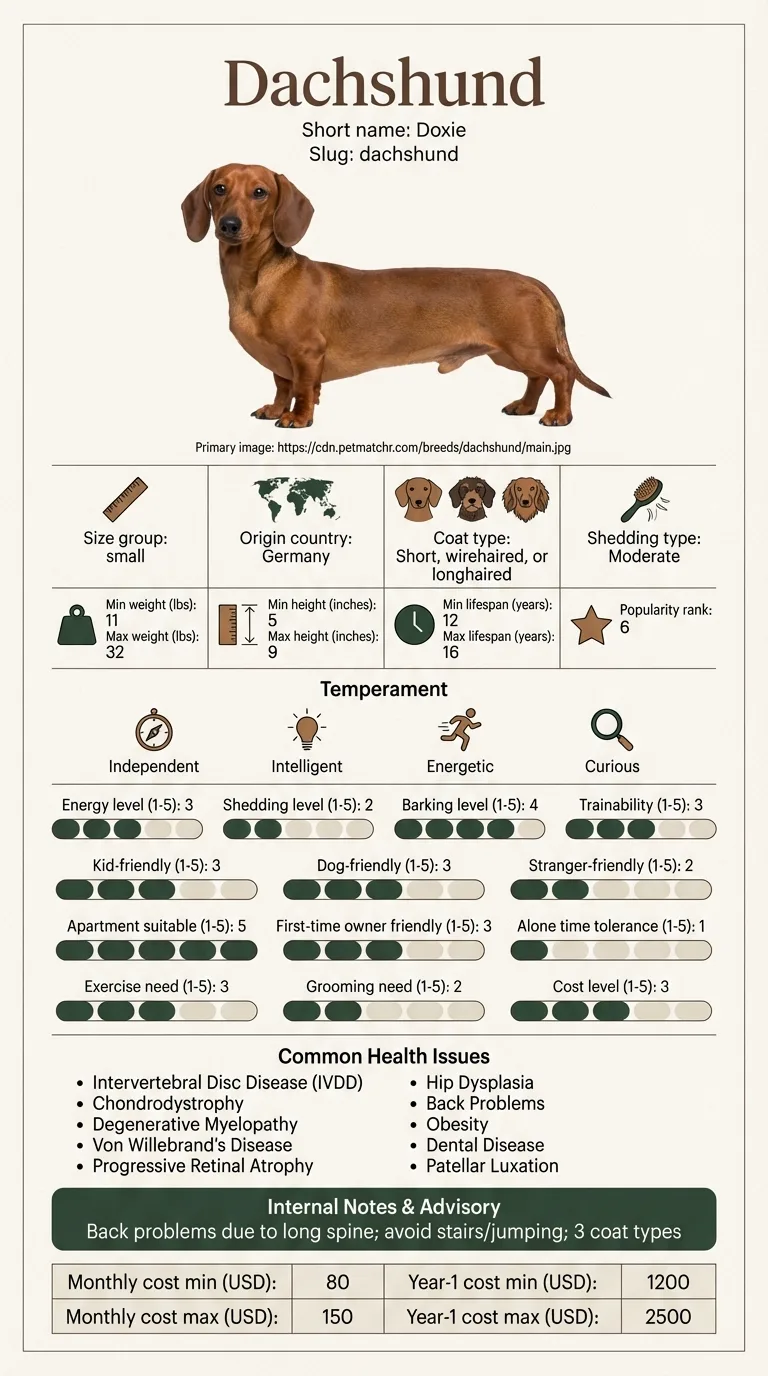
See all Dachshund health problems, which breeds are prone to corneal dystrophy, or the full Dachshund breed guide for temperament, exercise needs and ownership costs.
You can expect to see improvements in your Dachshund's corneal health within 4 to 6 weeks of consistent treatment. For some dogs, long-term management may be necessary.
Success means your Dachshund has clearer vision and less discomfort. You'll notice fewer signs of cloudiness in their eyes and a more active disposition as a result.
When Jenna adopted Sammy, her playful Dachshund, she quickly noticed his eyes were cloudy. At first, she thought it was just a quirky trait of his breed. After a vet visit, Jenna learned that Sammy had corneal dystrophy. Determined to help him, she followed a treatment plan that included eye drops and regular vet check-ups. Over the next few weeks, Sammy's eyes gradually cleared up, and he became more playful than ever, chasing after his favorite toys with renewed energy.
Key takeaway: With the right treatment and commitment, you can improve your Dachshund's quality of life when dealing with corneal dystrophy.
This condition is often hereditary, meaning it can be passed down from parent dogs. Factors like age and environmental irritants can also contribute to its development. Consulting a vet can help determine the cause in your specific case.
Treatment options vary. Some dogs may need eye drops to manage discomfort, while others may require surgery to correct severe cases. Always consult your veterinarian to discuss the best treatment plan for your dog.
Since this condition is often genetic, prevention is challenging. However, regular veterinary check-ups can help catch early signs. Keeping your dog's eyes clean and avoiding irritants can also be beneficial.
Common signs include cloudy eyes, squinting, and excessive tearing. If you notice these symptoms, it's crucial to get your dog evaluated by a vet. Early intervention can help maintain their quality of life.
While corneal dystrophy can affect vision, many dogs adapt well to the condition. However, severe cases may lead to complications, so ongoing veterinary care is important. Regular check-ups will help manage any issues that arise.
Training won’t directly affect corneal dystrophy, but it can help your dog adjust to any vision changes. Positive reinforcement training can build confidence and reduce anxiety related to their condition.
Older Dachshunds can experience corneal dystrophy more severely due to age-related changes in their eyes. It's essential to monitor their vision and consult a vet if you notice any changes.
A veterinarian diagnoses Dachshund corneal dystrophy through a thorough eye examination. They may use specialized tools to assess the cloudiness and overall health of your dog's eyes.
While there is no cure for Dachshund corneal dystrophy, treatments may include lubricating eye drops to relieve symptoms. In severe cases, surgical options can be discussed with your vet.
You should see a vet if your Dachshund shows signs of pain, increased tearing, or rapid changes in vision. Early intervention can help manage the condition more effectively.
There isn't a way to stop it, but regular vet visits and eye care can help manage the condition.
Keep your dog's eyes clean and avoid irritants. Regular check-ups can catch issues early.
It can cause discomfort, but many dogs learn to cope. Consult your vet for pain management options.
In severe cases, it can affect vision, but many dogs retain partial sight. Regular vet check-ups are key to monitoring their condition.
Take your dog to the vet for a thorough examination. Early diagnosis can help manage the condition effectively.
A one-page prep sheet for this condition: the signs, the questions to ask, what to get priced. Unlocks here.
You get: Vet visit prep sheet
No spam. One-click unsubscribe. See our privacy policy.
Preview page 1 before you decide.