Behavior
What are Dachshund arthritis quick tips?
Keep your Dachshund active with low-impact exercises, maintain a healthy diet, and provide a warm, comfortable resting area.

Quick answer
What are Dachshund arthritis quick tips?
Keep your Dachshund active with low-impact exercises, maintain a healthy diet, and provide a warm, comfortable resting area.
Dachshund arthritis is a common issue that affects many Doxies, leading to pain and discomfort in their joints.
Owners of Dachshunds, especially those who are older or more active, often face this challenge. If you notice your Doxie limping or hesitating to jump, you might be dealing with arthritis.
This guide is not medical advice. If your dog shows pain, sudden behavior change, or worsening symptoms, consult a licensed veterinarian.
Some links may be affiliate links. We may earn a commission at no extra cost to you. We only suggest products we believe are helpful for dog owners.
We research and check what we publish, but we do not warrant that any figure, date, price, or statement is accurate, complete, or current, and we accept no liability for any loss, cost, injury, or other harm arising from the use of this site. Use it as one reference among several. You remain responsible for your own decisions and for your dog's care - confirm anything that matters with a licensed veterinarian or another qualified professional before you act on it. Full disclaimer.
Check this first
Recognizing when Dachshund arthritis becomes an emergency is crucial for your dog's health. If your Doxie displays severe signs such as inability to walk, extreme pain when touched, or sudden swelling in their joints, you should call your vet immediately. These symptoms can indicate a more serious condition that requires urgent care.
If any of these apply, call your vet or an emergency clinic now. The rest of this page is for the cases that are not an emergency.
Dachshund arthritis is a common issue that affects these small dogs, often manifesting as difficulty in movement or reluctance to engage in play. As they age, their joints can become stiff and painful, leading to noticeable changes in their daily activities. You might see your Doxie struggling to jump onto the couch or hesitating before going up the stairs.
Arthritis is quite common in Dachshunds, especially as they reach their senior years. Studies suggest that a significant portion of Dachshunds over the age of 7 may experience some form of arthritis. Early detection and management can greatly improve their quality of life.
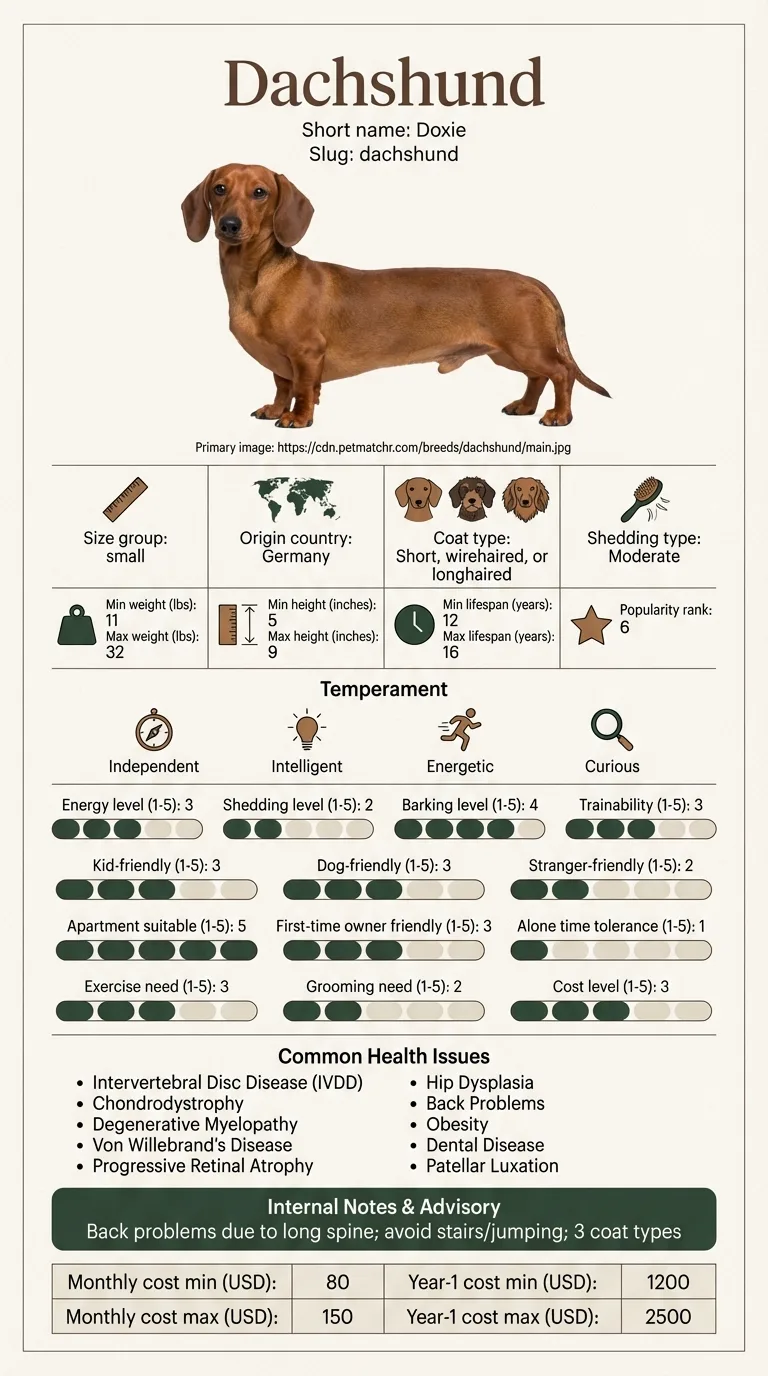
Dachshunds are prone to arthritis due to their long bodies and short legs. This unique structure can lead to joint stress and conditions like Intervertebral Disc Disease (IVDD). Additionally, their genetic predisposition makes them more vulnerable to this painful condition as they age.
Environmental factors can also contribute to Dachshund arthritis. Obesity from overfeeding and lack of exercise increases joint strain. Furthermore, slippery surfaces can lead to falls or injuries, exacerbating existing joint issues.
Consult your vet if you notice signs of pain, like limping or reluctance to move. They can recommend treatments, including medications or supplements, tailored to your Dachshund's needs.
Many owners inadvertently reinforce Dachshund arthritis problems. Here are some common mistakes to avoid, along with safer alternatives.
Start here: Dachshund Most Common Genetic Disorders: What to Screen For
See all Dachshund health problems, which breeds are prone to arthritis, or the full Dachshund breed guide for temperament, exercise needs and ownership costs.
You might start seeing improvements in your Dachshund's mobility and comfort within 4 to 6 weeks of implementing changes.
Success means your Dachshund can move more freely, enjoys playtime without discomfort, and shows a happier demeanor overall.
In less severe cases, you can monitor your Dachshund's arthritis at home. Signs like mild limping, occasional stiffness, or reluctance to jump can often be managed with a care plan that includes weight management and moderate exercise. Keeping a close eye on your dog’s activity and comfort levels can help you determine if a vet visit is needed later.

Meet Sarah, a busy nurse in Chicago who adopted a sweet Dachshund named Max. After a few months, she noticed Max was struggling to jump onto the couch and hesitated during walks. Concerned about Dachshund arthritis, she consulted her vet, who recommended a combination of weight management, joint supplements, and gentle exercises. Sarah created a structured daily routine with short walks and play sessions, slowly increasing Max's activity level. She also invested in a ramp for the couch and started a low-impact swimming routine. After six weeks, Max was noticeably more active and playful, reclaiming his joyful spirit.
Key takeaway: With the right care and adjustments, managing Dachshund arthritis can lead to a happier, more active life for your furry friend.
Dachshund arthritis is often due to age-related wear and tear on the joints. Their long spine and short legs can put extra stress on their joints, making them more susceptible. Regular check-ups with your vet can help catch early signs.
To help manage Dachshund arthritis, consider providing a comfortable bed, maintaining a healthy weight, and ensuring low-impact exercise. Joint supplements may also be beneficial, but consult your vet for tailored advice.
Signs of arthritis in Dachshunds can include limping, stiffness, reluctance to jump or play, and difficulty getting up. If you notice any of these symptoms, a vet visit is essential for proper diagnosis and treatment.
A diet rich in omega-3 fatty acids can help reduce inflammation and support joint health in Dachshunds with arthritis. Look for high-quality dog food or supplements that include these nutrients and consult your vet for recommendations.
Training can help by reinforcing gentle movements and commands that don’t strain the joints. Activities like obedience training or mental stimulation can keep your Dachshund engaged without overexertion.
Treatment for Dachshund arthritis can include pain relief medications, physical therapy, and weight management. In severe cases, surgical options may be discussed with your vet.
Preventing Dachshund arthritis involves maintaining a healthy weight, providing regular but gentle exercise, and ensuring they avoid high-impact activities. Early vet visits can help monitor joint health.
Early signs of Dachshund arthritis can include limping, reluctance to jump or climb stairs, and stiffness after resting. You might also notice your Doxie is less playful or hesitant to engage in their usual activities.
Yes, older Dachshunds may experience more severe symptoms due to the natural aging process. It's important to monitor their mobility and comfort levels closely, as they may require different care or medication.
Dachshunds can develop arthritis at a young age due to genetic factors, obesity, or previous injuries. Their long spine makes them particularly vulnerable to joint issues, so it's essential to keep them at a healthy weight and provide proper care.
To help your Dachshund with arthritis, consider providing a soft, supportive bed and avoiding steep stairs. Regular, gentle exercise can also help maintain joint health, but be sure to consult your vet for a tailored exercise plan.
If you notice persistent limping, changes in behavior, or difficulty in movement, it's time to see the vet. Early intervention can make a significant difference in managing Dachshund arthritis and improving their quality of life.
Keep your Dachshund active with low-impact exercises, maintain a healthy diet, and provide a warm, comfortable resting area.
Treatment costs for Dachshund arthritis can range from $80 to $150 monthly, depending on medications and vet visits.
Yes, with proper care and management, many Dachshunds can live comfortably with arthritis for years.
If your Dachshund shows signs of pain or mobility issues, schedule a vet visit as soon as possible for assessment.
Provide a soft bed, maintain a healthy weight, and limit jumping or running on hard surfaces to ease joint stress.
A one-page prep sheet for this condition: the signs, the questions to ask, what to get priced. Unlocks here.
You get: Vet visit prep sheet
No spam. One-click unsubscribe. See our privacy policy.
Preview page 1 before you decide.