Behavior
What are quick tips for managing Cocker Spaniel PRA?
Ensure your home is well-lit and free of obstacles to help your Cocker Spaniel navigate easily. Use consistent verbal commands to guide them and maintain a routine to reduce anxiety.

Quick answer
What are quick tips for managing Cocker Spaniel PRA?
Ensure your home is well-lit and free of obstacles to help your Cocker Spaniel navigate easily. Use consistent verbal commands to guide them and maintain a routine to reduce anxiety.
Cocker Spaniel progressive retinal atrophy (PRA) leads to gradual vision loss, impacting your dog's quality of life.
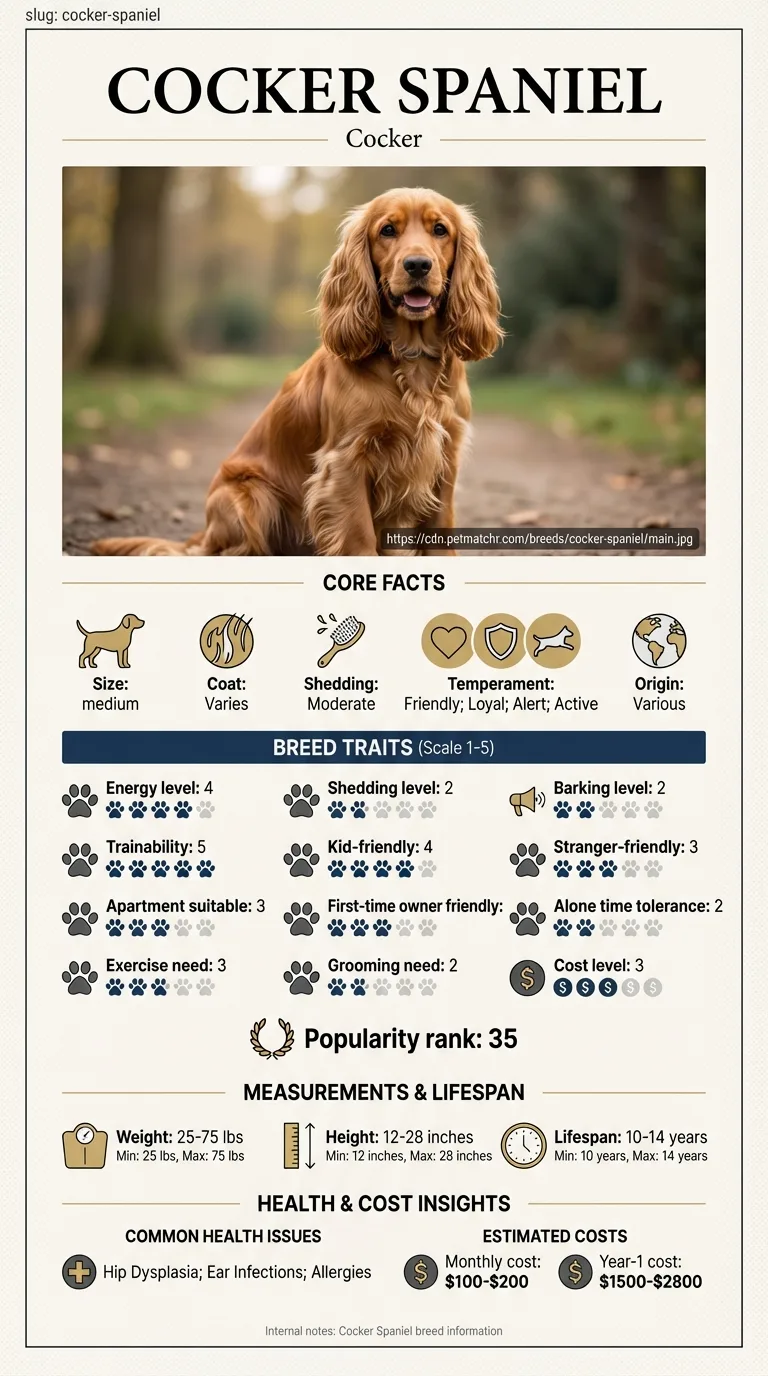
Owners of Cocker Spaniels, especially those who are first-time dog parents, often face the challenge of recognizing and adapting to the symptoms of PRA. It can be emotionally difficult to see a beloved pet struggle with vision loss.
This guide is not medical advice. If your dog shows pain, sudden behavior change, or worsening symptoms, consult a licensed veterinarian.
Some links may be affiliate links. We may earn a commission at no extra cost to you. We only suggest products we believe are helpful for dog owners.
We research and check what we publish, but we do not warrant that any figure, date, price, or statement is accurate, complete, or current, and we accept no liability for any loss, cost, injury, or other harm arising from the use of this site. Use it as one reference among several. You remain responsible for your own decisions and for your dog's care - confirm anything that matters with a licensed veterinarian or another qualified professional before you act on it. Full disclaimer.
Check this first
Recognizing when Cocker Spaniel progressive retinal atrophy (PRA) becomes an emergency can be crucial for your dog's well-being. If you notice signs of sudden vision loss, such as your dog bumping into furniture or appearing disoriented, call your vet immediately. Other red flags include excessive blinking, redness in the eyes, or signs of pain like whining or pawing at the face. These symptoms could indicate a more severe condition requiring urgent care.
On the other hand, there are mild cases of PRA that can be monitored. If your Cocker Spaniel seems to be having minor difficulties, like occasionally missing a toy or hesitating in low light, you can create a watch-and-wait plan. Keeping track of any changes in behavior or vision over time can help you and your vet determine the best course of action. Regular check-ups will also help in managing the condition effectively.
It's vital to stay vigilant. While most Cocker Spaniels with PRA can lead fulfilling lives, any drastic changes in their behavior should prompt a vet visit. Keeping a close eye on your dog's vision health can make all the difference in ensuring they remain happy and comfortable.
If any of these apply, call your vet or an emergency clinic now. The rest of this page is for the cases that are not an emergency.
Cocker Spaniel progressive retinal atrophy (PRA) is a genetic condition that leads to gradual vision loss. Owners may notice their dogs struggling to navigate familiar environments or becoming hesitant in new ones. Common signs include difficulty seeing in dim light or bumping into objects, which can be distressing for both the dog and the owner.
PRA is relatively common in Cocker Spaniels, with studies suggesting that around 10-15% may develop this condition during their lifetime. Early detection and genetic testing can help owners assess the risk.
Cocker Spaniels are prone to progressive retinal atrophy (PRA) due to genetic factors. This breed has a higher likelihood of inheriting conditions that affect their vision, leading to progressive vision loss. Their specific eye structure makes them more susceptible to these issues.
Environmental factors like poor lighting and lack of stimulation can exacerbate the effects of PRA. If a Cocker Spaniel is not provided with adequate exercise and mental engagement, their coping mechanisms may weaken. This can make them more reliant on their sight, worsening their anxiety as their vision declines.
Consult a vet if you notice significant changes in your dog’s behavior or if they seem to struggle with daily activities. A vet can offer tests to confirm PRA and discuss treatment options. Regular check-ups are essential to monitor their overall health as their condition progresses.
Avoiding these common mistakes can help manage Cocker Spaniel progressive retinal atrophy (PRA) more effectively.
Start here: Cocker Spaniel Most Common Genetic Disorders: Screening
See all Cocker Spaniel health problems, which breeds are prone to progressive retinal atrophy pra, or the full Cocker Spaniel breed guide for temperament, exercise needs and ownership costs.
Expect to see gradual changes in your Cocker Spaniel's vision over several months to years. Regular check-ups with a vet can help track the progression.
Success means managing your dog's comfort and quality of life despite vision loss. This includes adapting your home environment and continuing to engage your dog in safe activities.
Sarah, a busy teacher in her 30s, noticed her Cocker Spaniel, Bella, bumping into furniture and struggling to find her favorite toys. After a vet visit, Sarah learned Bella had progressive retinal atrophy (PRA). At first, Sarah was overwhelmed, but she quickly adapted by rearranging the furniture to create clear pathways and using toys with sound to help Bella navigate. They also started daily training sessions focusing on voice commands. Over time, Bella learned to rely on her other senses, and Sarah felt more confident managing Bella's condition.
Key takeaway: With patience and creativity, you can help your dog adapt to vision loss. Engaging with your Cocker Spaniel through training and environmental adjustments can make a significant difference in their quality of life.
PRA is primarily inherited and often affects Cocker Spaniels due to their genetic makeup. If your dog is diagnosed with PRA, it's likely due to a genetic predisposition passed down from their parents. Regular veterinary check-ups can help catch this condition early.
While there's no cure for PRA, you can help your Cocker Spaniel adjust by making their environment safe and predictable. Keep furniture and pathways consistent, and use verbal cues to guide them. Training can also help build their confidence despite vision loss.
Cocker Spaniel progressive retinal atrophy (PRA) training focuses on using sound and touch instead of sight. Positive reinforcement techniques can help. Gradually introduce new commands and routines, allowing your dog to learn through repetition and encouragement.
Signs of PRA include difficulty seeing in low light, bumping into objects, or showing anxiety in unfamiliar settings. If you notice any of these behaviors, consult your vet for a proper diagnosis and guidance on managing the condition.
While diet alone won't cure PRA, a balanced diet rich in antioxidants may support overall eye health. Consult your veterinarian for specific dietary recommendations that could help your Cocker Spaniel live a healthier, more comfortable life with PRA.
Surgery is not typically an option for PRA, as it is a degenerative condition. Instead, focus on supportive care and modifying your home environment to help your dog navigate safely. Always discuss options with your veterinarian.
Early signs of Cocker Spaniel progressive retinal atrophy (PRA) include difficulty seeing in low light, bumping into furniture, and hesitance to navigate stairs. If you notice these behaviors, it's a good idea to consult your vet for proper evaluation.
Yes, older Cocker Spaniels may show more severe symptoms of progressive retinal atrophy (PRA) compared to younger dogs. Their overall health can impact how they adapt to vision loss, making it essential to monitor their behavior closely.
Currently, there is no cure for Cocker Spaniel progressive retinal atrophy (PRA). However, your vet can recommend strategies to help your dog adapt, such as using consistent pathways and creating a safe environment at home.
To help your Cocker Spaniel adjust to vision loss from PRA, maintain a consistent layout in your home and use verbal cues to guide them. You can also engage in scent games and tactile toys that stimulate their other senses.
If you notice any signs of vision loss or behavioral changes in your Cocker Spaniel, you should take them to the vet promptly. Early detection can make a difference in managing their comfort and quality of life.
Ensure your home is well-lit and free of obstacles to help your Cocker Spaniel navigate easily. Use consistent verbal commands to guide them and maintain a routine to reduce anxiety.
Focus on using sound and touch for training. Positive reinforcement methods will help your dog learn effectively despite their vision challenges.
Create a safe, predictable environment and reassure your dog with your presence. Gradually introduce them to new areas to build confidence.
Costs can vary, but managing PRA typically includes regular veterinary visits and modifications to your home environment. Budgeting for these expenses is important.
While no supplements can cure PRA, some may support overall eye health. Always consult your veterinarian before adding any supplements to your dog's diet.
A one-page prep sheet for this condition: the signs, the questions to ask, what to get priced. Unlocks here.
You get: Vet visit prep sheet
No spam. One-click unsubscribe. See our privacy policy.
See a sample page before you decide.
Early access list
The free prep sheet covers the same-day warning signs, a symptom log and the questions to ask. We are considering a fuller kit that adds a cost worksheet for the usual tests and treatments (US price ranges with their sources) and a plain-English guide to ways of covering the bill. It is not built yet; this list tells us whether it is worth building.
One email, no spam, unsubscribe anytime. Information only, not veterinary advice.