Behavior
What are some Cavalier King Charles Spaniel x-scid quick tips?
Keep your Cavalier away from crowded places and other dogs to minimize infection risk. Regular vet check-ups are essential for monitoring their health.

Quick answer
What are some Cavalier King Charles Spaniel x-scid quick tips?
Keep your Cavalier away from crowded places and other dogs to minimize infection risk. Regular vet check-ups are essential for monitoring their health.
Cavalier King Charles Spaniel x-scid is a serious health issue that can affect your dog's immune system.
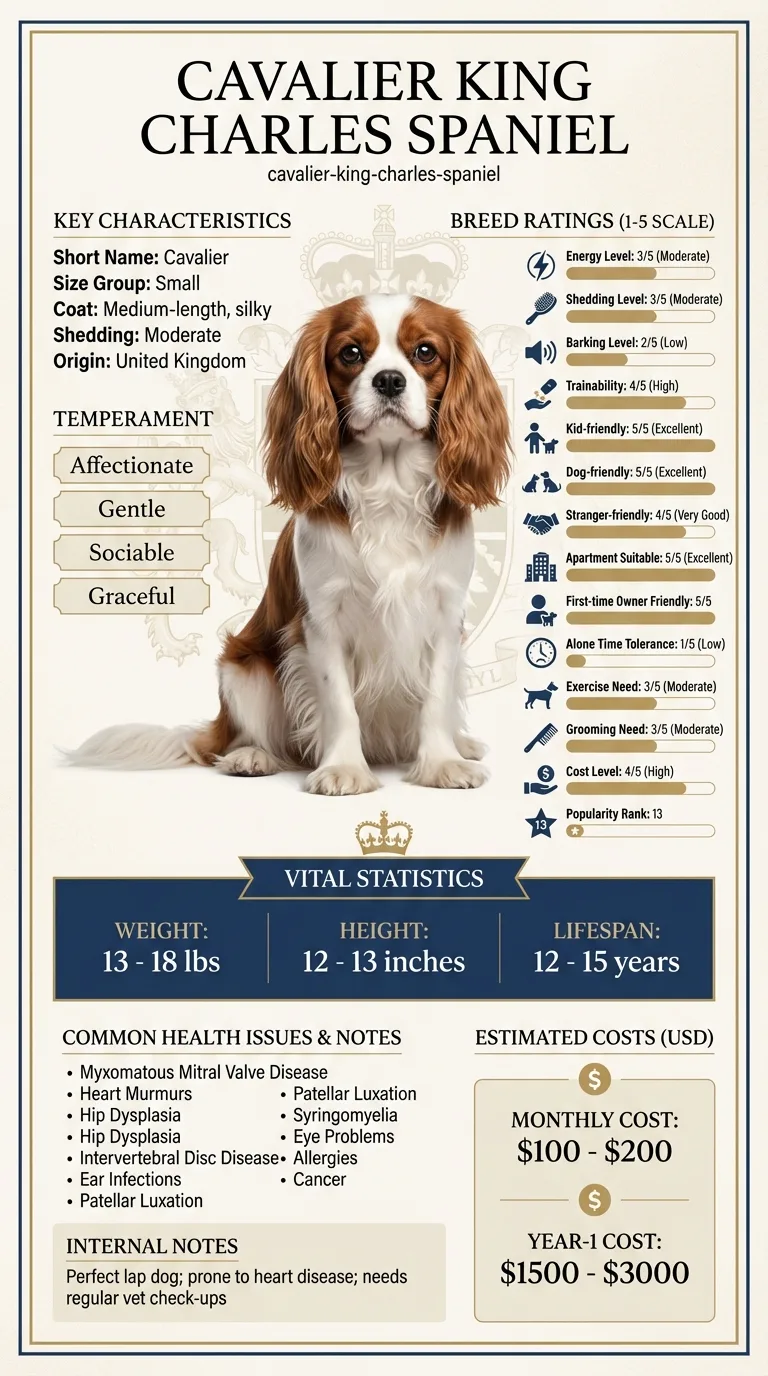
Typically, owners of Cavalier King Charles Spaniels face this problem, especially those who want to ensure their dog lives a healthy, happy life. New pet parents may feel overwhelmed when they discover this condition in their beloved companion.
This guide is not medical advice. If your dog shows pain, sudden behavior change, or worsening symptoms, consult a licensed veterinarian.
Some links may be affiliate links. We may earn a commission at no extra cost to you. We only suggest products we believe are helpful for dog owners.
We research and check what we publish, but we do not warrant that any figure, date, price, or statement is accurate, complete, or current, and we accept no liability for any loss, cost, injury, or other harm arising from the use of this site. Use it as one reference among several. You remain responsible for your own decisions and for your dog's care - confirm anything that matters with a licensed veterinarian or another qualified professional before you act on it. Full disclaimer.
Check this first
Call your vet immediately if your dog shows any of these red-flag signs: - Persistent vomiting or diarrhea - Sudden weight loss - Unexplained lethargy or weakness - Difficulty breathing or coughing - Swelling of the lymph nodes - Signs of infection like fever or discharge
These symptoms can indicate severe conditions that require urgent care. If your dog is experiencing any of these, do not wait; prompt action can save their life.
On the other hand, if your Cavalier is showing mild symptoms, you might not need an immediate vet visit. Monitor the following: - Occasional sneezing or coughing without distress - Mild digestive upset that lasts less than 24 hours - Slight lethargy that improves with rest
In these cases, observe your dog closely and keep a record of any changes. If symptoms worsen or don’t improve, reach out to your vet. It’s better to be safe and consult a professional than to risk your pet's health.
If any of these apply, call your vet or an emergency clinic now. The rest of this page is for the cases that are not an emergency.
Cavalier King Charles Spaniels can be affected by X-SCID, or X-linked severe combined immunodeficiency, a rare but serious condition. This disease weakens their immune system, making them vulnerable to infections. Daily life for a dog with X-SCID can be challenging, as they may experience frequent illnesses, fatigue, and require special care to manage their health.
X-SCID is quite rare in Cavalier King Charles Spaniels, but when it occurs, it significantly impacts their quality of life. Owners should be aware of the symptoms and ensure regular veterinary check-ups to catch any issues early.
The Cavalier King Charles Spaniel is prone to certain genetic health issues, including X-SCID (Severe Combined Immunodeficiency). This condition is rare but can lead to serious immune system problems. Breeding practices may have inadvertently contributed to the prevalence of this health issue, as it can be hereditary.
Environmental factors, such as exposure to pathogens and stress levels, can exacerbate the effects of X-SCID. If a Cavalier is in an environment with frequent infections or high stress, their weakened immune system can struggle even more. Additionally, inadequate socialization or lack of a stable routine can impact their overall well-being.
Consult your vet if you notice symptoms like frequent infections, lethargy, or unusual behaviors in your Cavalier. These could indicate that their immune system is compromised and may require medical attention.
Avoiding these common mistakes can help manage your Cavalier King Charles Spaniel's x-scid more effectively.
Start here: Cavalier King Charles Spaniel Genetic Disorders: Screening
See all Cavalier King Charles Spaniel health problems, which breeds are prone to x scid, or the full Cavalier King Charles Spaniel breed guide for temperament, exercise needs and ownership costs.
With consistent care and support, you can see improvements in your Cavalier King Charles Spaniel's x-scid behavior within 4 to 6 weeks. However, managing this condition is an ongoing process that requires patience.
Success means your dog shows fewer signs of anxiety and is more comfortable in various situations, allowing them to enjoy their daily life and bond with you and others.
Max, a Cavalier King Charles Spaniel, was diagnosed with x-scid, leading to severe anxiety in new environments. His owner, Sarah, a busy nurse, struggled to take him out without him becoming overwhelmed. After consulting a vet and a dog trainer, Sarah implemented a consistent training routine focused on gradual exposure to different situations. They started with short trips to the park during quiet hours and gradually increased exposure to more stimuli. Over time, Max became more confident and calm during outings, and Sarah found joy in sharing new experiences with her furry friend.
Key takeaway: With the right training and gradual exposure, you can help your Cavalier King Charles Spaniel manage their x-scid-related anxiety and enjoy life together.
X-SCID, or severe combined immunodeficiency, is a genetic condition that affects your Cavalier's immune system. This means they struggle to fight off infections. It's often inherited, so if your dog has it, it's important to discuss genetic testing with your vet. This answer relates to Cavalier King Charles Spaniel x-scid.
To support your Cavalier, keep them in a clean, low-stress environment. Regular vet visits are crucial for managing their health and spotting any infections early. Also, limit exposure to other dogs to reduce the risk of illness.
Symptoms of x-scid can include frequent infections, persistent diarrhea, and poor growth. If you notice any of these signs, it's important to consult your vet immediately for a proper diagnosis and treatment plan.
Currently, there is no cure for x-scid. Treatment primarily focuses on managing symptoms and preventing infections. Your vet may recommend specific medications or therapies to help your dog stay healthy.
Yes, x-scid can significantly impact your dog's lifespan due to increased susceptibility to infections. With proper care and management, however, some dogs can live a fulfilling life with this condition.
X-SCID is a genetic condition that typically appears in young dogs. However, older dogs may show symptoms if they were previously undiagnosed. Regular vet check-ups are essential for early detection.
Supporting a Cavalier with X-SCID includes providing a stress-free environment, ensuring proper nutrition, and regular veterinary visits. Your vet may recommend special care plans tailored to your dog's needs.
Training a Cavalier with X-SCID should focus on positive reinforcement, as stressful situations can worsen their condition. Keep training sessions short and fun to avoid overwhelming your dog.
If you notice symptoms like excessive infections or poor growth, it's time to see the vet. Early intervention can make a significant difference in managing X-SCID.
Keep your Cavalier away from crowded places and other dogs to minimize infection risk. Regular vet check-ups are essential for monitoring their health.
Use positive reinforcement techniques to train your Cavalier. Focus on basic commands and socialization to help them feel secure.
Monthly costs for a Cavalier with x-scid can range from $100 to $200, depending on their health needs and any medications.
While x-scid is rare, it can occur in Cavalier King Charles Spaniels due to genetic factors. Responsible breeding can help reduce its prevalence.
Create a calm environment and establish a routine to help reduce anxiety. Consider using calming products or consulting a trainer for additional support.
A one-page prep sheet for this condition: the signs, the questions to ask, what to get priced. Unlocks here.
You get: Vet visit prep sheet
No spam. One-click unsubscribe. See our privacy policy.
Preview page 1 before you decide.