Behavior
What should I do if my Cavalier gets too hot?
Move them to a cooler area, offer fresh water, and apply cool, damp cloths to their body. If symptoms persist, seek veterinary care immediately.

Quick answer
What should I do if my Cavalier gets too hot?
Move them to a cooler area, offer fresh water, and apply cool, damp cloths to their body. If symptoms persist, seek veterinary care immediately.
Cavalier King Charles Spaniels are charming companions, but their heat sensitivity can lead to serious issues like hyperthermia.
Owners of Cavaliers, especially those living in warmer climates or with limited access to cool environments, often face challenges managing their dog's heat sensitivity. This issue can be especially stressful for first-time dog owners who may not be familiar with the signs of overheating.
This guide is not medical advice. If your dog shows pain, sudden behavior change, or worsening symptoms, consult a licensed veterinarian.
Some links may be affiliate links. We may earn a commission at no extra cost to you. We only suggest products we believe are helpful for dog owners.
We research and check what we publish, but we do not warrant that any figure, date, price, or statement is accurate, complete, or current, and we accept no liability for any loss, cost, injury, or other harm arising from the use of this site. Use it as one reference among several. You remain responsible for your own decisions and for your dog's care - confirm anything that matters with a licensed veterinarian or another qualified professional before you act on it. Full disclaimer.
Check this first
If your Cavalier shows any of these critical symptoms, it’s time to act fast:
- Excessive panting or difficulty breathing - Weakness or lethargy - Elevated heart rate or pulse - Vomiting or diarrhea - Seizures or loss of consciousness
These symptoms indicate severe overheating and require immediate veterinary attention. On the other hand, mild cases can often be managed with careful observation. If your dog is simply panting but still responsive, or if they seem a bit restless on a warm day, monitor them closely. Make sure they have access to plenty of fresh water and a cool place to rest.
In cases of mild discomfort, keep an eye on their behavior and hydration levels. If they start to show signs of distress like drooling or excessive panting, it’s time to take action. Always err on the side of caution. If you are ever unsure, it’s better to consult your vet. Your Cavalier's safety is paramount, so don’t hesitate to seek professional help when in doubt.
If any of these apply, call your vet or an emergency clinic now. The rest of this page is for the cases that are not an emergency.
Cavalier King Charles Spaniels are particularly prone to heat sensitivity and hyperthermia, which can lead to dangerous health issues. On a hot day, you might notice your Cavalier panting excessively, becoming lethargic, or refusing to play outside. These signs can escalate quickly, making it crucial to monitor their temperature and behavior during warmer months.
Heat sensitivity and hyperthermia are common issues for Cavalier King Charles Spaniels. They face a 533% higher risk of heat-related problems compared to other breeds, making it essential for owners to stay vigilant.
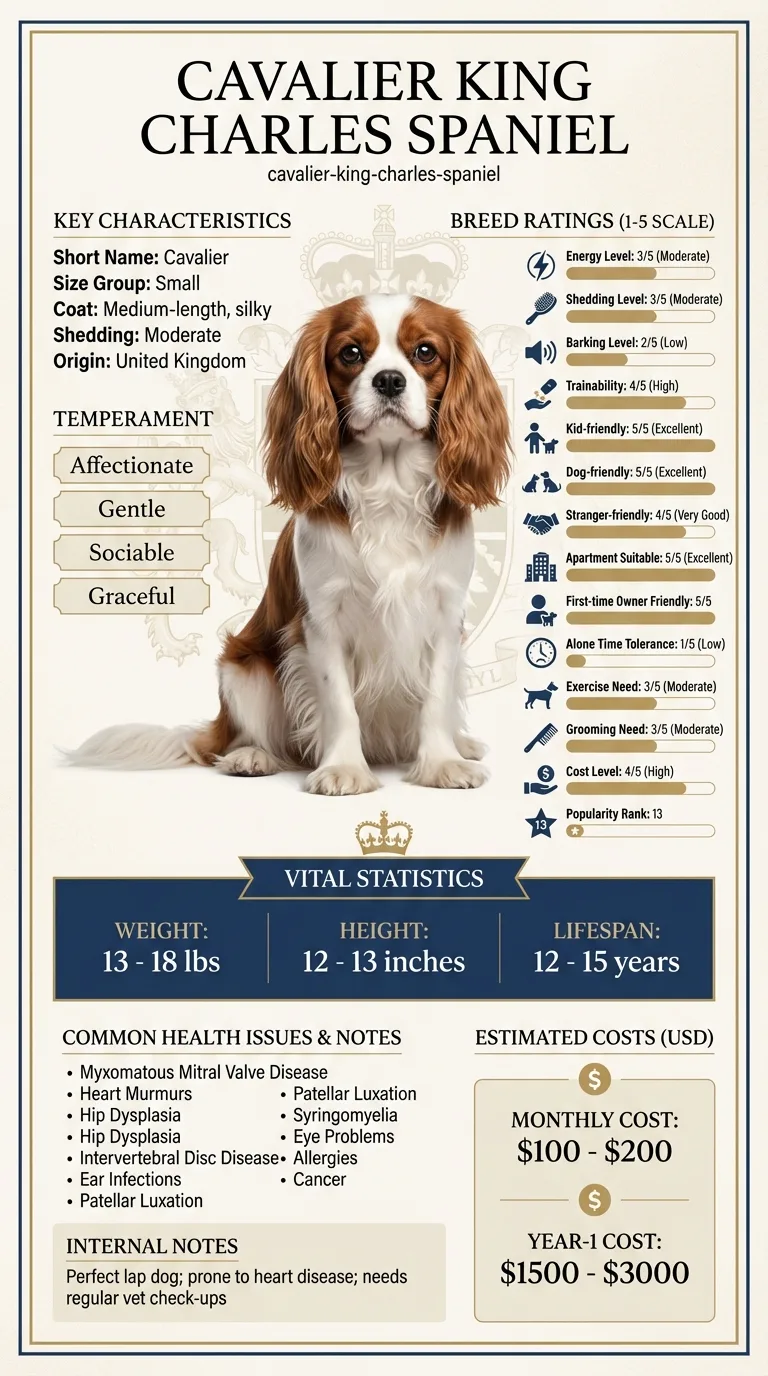
Cavalier King Charles Spaniels are small dogs with a medium-length, silky coat. Their size and coat type can make them more sensitive to heat. Additionally, they have a higher risk of heat-related issues, with studies showing they are 533% more likely to suffer from heatstroke.
Heat sensitivity can also be influenced by their living conditions. A warm apartment or lack of access to cool, shaded areas can worsen their discomfort. Factors like humidity and excessive exercise during peak heat can further increase the risk of hyperthermia.
If your Cavalier experiences repeated episodes of overheating or if you notice any unusual symptoms, consult your vet. Regular check-ups are essential, especially since Cavaliers are prone to various health issues.
Avoiding these common mistakes can help your Cavalier King Charles Spaniel stay safe and comfortable in the heat.
Start here: Cavalier King Charles Spaniel Genetic Disorders: Screening
See all Cavalier King Charles Spaniel health problems, which breeds are prone to heat sensitivity hyperthermia, or the full Cavalier King Charles Spaniel breed guide for temperament, exercise needs and ownership costs.
It typically takes a few weeks to a few months to create a successful heat management routine for your Cavalier King Charles Spaniel. Consistency is key.
Success looks like your Cavalier being comfortable in warm weather, enjoying outdoor activities safely, and avoiding heat-related health issues.
When Emily adopted Bella, her Cavalier King Charles Spaniel, she noticed Bella struggled during the hot summer months. Bella would pant heavily and seem lethargic after short walks. Concerned, Emily learned about Cavalier heat sensitivity and decided to take action. She started by adjusting Bella's walk schedule to early mornings and late evenings when temperatures were cooler. Emily also set up a cool, shaded area in their home for Bella to relax. Gradually, Bella became more active and happier during the summer, enjoying her outdoor time without overheating.
Key takeaway: With small adjustments to routine and environment, you can significantly improve your Cavalier's comfort and health during hot weather.
Cavalier King Charles Spaniels are prone to heat sensitivity due to their small size and coat type. Their risk of heat-related illnesses is significantly higher, making them vulnerable to heatstroke. It's crucial to monitor them closely during warm weather and provide adequate hydration and shade.
To prevent heat sensitivity, ensure your Cavalier stays indoors during peak temperatures and has access to cool, shaded areas when outside. Frequent breaks during exercise and never leaving them in a hot car are also vital. Additionally, consider using cooling mats or vests designed for dogs.
Signs of hyperthermia include excessive panting, drooling, weakness, and a rapid heart rate. You might also notice your dog becoming lethargic or disoriented. If you observe these symptoms, it's critical to cool them down immediately and seek veterinary assistance.
To mitigate heat sensitivity, schedule walks during cooler parts of the day and limit strenuous activities in hot weather. Training your dog to recognize cues for when to rest can also help manage their heat exposure. Consistent hydration is essential, especially on warm days.
Yes, training can include teaching your Cavalier to seek shade or water when outdoors. Positive reinforcement for resting during hot weather can help them learn to manage their energy levels. Always monitor their behavior during training sessions in warm conditions.
Common signs of overheating in a Cavalier King Charles Spaniel include excessive panting, drooling, lethargy, and a rapid heartbeat. If you notice your dog acting unusually or if they seem disoriented, it's crucial to cool them down and provide water.
Yes, older Cavalier King Charles Spaniels may be more prone to heat sensitivity. Their bodies may not regulate temperature as effectively, so it's essential to monitor them closely during warm weather and limit their outdoor activities.
Training your Cavalier King Charles Spaniel to handle heat involves gradually acclimating them to warmer temperatures. Start with short, controlled exposure during cooler parts of the day and always ensure they have access to shade and water.
If your Cavalier King Charles Spaniel shows severe signs of heat sensitivity, such as vomiting, fainting, or seizures, you should see a vet immediately. Early intervention can prevent serious health complications like heatstroke.
To protect your Cavalier from heat sensitivity, avoid walks during the hottest parts of the day, and keep them indoors in air conditioning when possible. Providing plenty of fresh water and cool places to rest is also essential.
Move them to a cooler area, offer fresh water, and apply cool, damp cloths to their body. If symptoms persist, seek veterinary care immediately.
Watch for excessive panting, drooling, and signs of weakness. If they appear disoriented or are having trouble standing, it's time to cool them down.
Limit outdoor time during hot weather, provide plenty of water, and use cooling products if needed. Always have a shaded area available.
Exercise should be limited during hot days; opt for early morning or late evening walks. Always monitor their behavior for signs of overheating.
The monthly cost for a Cavalier King Charles Spaniel typically ranges from $100 to $200, covering food, grooming, and regular vet visits.
A one-page prep sheet for this condition: the signs, the questions to ask, what to get priced. Unlocks here.
You get: Vet visit prep sheet
No spam. One-click unsubscribe. See our privacy policy.
Preview page 1 before you decide.