Behavior
What is a quick tip for managing DM in Cavaliers?
Focus on creating a safe, supportive home environment with non-slip surfaces and easy access to favorite resting spots.

Quick answer
What is a quick tip for managing DM in Cavaliers?
Focus on creating a safe, supportive home environment with non-slip surfaces and easy access to favorite resting spots.
Cavalier King Charles Spaniel degenerative myelopathy (DM) is a serious condition that affects your dog’s mobility and quality of life.
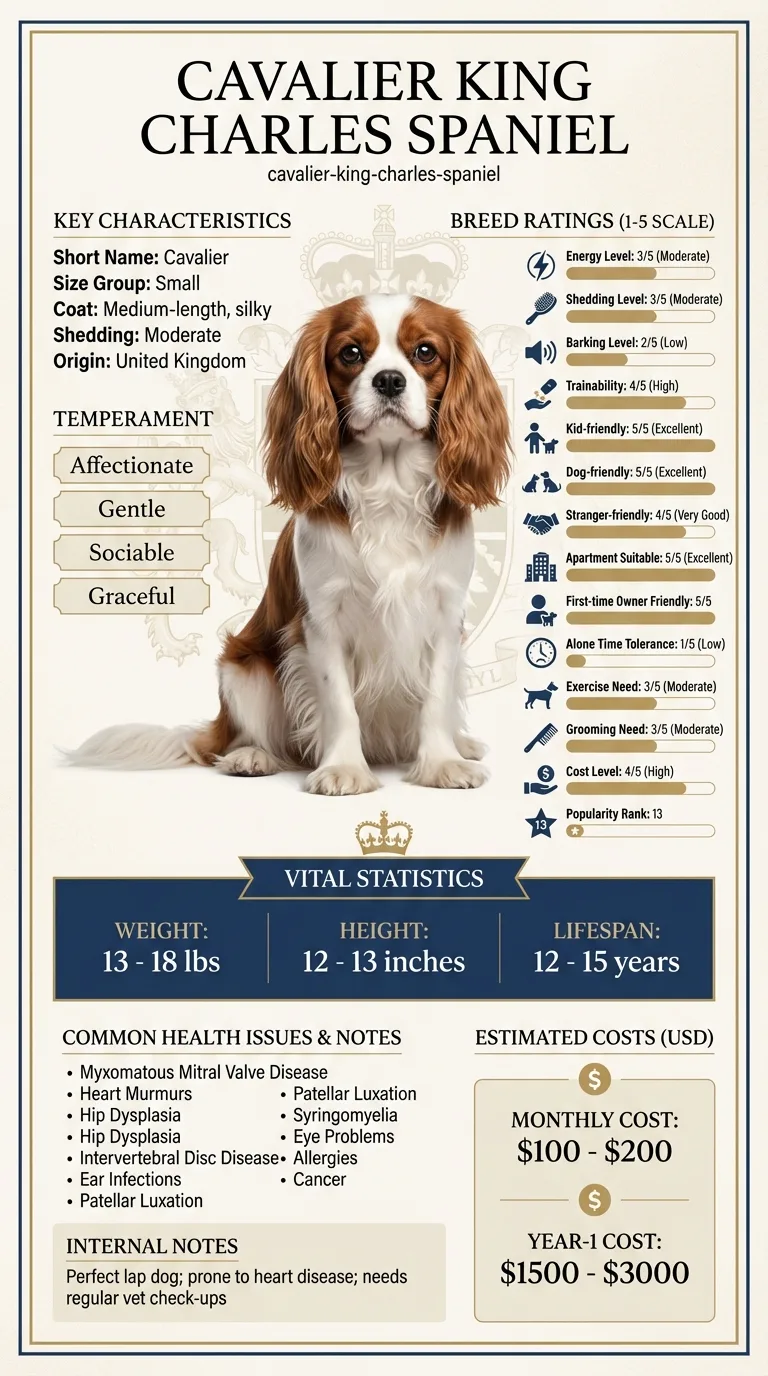
Owners of Cavalier King Charles Spaniels, especially those with older dogs, often face the emotional and physical challenges of this condition. Many find themselves wondering how to support their beloved pets as they navigate the impacts of DM.
This guide is not medical advice. If your dog shows pain, sudden behavior change, or worsening symptoms, consult a licensed veterinarian.
Some links may be affiliate links. We may earn a commission at no extra cost to you. We only suggest products we believe are helpful for dog owners.
We research and check what we publish, but we do not warrant that any figure, date, price, or statement is accurate, complete, or current, and we accept no liability for any loss, cost, injury, or other harm arising from the use of this site. Use it as one reference among several. You remain responsible for your own decisions and for your dog's care - confirm anything that matters with a licensed veterinarian or another qualified professional before you act on it. Full disclaimer.
Check this first
Understanding when Cavalier King Charles Spaniel degenerative myelopathy (DM) becomes an emergency is crucial. Here are some red-flag signs that mean you should call your vet immediately. If your Cavalier suddenly loses the ability to walk, shows signs of severe pain, or experiences incontinence, these are serious symptoms that need urgent care. Additionally, if you notice rapid weight loss or a significant change in appetite, don’t wait to seek help.
On the other hand, mild cases of DM can often be monitored. If your Cavalier is showing slight weakness in their back legs or has difficulty getting up after lying down, this may be a sign of early-stage DM. While it’s still essential to keep your vet informed, these symptoms can often be managed with a tailored care plan. Regular check-ups and gradual adjustments to exercise can help maintain their quality of life. It's important to keep a close eye on their mobility and behavior for any changes that might require attention.
If any of these apply, call your vet or an emergency clinic now. The rest of this page is for the cases that are not an emergency.
Cavalier King Charles Spaniel degenerative myelopathy (DM) is a serious condition affecting the spinal cord. This progressive disease can lead to a gradual loss of mobility and coordination. You might notice your Cavalier struggling to walk, experiencing muscle weakness, or having difficulty getting up after lying down.
Degenerative myelopathy is relatively common in Cavalier King Charles Spaniels, particularly as they age. It is estimated that around 10-20% of Cavaliers may develop this condition during their lifetime.
Cavalier King Charles Spaniels are genetically predisposed to degenerative myelopathy (DM). This condition is more common in certain breeds due to inherited traits. The breed's structure and size may also contribute to the likelihood of developing this disease.
Environmental factors can play a role as well. Lack of exercise may worsen symptoms, while obesity can increase stress on the spine. Additionally, if the dog experiences stress or trauma, it might accelerate the onset of DM.
If you notice signs like weakness in the hind legs or difficulty standing, it's time to talk to your vet. They can help determine if it's DM or another issue. Regular check-ups are crucial for managing your Cavalier's health effectively.
Avoiding certain behaviors can help manage Cavalier King Charles Spaniel degenerative myelopathy (DM) more effectively. Here are common mistakes to watch out for.
Start here: Cavalier King Charles Spaniel Genetic Disorders: Screening
See all Cavalier King Charles Spaniel health problems, which breeds are prone to degenerative myelopathy dm, or the full Cavalier King Charles Spaniel breed guide for temperament, exercise needs and ownership costs.
Managing Cavalier King Charles Spaniel degenerative myelopathy (DM) can be an ongoing process. Typically, you might notice symptoms developing over a few months, and it can take 6 to 12 months to see noticeable changes with care adjustments and follow-up with your vet.
Success means your dog can maintain mobility longer and enjoy a good quality of life. You should also see improvements in their comfort level and adaptability to their changing condition.
Sarah, a busy nurse in Chicago, noticed her Cavalier King Charles Spaniel, Bella, had started stumbling during walks. After a vet visit, she learned that Bella had degenerative myelopathy (DM). Initially overwhelmed, Sarah began researching how to manage DM. She implemented a regular exercise routine, focused on low-impact activities, and started using a harness for support. Over time, Sarah adapted Bella's environment to make it safer and more accessible. Bella now enjoys short, gentle strolls and has learned to navigate her home with ease. While DM is a progressive disease, Sarah feels reassured knowing she can make Bella's life more comfortable.
Key takeaway: Managing Cavalier King Charles Spaniel degenerative myelopathy requires patience and proactive care. Adjustments to routine and environment can greatly enhance your dog's quality of life.
Cavalier King Charles Spaniel degenerative myelopathy (DM) is a progressive spinal cord disease that affects coordination and mobility. It typically starts with weakness in the hind legs and can eventually lead to paralysis. Early detection is crucial for managing symptoms.
Managing Cavalier King Charles Spaniel degenerative myelopathy (DM) involves providing a supportive environment. This includes physical therapy, mobility aids like harnesses, and maintaining a healthy weight. Regular vet visits are essential to adapt the care plan as the disease progresses.
Training methods for a Cavalier King Charles Spaniel with DM should focus on gentle encouragement and positive reinforcement. Simple commands can help maintain their mental stimulation, but avoid strenuous activities. Tailoring training to their current abilities is key.
Signs of DM include difficulty walking, dragging of the hind legs, and a noticeable loss of coordination. You may also see changes in your dog's behavior, such as reluctance to move or play. If you notice these symptoms, consult your veterinarian promptly.
Early signs of degenerative myelopathy in Cavalier King Charles Spaniels can include subtle changes in coordination or strength in the hind legs. You might notice your dog dragging their paws or having difficulty getting up after lying down. Regular observation and prompt veterinary advice are crucial for managing this condition.
Currently, there is no cure for degenerative myelopathy in Cavalier King Charles Spaniels. Treatment focuses on supportive care, such as physical therapy and mobility aids. Consulting with a veterinarian can help create a plan tailored to your dog's needs.
Degenerative myelopathy itself does not directly shorten the lifespan of Cavalier King Charles Spaniels, but it can lead to complications that might impact their health. With appropriate care, many dogs can maintain a good quality of life for some time after diagnosis. Regular veterinary check-ups are essential to monitor their health.
Yes, degenerative myelopathy is believed to have a hereditary component in Cavalier King Charles Spaniels. Genetic testing can help determine whether your dog is at risk. If you have concerns about breeding, consult a veterinarian or a breed specialist.
If you notice any changes in your Cavalier King Charles Spaniel's mobility or coordination, it's important to see a vet as soon as possible. Early intervention can help manage issues effectively and improve your dog's quality of life. Don't hesitate to reach out if something feels off.
Focus on creating a safe, supportive home environment with non-slip surfaces and easy access to favorite resting spots.
Consider using mobility aids like slings or carts to help them move around, especially as their condition progresses.
While there's no special diet for DM, keeping your Cavalier at a healthy weight can reduce stress on their mobility. Consult your vet for tailored dietary advice.
Caring for a Cavalier King Charles Spaniel with DM can range from $100 to $300 monthly, depending on vet visits, medications, and mobility aids.
A one-page prep sheet for this condition: the signs, the questions to ask, what to get priced. Unlocks here.
You get: Vet visit prep sheet
No spam. One-click unsubscribe. See our privacy policy.
Preview page 1 before you decide.