DogBreedCompass
← Back to breed profile

Cavalier King Charles Spaniel Arthritis: What You Need to Know

Cavalier King Charles Spaniel arthritis is a common issue that can significantly affect your dog's quality of life.

Cavalier King Charles Spaniel Arthritis: What You Need to Know infographic

Many Cavalier owners, especially those with older dogs, face the challenge of this age-related joint disease. It's particularly tough for owners who want to keep their furry friends active and happy despite their discomfort.

Important reminder

This guide is not medical advice. If your dog shows pain, sudden behavior change, or worsening symptoms, consult a licensed veterinarian.

Some links may be affiliate links. We may earn a commission at no extra cost to you. We only suggest products we believe are helpful for dog owners.

What this problem looks like

Cavalier King Charles Spaniel arthritis is a common issue that affects many dogs, especially as they age. This condition leads to pain and stiffness in the joints, making it difficult for them to move around comfortably. Owners may notice their Cavalier becoming less active, struggling to jump on furniture, or hesitating to go for walks.

Common triggers

  • Age-related wear and tear on joints
  • Obesity, which puts extra strain on joints
  • Injury or trauma to the joints
  • Genetic predisposition common in Cavaliers

Arthritis is quite common in Cavalier King Charles Spaniels, particularly those over the age of seven. It’s estimated that nearly 20-30% of older Cavaliers will experience some form of arthritis, making it a significant concern for owners.

Why this happens

Breed factors

Cavalier King Charles Spaniels are small, affectionate dogs that often suffer from genetic conditions. Their delicate build makes them prone to joint issues, including arthritis. Additionally, their high energy levels can lead to overexertion, which may worsen joint problems.

Environment factors

Environmental factors can also contribute to arthritis in Cavaliers. Lack of proper exercise can lead to weight gain, putting extra stress on their joints. On the other hand, overly strenuous activity, especially in older dogs, can accelerate joint deterioration.

What you can try

At-home strategies

  • Provide a comfortable, supportive bed to help ease joint pain.
  • Control your dog's weight through a balanced diet to reduce stress on joints.
  • Incorporate gentle exercise, like short walks or swimming, to maintain joint flexibility without overexertion.
  • Consider using joint supplements, like glucosamine, after consulting your vet.
  • Create a warm environment, especially during colder months, to help alleviate stiffness.

When to consider a trainer

If your Cavalier is showing signs of discomfort or difficulty moving, consider working with a trainer experienced in canine arthritis. They can develop a tailored exercise plan that respects your dog's limits while keeping them active.

When to talk to your vet

Consult your vet if you notice persistent limping, difficulty standing, or reluctance to play. A veterinarian can assess the severity of the arthritis and suggest treatments, including medications or physical therapy.

Realistic expectations

Managing Cavalier King Charles Spaniel arthritis typically takes several weeks to months. You'll start noticing gradual improvements in your dog's comfort level and mobility as you implement a care plan.

Success means your Cavalier can move around more comfortably, engage in light activities, and show less pain or stiffness, allowing them to enjoy their daily life.

Mistakes that Make Cavalier King Charles Spaniel Arthritis Worse

Avoid these common mistakes to help your Cavalier feel better. Each mistake can delay improvement and increase discomfort.

  • Ignoring weight management: Overweight Cavaliers put extra strain on their joints. Focus on a balanced diet and regular exercise to maintain a healthy weight.
  • Skipping vet visits: Neglecting regular check-ups means missing early signs of arthritis. Schedule vet visits to monitor your dog's joint health and adjust care as needed.
  • Disregarding pain signs: If your Cavalier is limping or reluctant to move, don’t brush it off. Addressing pain early can prevent further joint damage.
  • Over-exercising: While exercise is important, too much can exacerbate arthritis symptoms. Opt for short, gentle walks instead of long, strenuous outings.
  • Inadequate rest: Allow your Cavalier plenty of downtime. A cozy bed can help your dog rest and recover, reducing joint strain.
  • Using harsh training methods: Stress can worsen arthritis symptoms. Use positive reinforcement training to create a calm and supportive environment.
  • Neglecting mobility aids: If your dog struggles to move, consider using ramps or supportive harnesses. These tools can help them navigate their environment with ease.

When Cavalier King Charles Spaniel Arthritis is an Emergency

Recognizing when Cavalier King Charles Spaniel arthritis becomes an emergency is crucial for your pet's well-being. If your dog shows sudden signs of severe pain, inability to walk or stand, or persistent whimpering, these are red flags. Call your vet immediately if you notice swelling in the joints, a sudden change in behavior, or if your dog seems overwhelmed by pain even during rest.

Cavalier King Charles Spaniel Arthritis: What You Need to Know - When Cavalier King Charles Spaniel Arthritis is an Emergency

When to Monitor and Wait

In less severe cases, you can monitor your Cavalier’s arthritis at home. If your dog shows mild limping, occasional stiffness after rest, or slight difficulty getting up, it's usually safe to keep an eye on things for a few days. Create a plan for gradual exercise and consider talking to your vet about pain management options if symptoms persist.

Cavalier King Charles Spaniel Arthritis: What You Need to Know - When to Monitor and Wait

Finding Relief for Bella: A Cavalier's Journey with Arthritis

When Sarah adopted Bella, her Cavalier King Charles Spaniel, she noticed Bella was having trouble jumping onto the couch. After a vet visit, Sarah learned that Bella had early signs of arthritis. Determined to help her furry friend, Sarah adjusted Bella's diet and introduced joint supplements. She also started using low-impact exercises, like short walks and gentle playtime. Over a few months, Bella showed remarkable improvement. She started to jump again and play with her toys with more energy. Sarah felt a sense of relief seeing Bella happier and more comfortable.

Key takeaway: With dedication and the right care strategies, managing Cavalier King Charles Spaniel arthritis can lead to a happier, more active life for your dog.

Frequently asked questions

Why does my Cavalier King Charles Spaniel have arthritis?

Cavalier King Charles Spaniels are prone to arthritis due to their small size and genetics. Aging can lead to wear and tear on their joints, resulting in arthritis. Regular vet check-ups can help identify early signs and manage the condition.

How can I stop my Cavalier King Charles Spaniel from suffering with arthritis?

While arthritis can't be fully stopped, you can manage it through a combination of weight control, moderate exercise, and joint supplements. Consult your vet to create a plan tailored to your dog's needs, which may also include anti-inflammatory medications.

What are the signs of arthritis in a Cavalier King Charles Spaniel?

Common signs include limping, reluctance to jump or climb stairs, and stiffness after resting. You might also notice your Cavalier being less active or having difficulty getting comfortable. Observing these behaviors can help you seek timely veterinary advice.

Can training help with Cavalier King Charles Spaniel arthritis?

Training can help by encouraging gentle movements that maintain joint flexibility. Focus on low-impact activities, like short walks and obedience training, to support their overall mobility without overexertion. Always consult with your vet on what’s suitable.

Are there any specific diets for Cavalier King Charles Spaniels with arthritis?

A diet rich in omega-3 fatty acids can help reduce inflammation and support joint health. Your vet can recommend specific foods or supplements that are beneficial for your Cavalier's arthritis management.

When should I take my Cavalier King Charles Spaniel to the vet for arthritis?

If you notice signs of discomfort, such as limping or changes in energy levels, it’s time to visit the vet. Early intervention can help manage symptoms effectively and improve your dog's quality of life.

What causes arthritis in Cavalier King Charles Spaniels?

Arthritis in Cavalier King Charles Spaniels can be caused by age-related wear and tear on the joints, as well as genetic predispositions common in the breed. Factors like obesity and previous injuries can also contribute to the development of arthritis.

How can I tell if my Cavalier King Charles Spaniel has arthritis?

Look for signs like limping, difficulty climbing stairs, or reluctance to play. If your dog seems to be in pain or is slower than usual, it's a good idea to consult your vet for a proper diagnosis.

What treatments are available for Cavalier King Charles Spaniel arthritis?

Treatment options for Cavalier King Charles Spaniel arthritis include weight management, joint supplements, physical therapy, and pain relief medications prescribed by your vet. Regular, gentle exercise can also help maintain joint mobility.

When should I see a vet about my Cavalier King Charles Spaniel's arthritis?

If you notice any changes in your Cavalier's behavior, such as decreased activity, difficulty standing up, or signs of pain, it's important to consult your vet. Early intervention can significantly improve your dog's quality of life.

Can Cavalier King Charles Spaniel arthritis be prevented?

While you can't completely prevent arthritis, maintaining a healthy weight and providing regular, low-impact exercise can help reduce the risk. It's also important to schedule regular vet check-ups to monitor your dog's joint health as they age.

Quick answers

View more answers
Behavior

What are Cavalier King Charles Spaniel arthritis quick tips?

Maintain a healthy weight, provide low-impact exercise, and consult your vet for joint supplements.

Costs

How much does it cost to manage Cavalier King Charles Spaniel arthritis?

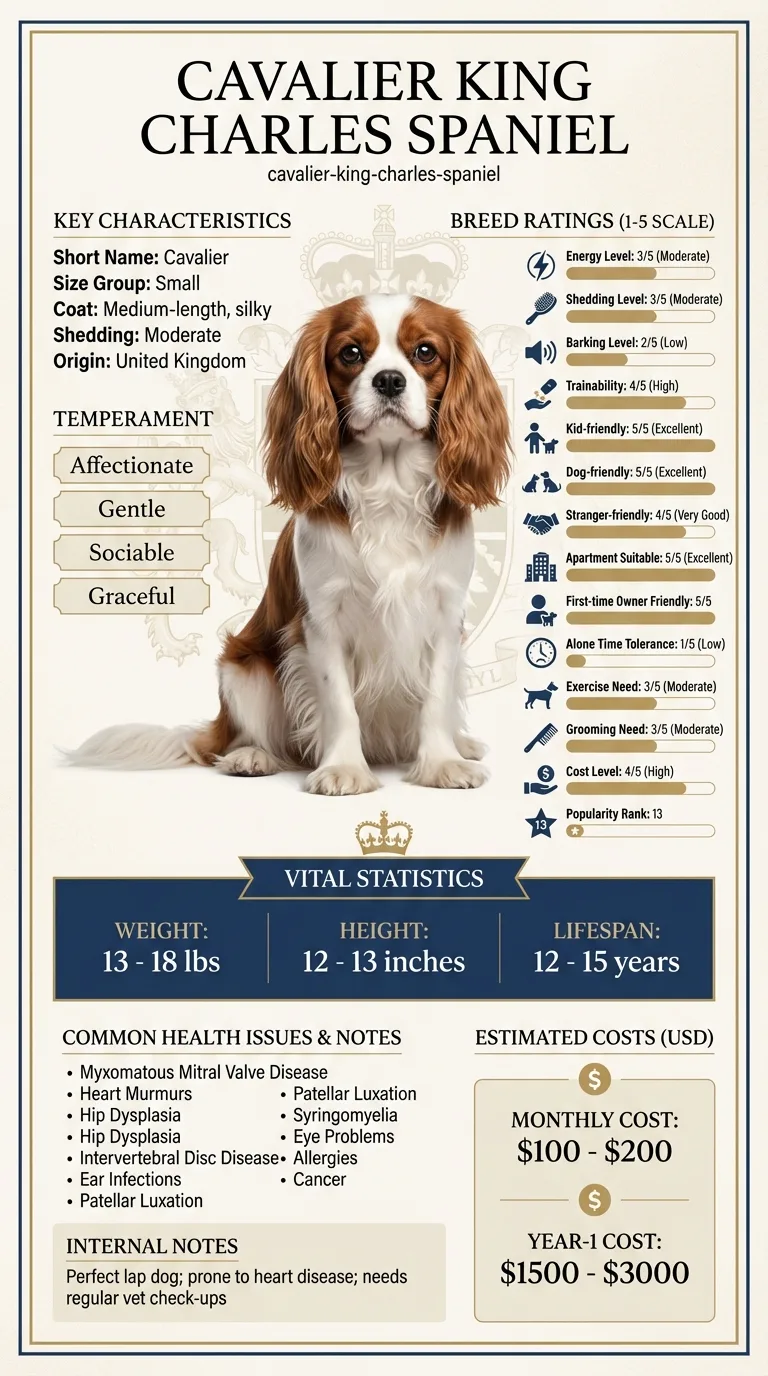
Expect monthly expenses of $100 to $200 for vet visits and medications, depending on your dog's specific needs.

Living

Can Cavalier King Charles Spaniels live with arthritis?

Yes, with proper management, many Cavalier King Charles Spaniels can live happy, active lives despite arthritis.

Health

Is surgery an option for Cavalier King Charles Spaniel arthritis?

In some cases, surgery may be recommended, but it's usually considered after non-surgical options have been explored.

Related DogBreedCompass guides

  • Cavalier King Charles Spaniel behavior problemsLearn about common behavior issues that might accompany arthritis.
  • Cavalier King Charles Spaniel arthritis trainingUnderstand the best training techniques to help manage arthritis symptoms.
  • Cavalier King Charles Spaniel health issuesExplore potential health issues in Cavaliers that may cause or worsen arthritis.
  • Cavalier King Charles Spaniel separation anxiety guideFind out how to help Cavaliers with separation anxiety, which can be related to pain management.
  • Cavalier King Charles Spaniel arthritis cost breakdownCalculate the costs of caring for a Cavalier with arthritis, including vet visits and treatments.

Related guides