DogBreedCompass
← Back to breed profile

Understanding Cavalier King Charles Spaniel Allergies

Cavalier King Charles Spaniel allergies can be a frustrating challenge for owners. These small, affectionate dogs are prone to various allergies that can affect their comfort and health.

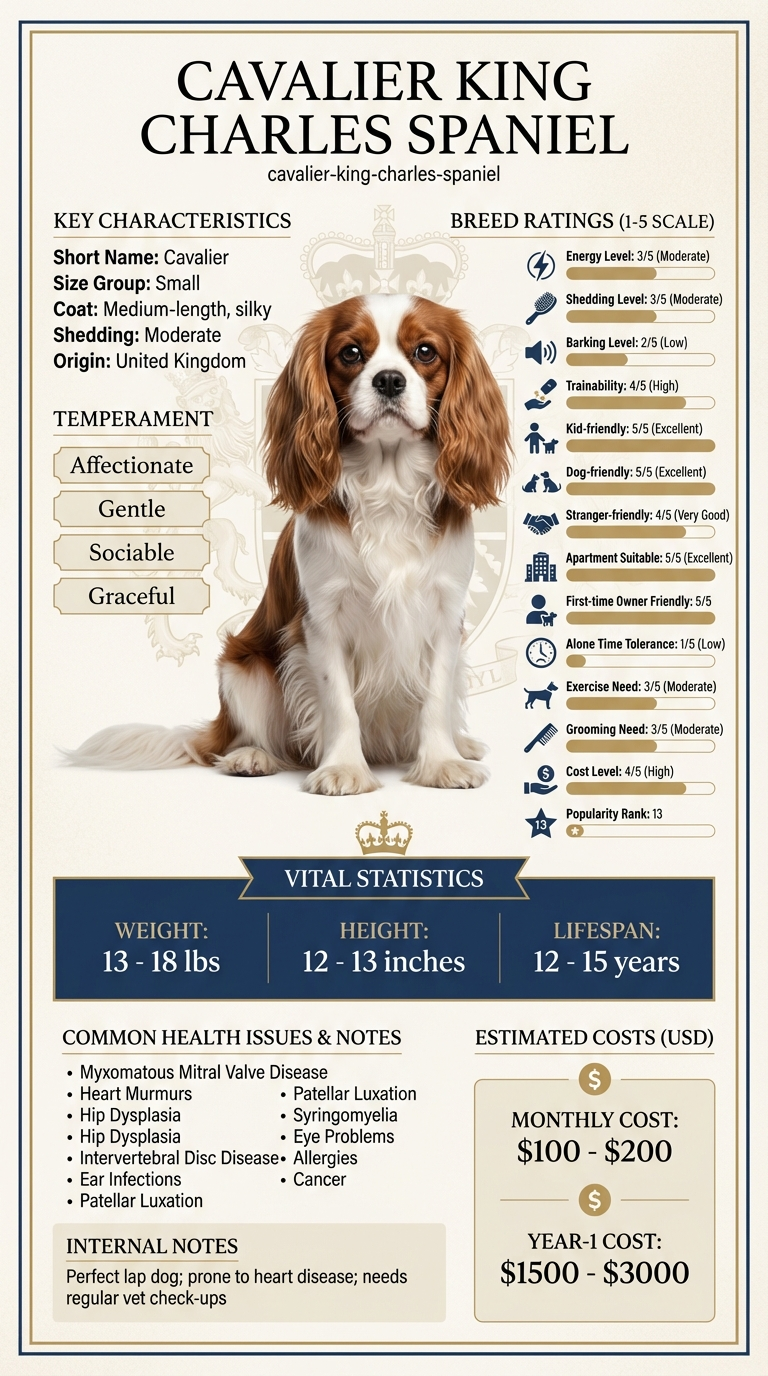
Understanding Cavalier King Charles Spaniel Allergies infographic

Typically, first-time dog owners or families with young children may struggle with these allergies. They often find it tough to identify the cause and manage symptoms effectively, leaving both them and their pets feeling overwhelmed.

Important reminder

This guide is not medical advice. If your dog shows pain, sudden behavior change, or worsening symptoms, consult a licensed veterinarian.

Some links may be affiliate links. We may earn a commission at no extra cost to you. We only suggest products we believe are helpful for dog owners.

What this problem looks like

Cavalier King Charles Spaniel allergies can be a challenging issue for many owners. These small, affectionate dogs often suffer from food and environmental allergies, leading to symptoms like itchy skin, ear infections, and gastrointestinal distress. Owners may notice their Cavaliers scratching, licking, or having trouble with their coats due to these allergic reactions.

Common triggers

  • Certain food ingredients, such as grains or proteins
  • Pollen and dust mites in the environment
  • Fleas or other parasites
  • Household cleaning products or fragrances

Allergies are relatively common in Cavalier King Charles Spaniels, affecting a significant number of them during their lives. Many owners report allergy symptoms appearing in the first few years, making it crucial to monitor their health closely.

Why this happens

Breed factors

Cavalier King Charles Spaniels, like many small breeds, can have genetic predispositions to allergies. Their sensitive skin and immune systems make them more vulnerable to allergens, whether from food or the environment. Additionally, common health issues in the breed can exacerbate allergic reactions.

Environment factors

Environmental factors play a significant role in allergy development. Things like pollen, dust mites, mold, and certain cleaning products can trigger allergic responses. If your Cavalier is exposed to these allergens frequently, it may lead to symptoms like itching, redness, or ear infections.

What you can try

At-home strategies

  • 1. Keep your home clean by regularly vacuuming and using air purifiers to reduce allergens. This helps minimize dust and pollen exposure.
  • 2. Bathe your Cavalier weekly with a hypoallergenic dog shampoo to soothe their skin and remove allergens. Ensure to rinse thoroughly.
  • 3. Monitor their diet and consider switching to a limited-ingredient dog food to identify potential food allergies. Gradually introduce new foods to see how their body reacts.
  • 4. Create a designated allergy-free zone in your home, like a specific room with low dust and no carpets, where your Cavalier can rest comfortably.

When to consider a trainer

If your Cavalier is showing signs of anxiety or excessive scratching that leads to destructive behavior, consider hiring a trainer. A trainer can help address behavioral issues stemming from allergies and provide guidance on managing stress.

When to talk to your vet

If home strategies don’t alleviate your Cavalier's symptoms, or if they develop severe reactions like swelling or difficulty breathing, contact your vet. They can recommend allergy testing and treatment options that may include medications or specialized diets.

Realistic expectations

You can expect to see improvements in your Cavalier King Charles Spaniel's allergy symptoms within 4 to 8 weeks of implementing changes. Consistency is key, and ongoing management may be necessary.

Success looks like reduced itching, fewer ear infections, and an overall happier dog. You'll notice them being more active and comfortable in their skin.

Mistakes that make this worse

Avoiding these common mistakes can help improve your Cavalier King Charles Spaniel's allergies. Here are some things to watch out for.

  • Ignoring Symptoms: Not recognizing signs of allergies, like itching or ear infections, can prolong discomfort. Keep an eye on your dog and consult a vet if you see persistent symptoms.
  • Inconsistent Cleaning: Failing to regularly clean your home can lead to dust and allergens building up. Make a cleaning schedule to reduce allergens in your dog's environment.
  • Feeding Low-Quality Food: Feeding your Cavalier cheap dog food can exacerbate allergies. Opt for high-quality, hypoallergenic options to help manage their sensitivities.
  • Skipping Vet Visits: Not taking your dog for regular vet check-ups can delay treatment. Schedule routine visits to catch any issues early and discuss allergy management.
  • Neglecting Grooming: Infrequent grooming can lead to skin irritations and infections. Regularly brush and bathe your Cavalier to keep their coat healthy and reduce allergens.
  • Using Harsh Chemicals: Cleaning products with strong chemicals can trigger allergies. Switch to pet-safe cleaning supplies to create a healthier home environment.
  • Self-Diagnosing: Trying to treat your dog's allergies without professional advice can be harmful. Always consult your vet for proper diagnosis and treatment options.

When Cavalier King Charles Spaniel Allergies Are an Emergency

Emergency signs for Cavalier King Charles Spaniel allergies include severe itching, swelling, difficulty breathing, or hives. If your dog shows any of these symptoms, don't wait—contact your vet immediately. These could indicate anaphylaxis or a severe allergic reaction that needs prompt treatment.

On the other hand, mild signs like sneezing, occasional scratching, or minor skin irritations can often be monitored at home. You can implement a plan that includes allergy testing or changing their diet. Keeping track of your dog's symptoms can help determine if there's a pattern or a particular trigger to avoid.

If you notice your Cavalier has recurring ear infections or skin issues, these may also warrant a vet visit to rule out underlying conditions. Regular check-ups can help manage allergies effectively, ensuring your furry friend remains happy and healthy.

Understanding Cavalier King Charles Spaniel Allergies - When Cavalier King Charles Spaniel Allergies Are an Emergency

Megan's Journey with Bella's Allergies

Megan, a first-time dog owner, noticed her Cavalier King Charles Spaniel, Bella, scratching excessively and having ear infections. After a visit to the vet, she learned Bella had allergies. Megan started by changing Bella's diet to a hypoallergenic food and eliminated common allergens in her home. Slowly, Bella's symptoms improved, and she became much more playful and relaxed. Megan also learned to keep Bella's coat clean to prevent skin infections.

Key takeaway: Identifying and managing allergies can drastically improve your dog's quality of life. Regular vet check-ups and adjustments to their environment are essential.

Frequently asked questions

Why does my Cavalier King Charles Spaniel have allergies?

Cavalier King Charles Spaniels can develop allergies due to environmental factors, food ingredients, or even flea bites. Common allergens include pollen, dust mites, certain proteins in food, and mold. If you notice symptoms like itching or skin rashes, it's best to consult your vet.

How can I stop my Cavalier King Charles Spaniel's allergies?

To manage Cavalier King Charles Spaniel allergies, start by identifying and avoiding known allergens. Regular baths with hypoallergenic shampoos can help soothe the skin. Additionally, your vet may recommend allergy testing to pinpoint specific triggers.

What signs indicate my Cavalier King Charles Spaniel has allergies?

Common signs of allergies in Cavalier King Charles Spaniels include excessive scratching, ear infections, and skin irritations. Watch for symptoms like watery eyes or sneezing, which can indicate environmental allergies. If symptoms persist, consult your vet for further evaluation.

Can diet affect my Cavalier King Charles Spaniel's allergies?

Yes, diet can play a significant role in your Cavalier's allergies. Certain ingredients in dog food, like beef or wheat, may cause allergic reactions. Consider a limited-ingredient diet or hypoallergenic food to help manage symptoms.

What treatments are available for Cavalier King Charles Spaniel allergies?

Treatment options for Cavalier King Charles Spaniel allergies include antihistamines, corticosteroids, and allergy shots. Your vet may also suggest topical treatments for skin issues or prescribe special diets for food allergies.

How can I help my Cavalier King Charles Spaniel feel more comfortable during allergy season?

During allergy season, keep your Cavalier indoors on high pollen days and bathe them regularly to remove allergens. Consider using air purifiers to reduce indoor allergens. Always consult your vet for tailored solutions.

What should I do if my Cavalier King Charles Spaniel has a severe allergic reaction?

If your Cavalier experiences a severe allergic reaction, such as difficulty breathing or swelling, contact your vet immediately. Quick treatment is crucial to prevent serious complications. Always keep emergency vet contact information handy.

How do I know if my Cavalier King Charles Spaniel has seasonal allergies?

If your Cavalier is itching, sneezing, or has watery eyes during certain seasons, they may have seasonal allergies. Keep track of when these symptoms occur and discuss them with your vet for proper diagnosis and management.

Can food allergies be the cause of my Cavalier King Charles Spaniel's skin issues?

Yes, food allergies can lead to skin problems in Cavaliers. Common signs include itching, redness, or hot spots. A vet can help identify the allergy and suggest an elimination diet to pinpoint specific triggers.

Are Cavaliers more prone to allergies as they age?

Cavalier King Charles Spaniels can develop allergies at any age, but they may be more susceptible as they get older. Regular vet check-ups are essential to monitor their health and manage any new allergy issues that may arise.

What are some home remedies for Cavalier King Charles Spaniel allergies?

Some home remedies include using hypoallergenic shampoos, maintaining a clean living environment, and adding omega fatty acids to their diet. However, always consult your vet before trying home remedies to ensure they are safe and effective.

Quick answers

View more answers
Behavior

What are quick tips for managing Cavalier King Charles Spaniel allergies?

Keep your home clean and free of dust, use hypoallergenic dog shampoos, and consult your vet for dietary changes. Regular vet visits can also help monitor allergies.

Health

Are Cavalier King Charles Spaniels prone to food allergies?

Yes, they can have food allergies, especially to proteins like beef or chicken. A limited-ingredient diet can help identify and manage these allergies.

Living

Do Cavalier King Charles Spaniels need special grooming for allergies?

Regular grooming helps reduce allergens in their coat. Consider using hypoallergenic grooming products to soothe their skin.

Related DogBreedCompass guides

  • how to stop Cavalier King Charles Spaniel allergiesLearn how to manage allergies in your Cavalier King Charles Spaniel effectively.
  • Cavalier King Charles Spaniel allergies trainingDiscover training tips to help alleviate allergy symptoms in your Cavalier.
  • Cavalier King Charles Spaniel behavior problemsExplore common behavior problems that may arise due to allergies.
  • Cavalier King Charles Spaniel separation anxiety guideUnderstand the unique needs of Cavaliers, including allergy management.
  • Cavalier King Charles Spaniel cost breakdownGet insights into the costs of owning a Cavalier King Charles Spaniel, including care for allergies.

Related guides