Health
What are some Cane Corso eye disorders quick tips?
Maintain regular vet check-ups and monitor your dog's eyes for any changes. Keep your Cane Corso's environment clean to reduce irritation, and ensure they have a healthy diet.

Quick answer
What are some Cane Corso eye disorders quick tips?
Maintain regular vet check-ups and monitor your dog's eyes for any changes. Keep your Cane Corso's environment clean to reduce irritation, and ensure they have a healthy diet.
Cane Corso eye disorders can significantly impact your dog's health and happiness. Understanding these issues is crucial for their well-being.
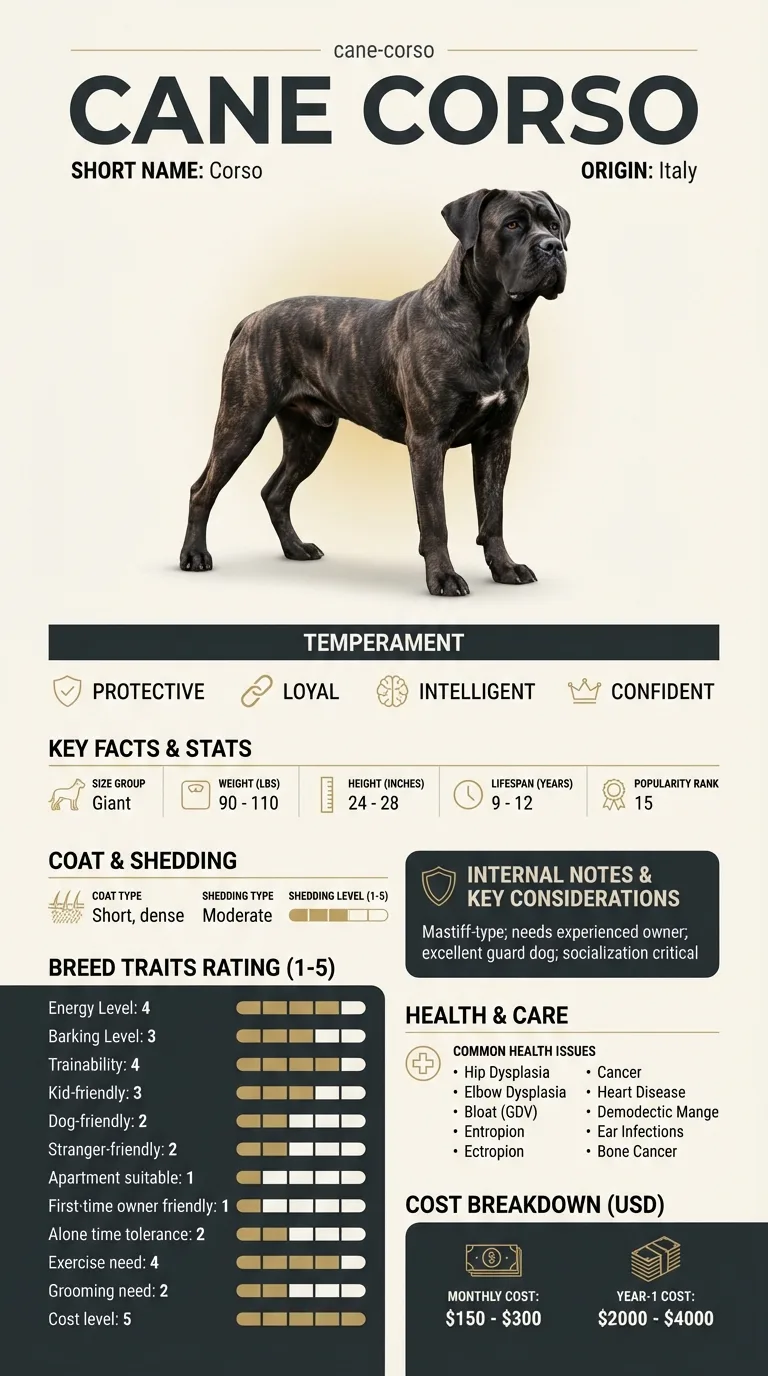
Owners of Cane Corsos, especially first-time pet parents, often face challenges in recognizing and managing these eye disorders. If you're unsure about your dog's eye health, you're not alone.
This guide is not medical advice. If your dog shows pain, sudden behavior change, or worsening symptoms, consult a licensed veterinarian.
Some links may be affiliate links. We may earn a commission at no extra cost to you. We only suggest products we believe are helpful for dog owners.
We research and check what we publish, but we do not warrant that any figure, date, price, or statement is accurate, complete, or current, and we accept no liability for any loss, cost, injury, or other harm arising from the use of this site. Use it as one reference among several. You remain responsible for your own decisions and for your dog's care - confirm anything that matters with a licensed veterinarian or another qualified professional before you act on it. Full disclaimer.
Check this first
Here are some red-flag signs that mean you should call your vet immediately:
- Sudden vision loss or your dog bumping into things. - Severe redness or swelling around the eyes. - Excessive tearing or discharge that is yellow or green. - Signs of pain, like pawing at the face or avoiding light.
On the other hand, here are mild cases that can be monitored:
- Occasional squinting without other symptoms. - Minor discharge that is clear and not excessive. - Eye irritation after exposure to dust or allergens.
Keeping an eye on your Cane Corso's eye health is important. If you notice anything unusual, don't hesitate to reach out to your vet. Better safe than sorry!
If any of these apply, call your vet or an emergency clinic now. The rest of this page is for the cases that are not an emergency.
Cane Corso eye disorders can significantly impact your dog's quality of life. Common issues include cataracts, eyelid disorders, and corneal ulcers. These disorders can lead to discomfort, vision impairment, and even pain if not addressed promptly.
Eye disorders are relatively common in Cane Corsos, particularly as they age. While not every Corso will face these issues, owners should be vigilant, as early signs can lead to better outcomes with treatment.
Cane Corsos are prone to specific eye disorders due to their genetics. Conditions like entropion (where the eyelid rolls inward) and ectropion (where it rolls outward) can occur in this breed. Their large size and facial structure can also contribute to eye issues, making them more susceptible than other breeds.
Environmental factors can worsen eye disorders in Cane Corsos. Dust, allergens, or chemicals in the home can irritate their eyes. Additionally, lack of proper grooming and healthcare can lead to untreated conditions that escalate over time.
If you notice any persistent redness, cloudiness, or discharge from your dog's eyes, schedule a visit with your vet. Early intervention can prevent long-term damage or loss of vision.
Avoid these common mistakes that can worsen Cane Corso eye disorders and delay their improvement. Understanding what not to do is just as important as knowing the right actions to take.
Start here: Cane Corso Most Common Genetic Disorders: What to Screen For
See all Cane Corso health problems, which breeds are prone to eye disorders, or the full Cane Corso breed guide for temperament, exercise needs and ownership costs.
Addressing Cane Corso eye disorders can take several weeks to months, depending on the severity of the issue and the treatment plan. Regular vet check-ups will help monitor progress and adjust care as needed.
Success means your Cane Corso shows improved eye health, reduced symptoms, and a better quality of life. You'll notice fewer signs of discomfort and a more active, happy dog.
When Lisa adopted Jerry, her Cane Corso, she noticed he often squinted and seemed uncomfortable. After a vet visit, she learned he had entropion, where his eyelids were turning inward. Lisa followed the vet's advice to schedule surgery and also learned how to manage his environment to prevent irritation. After several weeks of care, Jerry's eyes healed, and he returned to his playful self. Lisa felt relieved and happy to see him thriving.
Key takeaway: With the right treatment and care, many Cane Corso eye disorders can be effectively managed, leading to a healthier, happier dog.
Symptoms can include excessive tearing, redness, squinting, or discharge from the eyes. You might also notice your Cane Corso rubbing its eyes or having difficulty seeing. If you observe any of these signs, it's important to consult a vet.
While not all eye disorders can be prevented, proper care can help. Ensure your Cane Corso has a balanced diet, regular vet visits, and is protected from harmful environments. Early socialization and training can also reduce stress-related issues.
Treatment depends on the specific disorder. Options may include medicated eye drops, surgery for severe conditions like cataracts, or eyelid corrections. Always consult your vet for a tailored treatment plan.
Yes, vision problems can lead to increased anxiety and stress in dogs. If your Cane Corso is struggling with their sight, they may become more withdrawn or irritable. Addressing their eye issues can improve their overall behavior.
Any signs of discomfort, such as squinting, tearing, or eye discharge, warrant a vet visit. Additionally, if you notice changes in their behavior related to vision, don't hesitate to seek professional help. Early intervention is crucial.
Yes, some eye disorders, like cataracts and entropion, can be hereditary. If you're considering breeding, it's crucial to have the parents screened for genetic eye conditions. This can help reduce the risk of passing these disorders to the puppies.
Older Cane Corsos may be more prone to eye disorders. Regular vet check-ups are essential, as early detection can lead to better management. Providing a safe, well-lit environment can also help them navigate comfortably.
If you notice any sudden changes, such as increased swelling or discharge, seek veterinary care immediately. Delaying treatment can lead to more serious issues or even vision loss. Always keep your vet informed about any changes in your dog's condition.
Treatment options can vary based on the specific disorder. Common treatments include medications, eye drops, or surgical procedures. Your veterinarian will recommend the most appropriate treatment plan tailored to your Cane Corso's needs.
Maintain regular vet check-ups and monitor your dog's eyes for any changes. Keep your Cane Corso's environment clean to reduce irritation, and ensure they have a healthy diet.
Use positive reinforcement techniques and avoid sudden movements that may startle them. Gradually introduce them to new environments to build their confidence.
Costs can vary widely based on the condition and treatment needed, ranging from $100 for basic medications to $3,000 for surgery. Always consult your vet for an estimate.
Yes, vision problems can lead to increased anxiety and stress. Addressing these eye issues promptly can help improve their quality of life.
A one-page prep sheet for this condition: the signs, the questions to ask, what to get priced. Unlocks here.
You get: Vet visit prep sheet
No spam. One-click unsubscribe. See our privacy policy.
Preview page 1 before you decide.