What are Cane Corso diabetes quick tips?
Keep your Cane Corso's weight in check with a balanced diet and regular exercise. Monitor their glucose levels as advised by your vet. Consistency in feeding times and insulin administration is crucial.
Cane Corso diabetes is a serious health issue that affects many dogs as they age. This condition requires careful management to ensure your furry friend stays healthy and happy.

Owners of Cane Corsos, especially those with senior dogs, often face challenges in managing diabetes. Many may feel overwhelmed by dietary changes, insulin injections, and monitoring their dog's health.
This guide is not medical advice. If your dog shows pain, sudden behavior change, or worsening symptoms, consult a licensed veterinarian.
Some links may be affiliate links. We may earn a commission at no extra cost to you. We only suggest products we believe are helpful for dog owners.
Cane Corso diabetes is a serious condition that can affect your dog's health, especially as they age. This endocrine disorder can lead to symptoms such as increased thirst, frequent urination, weight loss, and lethargy. If you notice these signs in your Cane Corso, it's crucial to consult a veterinarian for a proper diagnosis and treatment plan.
Diabetes is relatively common in Cane Corsos, especially as they reach their senior years. It’s estimated that about 1 in 100 dogs will develop diabetes, with a higher prevalence in larger breeds like the Cane Corso.
Cane Corsos are large, powerful dogs with a tendency toward certain health issues, including diabetes. Their size and genetics can make them more susceptible to this condition, especially as they age. If not managed properly, their diet and weight can lead to insulin resistance, which is a common cause of diabetes.
Environmental factors also play a significant role in the development of diabetes in Cane Corsos. Poor diet, lack of exercise, and obesity can increase their risk. Additionally, stress and lack of routine can affect their overall health, making them more vulnerable to this disease.
Consider hiring a trainer if your Cane Corso shows signs of behavioral issues related to their diabetes, such as increased anxiety or aggression. A professional can help create a structured training plan to manage their behavior and stress levels.
Talk to your vet if you notice any symptoms of diabetes, such as excessive thirst, frequent urination, or sudden weight loss. Early intervention is crucial for managing the condition and improving your dog's quality of life.
Managing Cane Corso diabetes typically takes 3 to 6 months to establish an effective routine.
Success means consistent blood sugar levels, weight management, and improved overall health for your Cane Corso.
Managing Cane Corso diabetes can be tricky. Here are some common mistakes that might exacerbate the issue, along with safer alternatives.
Recognizing when Cane Corso diabetes becomes an emergency is crucial. If you observe severe symptoms like excessive vomiting, lethargy, or seizures, it’s time to call your vet immediately. Other red flags include rapid weight loss, difficulty breathing, or a noticeable change in behavior. These signs indicate your dog may be in critical condition and needs urgent attention.
On the other hand, if your Cane Corso shows mild symptoms such as increased thirst or frequent urination, you can monitor them closely. It's essential to keep a log of their eating habits, water intake, and energy levels. Regular vet check-ups are also vital to make sure their diabetes is managed effectively. Adjusting their diet and exercise routine can help, but always consult your vet before making changes.
In summary, if you see alarming signs, don’t hesitate to reach out for help. However, mild symptoms can often be managed with observation and a solid care plan.

Maria, a devoted owner of a 6-year-old Cane Corso named Max, noticed he was drinking excessive water and losing weight. After a vet visit, Max was diagnosed with diabetes. Determined to help him, Maria researched how to stop Cane Corso diabetes. She modified Max's diet, started daily insulin shots, and began regular exercise. Initially, it was challenging to maintain the schedule, but after a few months, Max's health improved significantly.
Key takeaway: With dedication and the right support, managing Cane Corso diabetes can lead to a healthier, happier pet.

Cane Corso diabetes can result from various factors, including genetics, obesity, and aging. Senior dogs are more prone to diabetes, particularly if they are overweight. Maintaining a healthy diet and regular exercise can help mitigate these risks.
To manage Cane Corso diabetes, provide a balanced diet with controlled carbohydrates and regular exercise. Work with your vet to create a personalized feeding schedule and monitor blood glucose levels regularly. Consistency is key to managing this condition effectively.
Common symptoms of diabetes in a Cane Corso include increased thirst, frequent urination, weight loss despite a good appetite, and lethargy. If you notice these signs, consult your vet immediately for a proper diagnosis and treatment plan.
While diabetes in Cane Corsos cannot be reversed, it can be managed effectively. With proper diet, exercise, and insulin therapy, many dogs lead happy, healthy lives. Early detection and consistent care are crucial for the best outcomes.
A diet high in fiber and low in simple carbohydrates is ideal for a Cane Corso with diabetes. Consult your vet for specific food recommendations and portion sizes tailored to your dog's needs. Regular feeding times also help maintain stable blood sugar levels.
Regular vet visits are essential for managing Cane Corso diabetes. Initially, check-ups may be needed every 3-6 months to monitor blood glucose levels and adjust treatment plans. As the condition stabilizes, annual check-ups may suffice.
Common signs of diabetes in a Cane Corso include increased thirst, frequent urination, and weight loss despite a good appetite. You might also notice lethargy or changes in behavior. If you see these signs, it's essential to consult your vet.
A balanced diet is crucial for managing Cane Corso diabetes. High-fiber, low-sugar foods can help regulate blood sugar levels. Your vet can recommend a specific diet tailored to your dog's needs.
Yes, older Cane Corsos can develop diabetes suddenly, especially if they have underlying health issues. It's important to monitor any changes in their behavior or health and seek veterinary advice if you notice something unusual.
If your Cane Corso is diagnosed with diabetes, follow your vet's recommendations on diet and insulin management. Regular check-ups are vital to monitor their condition and adjust treatment as necessary.
Cane Corsos can develop diabetes due to various factors, including genetics, obesity, and hormonal imbalances. Age is also a significant risk factor. It’s best to consult your vet for a thorough evaluation and management plan.
Keep your Cane Corso's weight in check with a balanced diet and regular exercise. Monitor their glucose levels as advised by your vet. Consistency in feeding times and insulin administration is crucial.
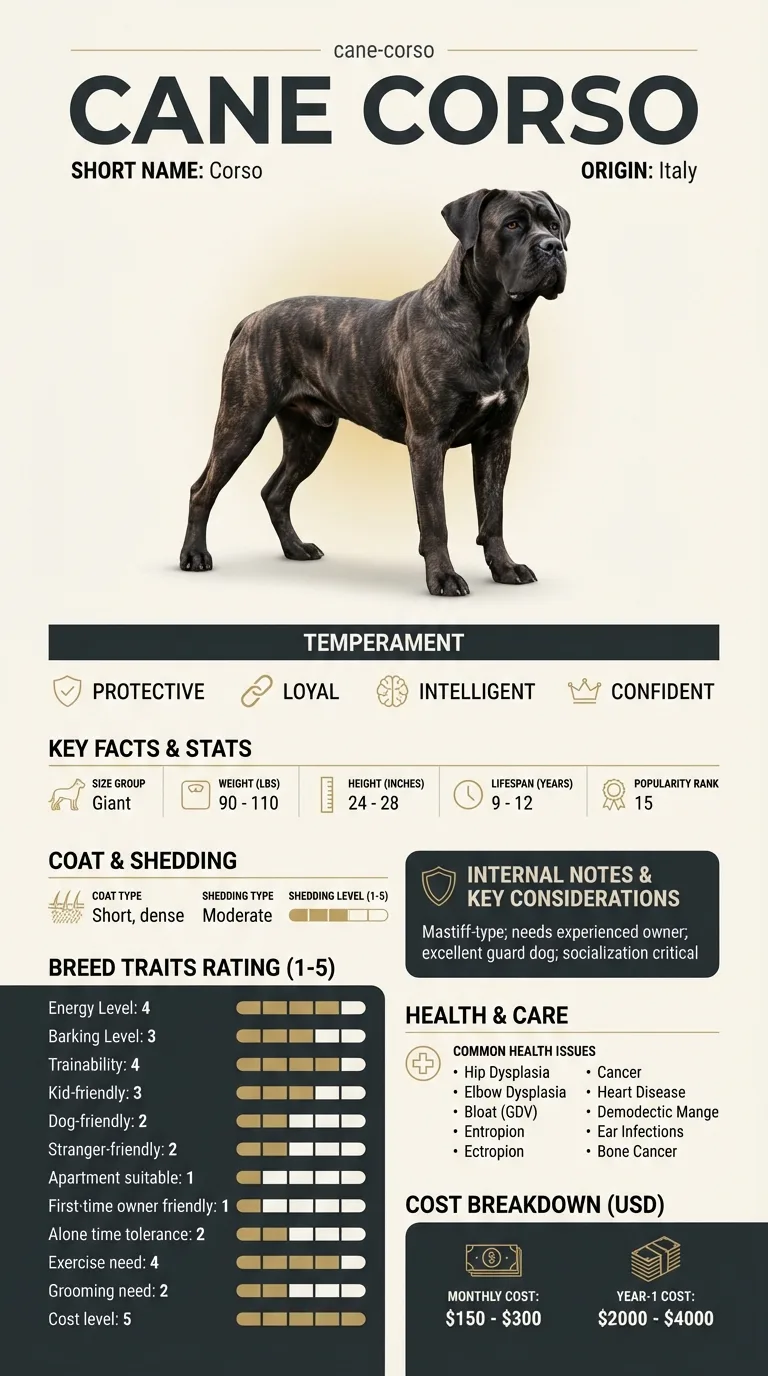
Managing Cane Corso diabetes typically costs between $150 to $300 per month, including food, vet visits, and medications. Initial costs may be higher due to diagnostics and treatment setup.
Some supplements, like omega-3 fatty acids and antioxidants, may support your Cane Corso's health. Always consult your vet before adding any supplements to avoid interactions with medications.