What are quick tips for managing Brussels Griffon exercise intolerance?
Keep exercise sessions short and frequent, monitor for signs of fatigue, and ensure they have access to water. Avoid hot weather and consider indoor activities on warm days.
Brussels Griffon exercise intolerance can be a concerning issue for owners. It often leads to overheating and overexertion risks, which can affect your dog's overall health.

Many first-time dog owners or busy families may struggle with Brussels Griffon exercise intolerance. If you're not aware of their exercise limits, you might inadvertently push them too hard during playtime or walks.
This guide is not medical advice. If your dog shows pain, sudden behavior change, or worsening symptoms, consult a licensed veterinarian.
Some links may be affiliate links. We may earn a commission at no extra cost to you. We only suggest products we believe are helpful for dog owners.
Brussels Griffon exercise intolerance can be a frustrating issue for dog owners. This problem often manifests as a reluctance to engage in physical activity or shortness of breath after minimal exertion. Owners may notice their Brussels panting heavily or lagging behind during walks, which can be concerning, especially for active families.
Exercise intolerance is relatively common in Brussels Griffons due to their small size and specific health concerns. Many owners report encountering this issue, especially during warmer months or after extended exercise.
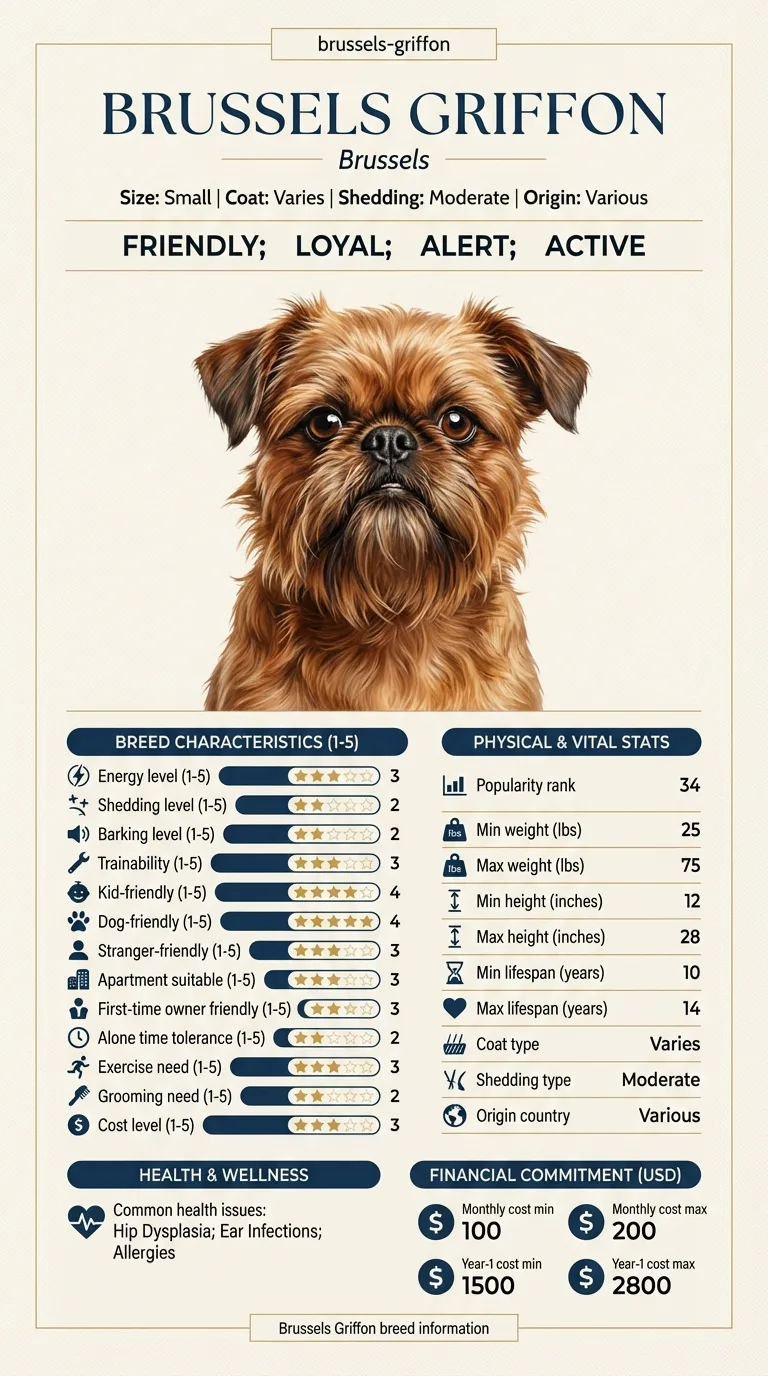
Brussels Griffons are small dogs with a moderate energy level. They can have genetic predispositions that affect their stamina and tolerance for exercise, which may lead to exercise intolerance. This breed may also struggle with specific health issues like hip dysplasia or respiratory problems that can limit their physical activity.
Environmental factors, such as hot weather or high humidity, can significantly impact a Brussels Griffon's ability to exercise. Additionally, lack of gradual conditioning or exposure to suitable exercise environments can make them more prone to overheating and fatigue. An owner's lifestyle, including insufficient outdoor space or time for walks, can also contribute to this issue.
If your Brussels Griffon shows persistent exercise intolerance despite gradual conditioning, consider consulting a professional dog trainer. A trainer can help assess your dog's specific needs and create a tailored exercise plan that suits their abilities.
If you notice severe lethargy, coughing, or any signs of distress during or after exercise, it's essential to talk to your vet. They can evaluate for underlying health concerns that may be contributing to your dog's exercise intolerance, ensuring your pet stays healthy and happy.
You might see gradual improvement in your Brussels Griffon's exercise tolerance within 4 to 8 weeks of consistent training and lifestyle adjustments.
Success means your Brussels Griffon can engage in regular, moderate exercise without showing signs of fatigue or overheating, allowing them to enjoy walks and playtime.
Avoiding common pitfalls can help improve your Brussels Griffon's exercise intolerance. Here are some mistakes to steer clear of:
Recognizing when exercise intolerance in your Brussels Griffon becomes an emergency is crucial for their health. If your dog shows signs of severe fatigue, excessive panting, or collapsing during or after exercise, you need to call your vet immediately. These symptoms can indicate overheating or overexertion, which can be life-threatening if not addressed quickly.
On the other hand, if your Brussels Griffon is simply reluctant to exercise or seems mildly tired after a short play session, it may not be an emergency. In these cases, monitor their behavior and adjust their exercise routine. Ensure they have plenty of water and rest periods. If the mild signs persist or worsen, consider consulting your vet for further guidance.

Lisa adopted Max, her Brussels Griffon, and quickly noticed he struggled during walks. After just a short distance, he would pant excessively and seem disinterested. Concerned, Lisa consulted her vet, who reassured her that some Brussels Griffons are prone to exercise intolerance. They discussed a gradual training plan, focusing on short, frequent walks and plenty of breaks. Over the next few weeks, Lisa implemented a routine of short strolls and interactive indoor play. She noticed Max becoming more energetic and engaged during their outings, showing signs of enjoying the fresh air without overdoing it.
Key takeaway: With patience and a tailored approach, owners can help their Brussels Griffons build stamina and enjoy exercise safely.

Brussels Griffons may experience exercise intolerance due to their small size and brachycephalic (short-nosed) structure. This can make them prone to overheating and breathing difficulties during intense physical activities. It's important to monitor their exercise levels and provide breaks as needed. This answer relates to Brussels Griffon exercise intolerance.
Start with short, gentle walks and gradually increase the duration as your dog becomes more comfortable. Look for signs of fatigue or overheating, such as excessive panting or drooling. Always provide plenty of water and rest periods during exercise.
Signs of struggle include heavy panting, reluctance to continue walking, or lying down during activity. If your dog seems overly tired or disoriented, it's crucial to stop the exercise immediately and allow them to cool down.
Yes, gradual training can improve your Brussels Griffon's stamina over time. Start with low-impact activities and increase intensity slowly, ensuring to monitor their response. Consistent, positive reinforcement during training can also help.
Short, low-impact activities like walking or gentle play are ideal for Brussels Griffons. Avoid high-intensity exercises like running or jumping, especially in hot weather, to prevent overheating and injury.
If your dog shows signs of overheating, move them to a cool area immediately. Offer fresh water and apply cool, wet cloths to their body. If symptoms persist, contact your veterinarian for further guidance.
Signs of exercise intolerance in your Brussels Griffon may include excessive panting, lethargy, or reluctance to engage in play. If your dog seems unusually tired or is taking longer to recover after light exercise, it could indicate a problem.
Yes, older Brussels Griffons can develop exercise intolerance due to age-related health issues like joint problems or heart conditions. Regular vet check-ups can help monitor their health and adjust their activity levels appropriately.
You should consult a vet if your Brussels Griffon shows persistent signs of exercise intolerance, such as difficulty breathing or extreme fatigue. Early diagnosis can help address any underlying health issues.
Training techniques for a Brussels Griffon with exercise intolerance should focus on short, gentle activities. Gradually increase their exercise duration and intensity while monitoring their response to avoid overexertion.
To manage your Brussels Griffon's exercise needs, provide short walks and play sessions instead of long, intense workouts. Incorporate mental stimulation through training games to keep them engaged without overexerting them.
Keep exercise sessions short and frequent, monitor for signs of fatigue, and ensure they have access to water. Avoid hot weather and consider indoor activities on warm days.
Look for balanced energy levels; they should be playful but not overly hyper or lethargic. Regular short walks and playtime should keep them engaged and satisfied.
Costs may include regular vet check-ups, cooling products, and potentially training sessions. Expect $100 to $200 monthly for general care.