Behavior
How often should I brush my Brussels Griffon's teeth?
Aim to brush your Brussels Griffon's teeth at least two to three times a week for optimal dental health.

Quick answer
How often should I brush my Brussels Griffon's teeth?
Aim to brush your Brussels Griffon's teeth at least two to three times a week for optimal dental health.
Brussels Griffon dental issues can lead to serious health problems if not addressed early.
Owners of Brussels Griffons, especially first-time dog parents, often struggle with these dental concerns. Busy families or individuals may not notice the signs until serious issues arise.
This guide is not medical advice. If your dog shows pain, sudden behavior change, or worsening symptoms, consult a licensed veterinarian.
Some links may be affiliate links. We may earn a commission at no extra cost to you. We only suggest products we believe are helpful for dog owners.
We research and check what we publish, but we do not warrant that any figure, date, price, or statement is accurate, complete, or current, and we accept no liability for any loss, cost, injury, or other harm arising from the use of this site. Use it as one reference among several. You remain responsible for your own decisions and for your dog's care - confirm anything that matters with a licensed veterinarian or another qualified professional before you act on it. Full disclaimer.
Check this first
Dental health is vital for your Brussels Griffon. While some dental issues can be monitored, certain signs mean it's time to call your vet urgently. Look for symptoms that indicate severe problems, such as excessive drooling, difficulty eating, or visible swelling around the mouth. If you notice blood in the saliva or if your dog is favoring one side of their mouth, these are red flags that require immediate attention.
On the other hand, mild cases such as occasional bad breath or minor tartar buildup can often be watched and managed at home. Regular dental care, including brushing and dental chews, may help. If your Brussels shows signs of discomfort but is still eating and drinking normally, you can monitor the situation. Keep an eye on their behavior and maintain a dental care routine to prevent worsening issues. If symptoms persist or worsen, don't hesitate to consult your vet to avoid serious health complications.
If any of these apply, call your vet or an emergency clinic now. The rest of this page is for the cases that are not an emergency.
Brussels Griffon dental issues can be a real challenge for owners. Daily, you might notice bad breath, difficulty eating, or even gum inflammation. These problems often stem from inadequate dental care, which is common in small breeds like the Brussels Griffon.
Dental issues are quite common in Brussels Griffons due to their small mouths, which can lead to overcrowding and plaque buildup. Many owners find themselves dealing with these problems, so you're not alone if you notice them.
Brussels Griffons are small dogs with unique dental structures. Their compact jaws can lead to overcrowding, which may cause misalignment and increased plaque buildup. This breed is also prone to dental issues due to their small teeth being more susceptible to decay and gum disease.
The environment plays a significant role in dental health. Lack of proper dental care, such as regular brushing or professional cleanings, can exacerbate dental problems. Additionally, diet can influence dental health; diets high in soft foods may not provide sufficient abrasion to keep teeth clean.
If you notice signs of dental issues, such as bleeding gums, excessive drooling, or difficulty eating, contact your vet. These symptoms may require professional dental cleaning or treatment.
Avoiding these common mistakes can help improve your Brussels Griffon's dental health. Recognizing and correcting them is key to preventing further issues.
Start here: Brussels Griffon Most Common Genetic Disorders: Screening
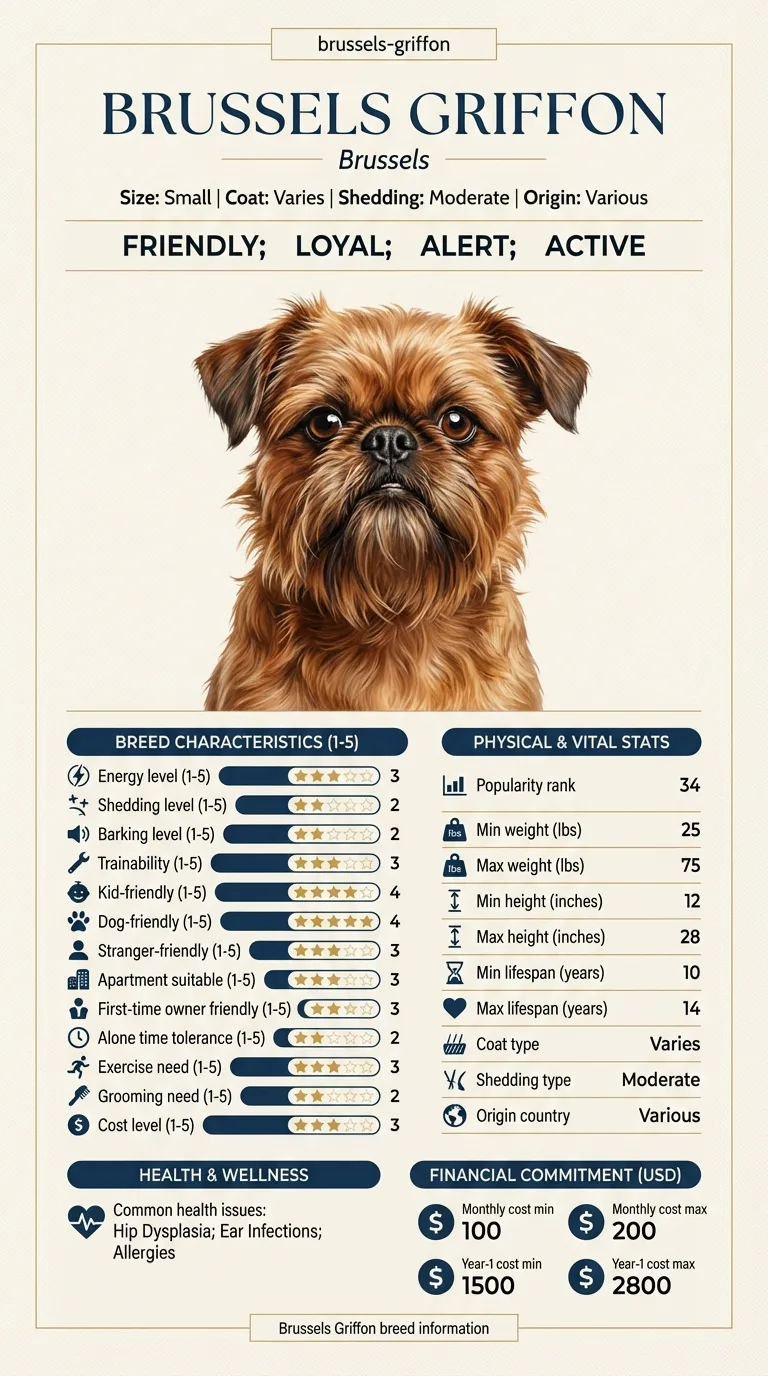
See all Brussels Griffon health problems, which breeds are prone to dental issues, or the full Brussels Griffon breed guide for temperament, exercise needs and ownership costs.
Most owners can expect to see improvements in their Brussels Griffon's dental health within 3 to 6 months of consistent care and follow-up with your vet.
Success means your dog has healthier gums, reduced plaque buildup, and a happier demeanor. Regular vet check-ups should show fewer dental issues and your dog will be more comfortable eating.
Maggie, a first-time dog owner in Seattle, noticed her Brussels Griffon, Charlie, had bad breath and was reluctant to chew his food. After a vet visit, she learned about the importance of dental care and how common dental issues are in small breeds like Charlie. Determined to help him, Maggie started brushing his teeth regularly, introduced dental chews, and scheduled biannual vet cleanings. While it was challenging at first, she found that Charlie quickly adjusted, and his dental health improved significantly over time.
Key takeaway: With commitment and the right tools, addressing Brussels Griffon dental issues can greatly enhance your pet's quality of life.
Brussels Griffons are prone to dental issues due to their small mouths, which can lead to overcrowding of teeth. This can cause plaque buildup and gum disease if not managed properly. Regular dental check-ups and at-home care are essential for keeping their teeth healthy.
To prevent Brussels Griffon dental issues, establish a regular dental care routine. Brush their teeth several times a week with dog-friendly toothpaste and provide dental chews that help reduce plaque. Additionally, schedule annual vet check-ups to catch any potential problems early.
Signs of dental problems in Brussels Griffons include bad breath, swollen gums, difficulty eating, and loose teeth. If you notice any of these symptoms, consult your veterinarian for an evaluation. Early intervention can prevent more serious health issues.
Yes, you can train your Brussels Griffon to accept dental care. Start by introducing them to the toothbrush and toothpaste slowly, rewarding them with treats for positive behavior. Gradually work up to regular brushing sessions for better dental hygiene.
Look for dental products specifically designed for small breeds, such as toothbrushes with softer bristles and dog toothpaste. Dental chews can also help maintain your Brussels Griffon's oral health by reducing plaque buildup. Always consult your vet for recommendations.
If your Brussels Griffon has severe dental issues, it’s crucial to take them to a veterinarian immediately. They may need professional cleaning or even tooth extractions to prevent further health complications. Don't delay in seeking help.
Common signs of dental issues in Brussels Griffons include bad breath, difficulty eating, and excessive drooling. You might also notice swollen gums or loose teeth. If you observe any of these symptoms, it's best to consult your vet.
Yes, dental issues can often be managed with regular dental care. For older Brussels Griffons, consider providing dental chews, brushing their teeth, and scheduling professional cleanings. Regular check-ups with your vet can help catch problems early.
Ideally, you should brush your Brussels Griffon's teeth daily. If daily brushing isn't feasible, aim for at least two to three times a week. Consistent dental care is crucial in preventing dental issues.
Yes, smaller breeds like the Brussels Griffon can be more susceptible to dental problems due to their smaller mouths and teeth. Regular dental care and vet check-ups are important to manage their oral health effectively.
If you suspect serious dental problems, such as severe pain or infection, take your Brussels Griffon to the vet immediately. They might recommend treatments like tooth extractions or professional cleaning to restore your dog's oral health.
Aim to brush your Brussels Griffon's teeth at least two to three times a week for optimal dental health.
Regular dental check-ups, daily tooth brushing, and dental chews can help prevent dental issues in Brussels Griffons.
Expect to spend around $300 to $600 annually for dental care, including cleanings and check-ups.
Yes, dental problems can lead to serious health issues if bacteria enter the bloodstream, affecting organs like the heart.
A one-page prep sheet for this condition: the signs, the questions to ask, what to get priced. Unlocks here.
You get: Vet visit prep sheet
No spam. One-click unsubscribe. See our privacy policy.
See a sample page before you decide.
Early access list
The free prep sheet covers the same-day warning signs, a symptom log and the questions to ask. We are considering a fuller kit that adds a cost worksheet for the usual tests and treatments (US price ranges with their sources) and a plain-English guide to ways of covering the bill. It is not built yet; this list tells us whether it is worth building.
One email, no spam, unsubscribe anytime. Information only, not veterinary advice.