Behavior
What are quick tips for managing Brussels Griffon degenerative myelopathy (dm)?
Focus on a healthy diet, maintain a moderate exercise routine, and consult your vet regularly. Mobility aids can also help improve your dog's quality of life.

Quick answer
What are quick tips for managing Brussels Griffon degenerative myelopathy (dm)?
Focus on a healthy diet, maintain a moderate exercise routine, and consult your vet regularly. Mobility aids can also help improve your dog's quality of life.
Brussels Griffon degenerative myelopathy (DM) is a serious spinal cord disease that can affect your beloved pet's mobility.
Typically, owners of Brussels Griffons face this issue as their dogs age, especially since DM commonly appears in middle-aged to older dogs. If you’ve noticed your dog struggling to get up or maintain balance, you might be worried about this debilitating condition.
This guide is not medical advice. If your dog shows pain, sudden behavior change, or worsening symptoms, consult a licensed veterinarian.
Some links may be affiliate links. We may earn a commission at no extra cost to you. We only suggest products we believe are helpful for dog owners.
We research and check what we publish, but we do not warrant that any figure, date, price, or statement is accurate, complete, or current, and we accept no liability for any loss, cost, injury, or other harm arising from the use of this site. Use it as one reference among several. You remain responsible for your own decisions and for your dog's care - confirm anything that matters with a licensed veterinarian or another qualified professional before you act on it. Full disclaimer.
Check this first
It's crucial to know when Brussels Griffon degenerative myelopathy (DM) becomes an emergency. If you notice your dog suddenly losing coordination in their back legs, this is a red flag. Other urgent signs include difficulty standing, dragging their paws, or showing signs of pain when moving. If these symptoms appear, contact your vet immediately.
On the other hand, milder signs of DM, like slight unsteadiness or occasional stumbling, can often be monitored at home. If your Brussels Griffon is still able to walk and play, create a plan. Regular vet check-ups and a consistent exercise routine can help manage the condition. Keep an eye on their mobility and behavior, and note any changes.
It's essential to differentiate between emergency signs needing immediate attention and milder cases that can wait. Always err on the side of caution. If you're unsure, don't hesitate to reach out to a vet for guidance.
If any of these apply, call your vet or an emergency clinic now. The rest of this page is for the cases that are not an emergency.
Brussels Griffon degenerative myelopathy (DM) is a progressive spinal cord disease that typically affects older dogs. This condition leads to weakness and loss of coordination in the hind legs, making daily activities challenging. Owners may notice their Brussels struggling to walk, having trouble climbing stairs, or experiencing difficulty getting up after lying down.
Degenerative myelopathy is relatively common in Brussels Griffons, especially as they age. While not every dog will develop this condition, a significant number of older Brussels may show signs, so being aware of symptoms is crucial for early intervention.
Brussels Griffons are genetically predisposed to degenerative myelopathy (DM). This inherited condition affects the spinal cord and leads to progressive weakness and loss of coordination. Certain lines of Brussels Griffons may have a higher risk due to their genetic background.
Environmental factors can also play a role in the severity of DM symptoms. Lack of exercise, obesity, and an unbalanced diet may exacerbate the condition. Stressful environments can further impact their overall health and lead to quicker progression of symptoms.
If your Brussels Griffon shows noticeable changes in mobility, strength, or coordination, consult your vet. They can provide a diagnosis and discuss management options. Early intervention can help slow the progression of degenerative myelopathy.
Here are some common mistakes that can worsen Brussels Griffon degenerative myelopathy (DM) and tips for better approaches.
Start here: Brussels Griffon Most Common Genetic Disorders: Screening
See all Brussels Griffon health problems, which breeds are prone to degenerative myelopathy dm, or the full Brussels Griffon breed guide for temperament, exercise needs and ownership costs.
Managing Brussels Griffon degenerative myelopathy (DM) typically takes several months of consistent care and follow-up with your vet. You'll likely see gradual improvement over 3 to 6 months, depending on the dog's condition and your commitment.
Success means your Brussels Griffon maintains mobility for as long as possible and shows improved quality of life. You'll notice better coordination and less discomfort during daily activities.
Sarah, a first-time dog owner, adopted Max, a cheerful Brussels Griffon. Within a year, she noticed he was stumbling and having trouble standing. After a vet diagnosed him with degenerative myelopathy (DM), Sarah felt overwhelmed but determined to help Max. She started a tailored exercise routine, focusing on low-impact activities like swimming and gentle walks. Sarah also researched and joined a support group for owners facing similar challenges. Over time, Max regained some strength and enjoyed his daily outings again. Although DM is progressive, Sarah learned to celebrate each small victory with Max.
Key takeaway: With the right care, support, and training, you can improve your Brussels Griffon's quality of life despite degenerative myelopathy (DM).
Degenerative myelopathy often occurs due to a genetic predisposition in Brussels Griffons. It typically develops in older dogs, usually around the age of 8 or older. Environmental factors may also play a role, but genetics are the primary concern.
While there is no cure for Brussels Griffon degenerative myelopathy (dm), supportive care can help. Physical therapy, mobility aids like carts, and maintaining a healthy weight can improve their quality of life. Regular vet check-ups are essential to monitor the condition.
Training can provide mental stimulation and strengthen the bond between you and your dog. While it won’t reverse the condition, positive reinforcement techniques can be used to encourage desirable behaviors and make daily tasks easier.
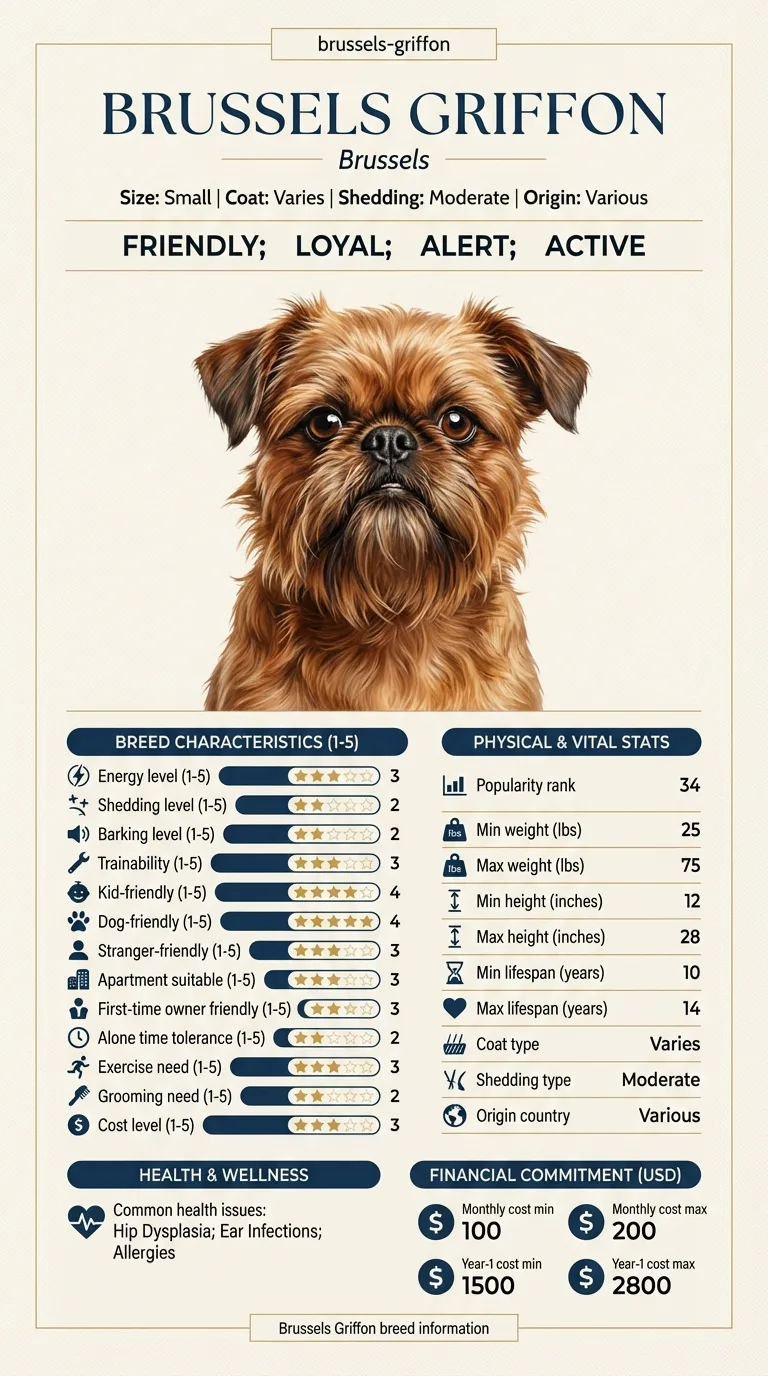
Monthly costs for a Brussels Griffon range from $100 to $200, including vet visits and supportive care. Planning for additional expenses, like mobility aids, can help you manage finances effectively. Consider pet insurance or saving ahead for unexpected medical costs.
Early signs of Brussels Griffon degenerative myelopathy (DM) may include difficulty walking or an unsteady gait. You might also notice a reluctance to jump or climb stairs. Monitoring your dog for these changes can help in early detection.
In older Brussels Griffons, degenerative myelopathy (DM) can lead to more rapid progression of symptoms. They may experience weakness in their hind legs and a decrease in mobility. It's crucial to consult a vet to manage their comfort and care.
Currently, there is no known way to prevent Brussels Griffon degenerative myelopathy (DM). Genetic factors play a significant role, so choosing a responsible breeder may help reduce the risk of this condition. Regular vet check-ups can also aid in monitoring overall health.
Therapies for Brussels Griffons with degenerative myelopathy (DM) often include physical therapy and hydrotherapy. These can help maintain mobility and improve quality of life. Always consult your veterinarian for tailored recommendations.
If you notice your Brussels Griffon struggling to walk, exhibiting a wobbly gait, or showing signs of pain, it's time to see a vet. Early intervention can lead to better management of degenerative myelopathy (DM) and improve their comfort.
Focus on a healthy diet, maintain a moderate exercise routine, and consult your vet regularly. Mobility aids can also help improve your dog's quality of life.
Watch for signs like whining, reluctance to move, or changes in appetite. Regular checkups with your vet can help assess their comfort level.
A balanced diet rich in omega fatty acids can support joint health. Consult your vet for tailored dietary advice.
A one-page prep sheet for this condition: the signs, the questions to ask, what to get priced. Unlocks here.
You get: Vet visit prep sheet
No spam. One-click unsubscribe. See our privacy policy.
Preview page 1 before you decide.