Behavior
What are Brussels Griffon bone & growth issues quick tips?
Ensure a balanced diet and regular vet check-ups to prevent bone issues. Limit high-impact activities until they are fully grown.

Quick answer
What are Brussels Griffon bone & growth issues quick tips?
Ensure a balanced diet and regular vet check-ups to prevent bone issues. Limit high-impact activities until they are fully grown.
Brussels Griffon bone & growth issues can be concerning for pet owners. These problems affect your dog's overall health and mobility.
Typical owners facing these challenges often include first-time dog parents or busy families. They may find it difficult to recognize early signs of growth issues and often seek guidance on how to provide the best care for their pup.
This guide is not medical advice. If your dog shows pain, sudden behavior change, or worsening symptoms, consult a licensed veterinarian.
Some links may be affiliate links. We may earn a commission at no extra cost to you. We only suggest products we believe are helpful for dog owners.
We research and check what we publish, but we do not warrant that any figure, date, price, or statement is accurate, complete, or current, and we accept no liability for any loss, cost, injury, or other harm arising from the use of this site. Use it as one reference among several. You remain responsible for your own decisions and for your dog's care - confirm anything that matters with a licensed veterinarian or another qualified professional before you act on it. Full disclaimer.
Check this first
Recognizing when bone and growth issues in your Brussels Griffon signal an emergency is crucial for their health. Certain signs indicate that immediate veterinary attention is necessary, while other cases can be monitored at home. Let's break down these red flags versus mild cases.
Call your vet right away if your Brussels Griffon shows any of these emergency signs: persistent limping, visible swelling in joints, inability to move or bear weight, sudden changes in appetite, or signs of severe pain such as yelping or whimpering. If you notice any of these symptoms, it’s best to act quickly to prevent further complications.
On the other hand, if your dog occasionally seems stiff after exercise but still plays and eats normally, it may not be an emergency. Mild cases can often be managed with rest and appropriate exercise adjustments. Keeping an eye on their behavior over the next few days is a good plan. If the issues persist or worsen, then a vet visit is advisable to rule out any serious conditions.
If any of these apply, call your vet or an emergency clinic now. The rest of this page is for the cases that are not an emergency.
Brussels Griffons can sometimes face bone and growth issues, which may lead to discomfort or mobility problems. These issues often manifest as joint pain, difficulty in movement, or unusual growth patterns. Owners may notice their pet favoring a leg or being less active than usual, which can be concerning for first-time dog owners.
Bone and growth issues are relatively common in Brussels Griffons, especially if they experience rapid growth. Regular check-ups with a vet can help catch these problems early, ensuring your pup stays healthy and happy.
Brussels Griffons are small but can experience bone and growth issues due to their genetic predisposition. Some may develop conditions like hip dysplasia or other skeletal problems. These issues can arise from improper breeding practices, which can lead to inherited health concerns.
Environmental factors play a significant role as well. Inadequate nutrition during their growth phase can lead to bone issues. Additionally, a lack of proper exercise or sudden impact during play can exacerbate growth-related problems.
If you notice persistent limping, difficulty in movement, or any signs of pain, consult a vet immediately. Early intervention can prevent further complications and ensure your dog's comfort.
Avoiding common mistakes can help manage Brussels Griffon bone and growth issues effectively. Here are some behaviors to steer clear of.
Start here: Brussels Griffon Most Common Genetic Disorders: Screening
See all Brussels Griffon health problems, which breeds are prone to bone growth issues, or the full Brussels Griffon breed guide for temperament, exercise needs and ownership costs.
You may start noticing improvements within 4 to 6 weeks with consistent care and follow-up with your vet. However, addressing more severe issues could take several months.
Success means your Brussels Griffon will show improved mobility and a reduction in discomfort. You'll also notice better behavior and a more active lifestyle.
Emily, a first-time dog owner, adopted Max, a Brussels Griffon, who struggled with bone growth issues. At just six months old, he had trouble keeping up during walks and often yelped in pain after playing. Frustrated and worried, Emily consulted a vet, who recommended a tailored training program and dietary adjustments. She diligently followed the vet's advice, incorporating gentle exercises and specific supplements into Max's routine. Within a few months, Max was more energetic and playful, and Emily felt a weight lift off her shoulders as he began to thrive.
Key takeaway: Addressing bone growth issues in Brussels Griffons requires a proactive approach, combining veterinary guidance with consistent training and care.
Brussels Griffons can experience bone and growth issues due to their small size and rapid growth patterns. Genetics play a significant role, and certain health issues like hip dysplasia can develop. Regular vet check-ups are crucial for early detection.
To help prevent bone and growth issues, ensure your Brussels Griffon has a balanced diet rich in nutrients. Regular exercise is important, but avoid excessive jumping or rough play until their bones are fully developed. Consult your vet for specific dietary recommendations and exercise guidelines.
Signs of bone and growth issues include limping, reluctance to play, or difficulty climbing stairs. You may also notice swelling around joints or a decrease in activity levels. If you observe any of these symptoms, contact your veterinarian for advice.
Provide high-quality dog food specifically formulated for small breeds to support healthy growth. Look for options that contain balanced proteins, fats, and essential vitamins. Always consult your vet for the best food choices based on your dog's age and health.
Start training your Brussels Griffon as early as possible, ideally around 8 weeks old. Focus on basic commands and socialization to promote good behavior. Consistent training can help reduce anxiety and prevent future behavior problems.
Manage your Brussels Griffon's anxiety by providing a consistent routine and safe space. Regular exercise and mental stimulation can also help. Consider using calming products or consult your vet for additional strategies if anxiety persists.
For older Brussels Griffons, gentle exercise and weight management are crucial. Consider providing joint supplements and modifying their diet to include anti-inflammatory foods. Always consult your vet before starting any new treatments or diets.
Even with a balanced diet, genetic factors can contribute to bone and growth issues in Brussels Griffons. Rapid growth can also lead to problems, especially if the dog is over-exercised or lacks proper nutrition. A vet can help assess your dog's specific situation.
Training can help improve your Brussels Griffon's overall behavior and physical condition. Focus on low-impact activities, like obedience training or gentle leash walks, which can help maintain their muscle tone without stressing their joints.
If your Brussels Griffon shows signs of pain, difficulty moving, or any noticeable changes in behavior, it's time to visit the vet. Early intervention can prevent further complications and help manage their condition effectively.
Ensure a balanced diet and regular vet check-ups to prevent bone issues. Limit high-impact activities until they are fully grown.
Provide a stable environment and engage in gentle exercises to support their growth without overexertion.
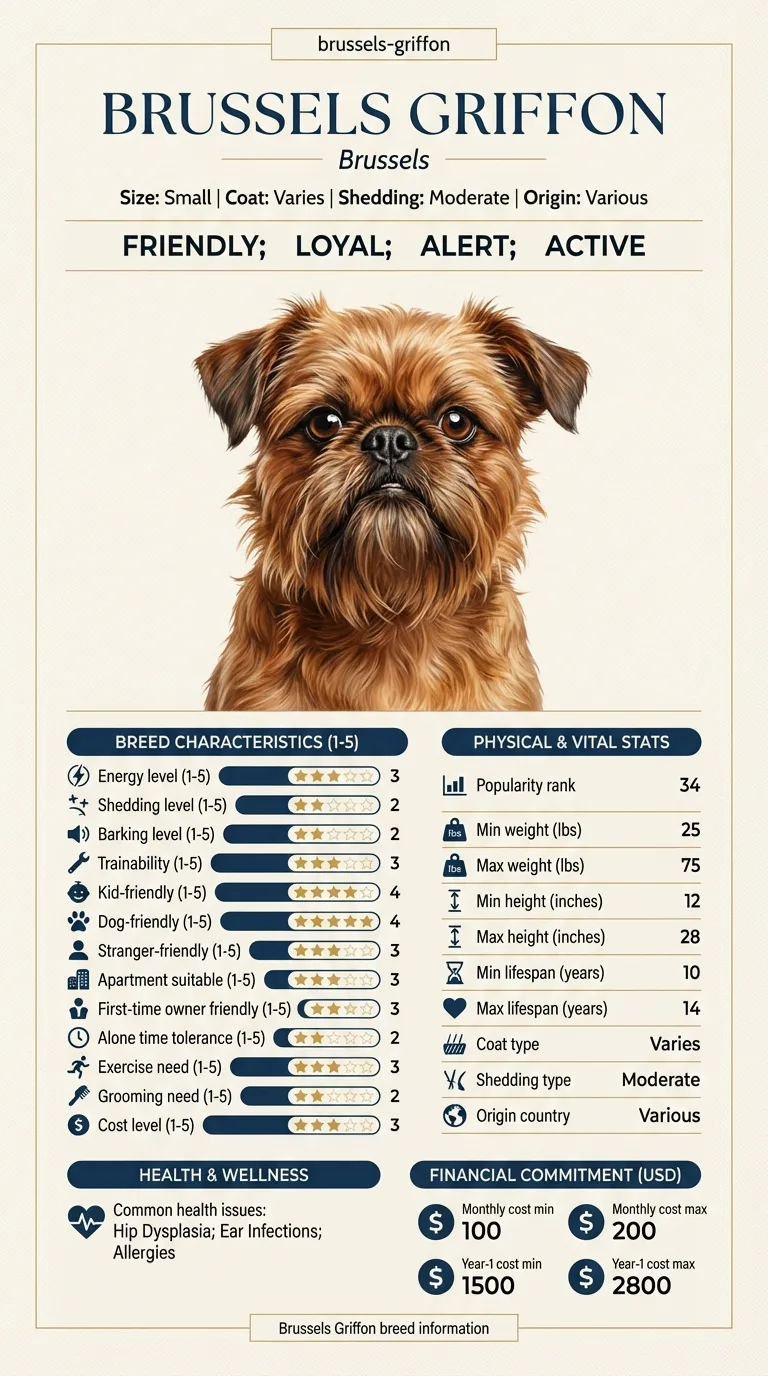
Common health issues include hip dysplasia, ear infections, and allergies. Regular vet visits can help catch these early.
The monthly care costs for a Brussels Griffon can range from $100 to $200, depending on food and vet expenses.
Focus on basic obedience and socialization as early as possible to prevent future behavior problems.
A one-page prep sheet for this condition: the signs, the questions to ask, what to get priced. Unlocks here.
You get: Vet visit prep sheet
No spam. One-click unsubscribe. See our privacy policy.
Preview page 1 before you decide.