Behavior
What are quick tips for managing Boxer degenerative myelopathy (DM)?
Keep your Boxer active with low-impact exercises and consult a vet for physical therapy options. Maintain a safe environment to prevent falls.

Quick answer
What are quick tips for managing Boxer degenerative myelopathy (DM)?
Keep your Boxer active with low-impact exercises and consult a vet for physical therapy options. Maintain a safe environment to prevent falls.
Boxer degenerative myelopathy (DM) is a serious condition that affects your dog's spinal cord. This progressive disease can lead to mobility issues and significantly impact your dog's quality of life.
Owners of Boxers, especially those who love to engage in active play or exercise, may find it particularly hard to cope with the changes DM brings. If you’re a first-time Boxer owner or someone who has recently noticed mobility issues in your dog, this guide is here to help.
This guide is not medical advice. If your dog shows pain, sudden behavior change, or worsening symptoms, consult a licensed veterinarian.
Some links may be affiliate links. We may earn a commission at no extra cost to you. We only suggest products we believe are helpful for dog owners.
We research and check what we publish, but we do not warrant that any figure, date, price, or statement is accurate, complete, or current, and we accept no liability for any loss, cost, injury, or other harm arising from the use of this site. Use it as one reference among several. You remain responsible for your own decisions and for your dog's care - confirm anything that matters with a licensed veterinarian or another qualified professional before you act on it. Full disclaimer.
Check this first
Understanding when to act is crucial for managing Boxer degenerative myelopathy (DM). Certain signs indicate an emergency, while others can be monitored with a plan. If your Boxer shows severe symptoms, it’s time to call your vet immediately.
Red-flag signs include sudden loss of coordination, inability to stand, or severe weakness in the legs. These symptoms can signal progression that demands immediate medical attention. Additionally, if your dog seems to experience extreme pain or distress, don’t hesitate to seek veterinary help.
On the other hand, if your Boxer is exhibiting mild symptoms like slight wobbling or occasional weakness, it’s generally safe to monitor the situation. You can create a management plan that includes gentle exercises and training to support their mobility. Keep an eye on changes in their condition, and be prepared to consult your vet if things worsen.
If any of these apply, call your vet or an emergency clinic now. The rest of this page is for the cases that are not an emergency.
Boxer degenerative myelopathy (DM) is a progressive spinal cord disease that typically affects older Boxers. Day-to-day, you may notice your Boxer struggling with coordination, especially in their hind legs. This can lead to difficulty walking, and eventually, they may have trouble standing or getting up.
Degenerative myelopathy is relatively common in Boxers, especially those aged 8 and older. It is important for owners to be aware of this condition, as early detection can help manage symptoms and improve quality of life.
Boxers are predisposed to degenerative myelopathy (DM) due to genetic factors. This progressive spinal cord disease can be linked to specific genes in the breed. Because Boxers are large dogs, they may also experience more strain on their nervous system as they age.
Environmental factors can contribute to the onset of DM. For instance, obesity can exacerbate symptoms, and a lack of proper exercise can weaken muscle strength. Additionally, traumatic injuries or poor nutrition may lead to early signs of the disease.
If you notice signs like weakness in the hind legs, trouble standing, or changes in behavior, it’s time to consult your vet. They can assess your dog's condition and offer treatment options, including medications or physical therapy.
Understanding what not to do can be just as important as knowing what to do. Here are some common mistakes that can worsen your Boxer’s degenerative myelopathy (DM) and safer alternatives.
Start here: Boxer Most Common Genetic Disorders: What to Screen For
See all Boxer health problems, which breeds are prone to degenerative myelopathy dm, or the full Boxer breed guide for temperament, exercise needs and ownership costs.
Managing Boxer degenerative myelopathy (DM) is a long-term commitment. Owners can expect to see gradual changes over several months to years, depending on the individual dog's progression.
Success includes maintaining your dog's quality of life through tailored exercise, nutrition, and mobility aids. You'll notice your Boxer adapting well to their condition, remaining comfortable, and enjoying their daily activities.
Sarah, a busy nurse in Seattle, was devastated when her 5-year-old Boxer, Max, was diagnosed with degenerative myelopathy (DM). At first, she felt overwhelmed, unsure of how to help him cope. After researching and speaking with her vet, Sarah created a routine that included low-impact exercises and a special diet to keep Max strong. She also invested in a harness to help him walk and adjusted their home to make it safer for him. Over time, Max adapted to his condition, and Sarah found great joy in their continued adventures together, albeit at a slower pace.
Key takeaway: With the right support and adjustments, you can help your Boxer manage degenerative myelopathy (DM) while maintaining their happiness and quality of life.
Boxer degenerative myelopathy (DM) is a progressive spinal cord disease that affects the mobility of your dog. It typically starts with weakness in the hind legs, leading to eventual paralysis. This condition is hereditary, and early detection can help manage symptoms.
While there is no cure for DM, you can help manage your Boxer's condition. Regular, low-impact exercise can maintain muscle strength, and physical therapy may improve mobility. A veterinarian can recommend specific exercises tailored for your dog's needs.
Training can help with managing your Boxer's DM by focusing on commands that promote balance and coordination. Using positive reinforcement for gentle exercises can also keep your dog engaged. However, avoid any strenuous activities that may worsen their condition.
Common signs of DM in Boxers include wobbling, dragging their hind legs, and difficulty getting up. You may also notice a decrease in activity levels. If you observe these signs, consult your vet for an assessment.
Early signs of Boxer degenerative myelopathy (DM) may include a gradual loss of coordination, particularly in the hind legs. You might notice your Boxer stumbling or dragging their paws while walking. If you observe these symptoms, it's important to consult your vet for further evaluation.
While diet alone cannot stop Boxer degenerative myelopathy (DM), a balanced diet can support overall health. Nutrients that promote joint and muscle health, like omega fatty acids, may be beneficial. Always discuss dietary changes with your vet to ensure they meet your dog's specific needs.
Boxer degenerative myelopathy (DM) is progressive, meaning symptoms worsen over time. Initially, you may see mild coordination issues, but as the disease advances, it can lead to paralysis. Regular vet check-ups are crucial to monitor changes and discuss management options.
Yes, degenerative myelopathy (DM) can have a hereditary component in Boxers. Genetic testing is available to determine if your dog carries the mutation associated with DM. If you are considering breeding, consult with a vet to understand the implications.
Training for Boxers with degenerative myelopathy (DM) should focus on low-impact exercises that maintain muscle strength and coordination. Activities like swimming or gentle leash walks can be beneficial. Always tailor your approach to your dog's abilities and consult with a trainer experienced in special needs dogs.
Keep your Boxer active with low-impact exercises and consult a vet for physical therapy options. Maintain a safe environment to prevent falls.
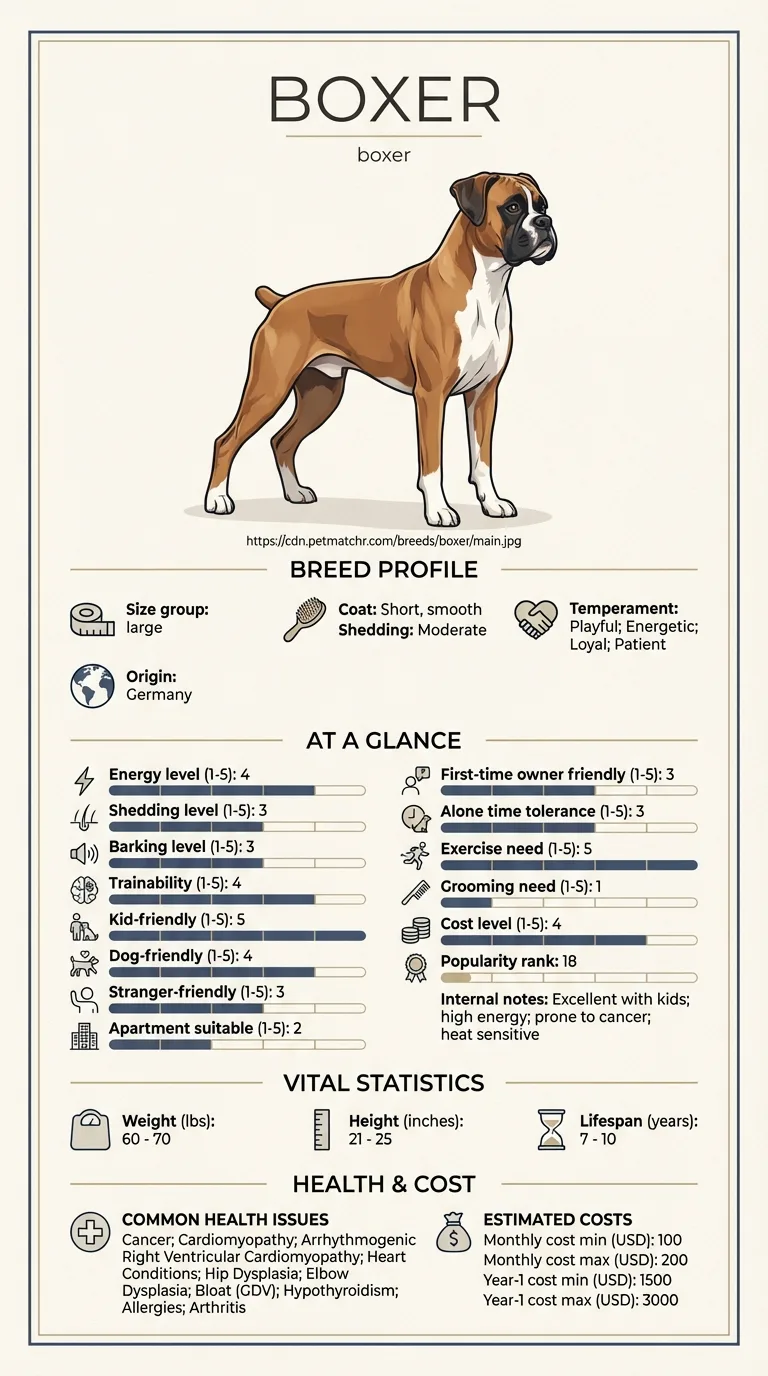
Caring for a Boxer with DM can range from $100 to $200 monthly, including vet visits and possible therapy sessions.
Provide a balanced diet rich in nutrients that support joint and muscle health. Consult your vet for specific dietary recommendations.
A one-page prep sheet for this condition: the signs, the questions to ask, what to get priced. Unlocks here.
You get: Vet visit prep sheet
No spam. One-click unsubscribe. See our privacy policy.
Preview page 1 before you decide.