Behavior
What are some quick tips for Boxer back problems?
Ensure your Boxer maintains a healthy weight and avoid high-impact activities. Regular vet visits can catch problems early.

Quick answer
What are some quick tips for Boxer back problems?
Ensure your Boxer maintains a healthy weight and avoid high-impact activities. Regular vet visits can catch problems early.
Boxer back problems can lead to serious pain and mobility issues. Understanding these problems is crucial for your dog's well-being.
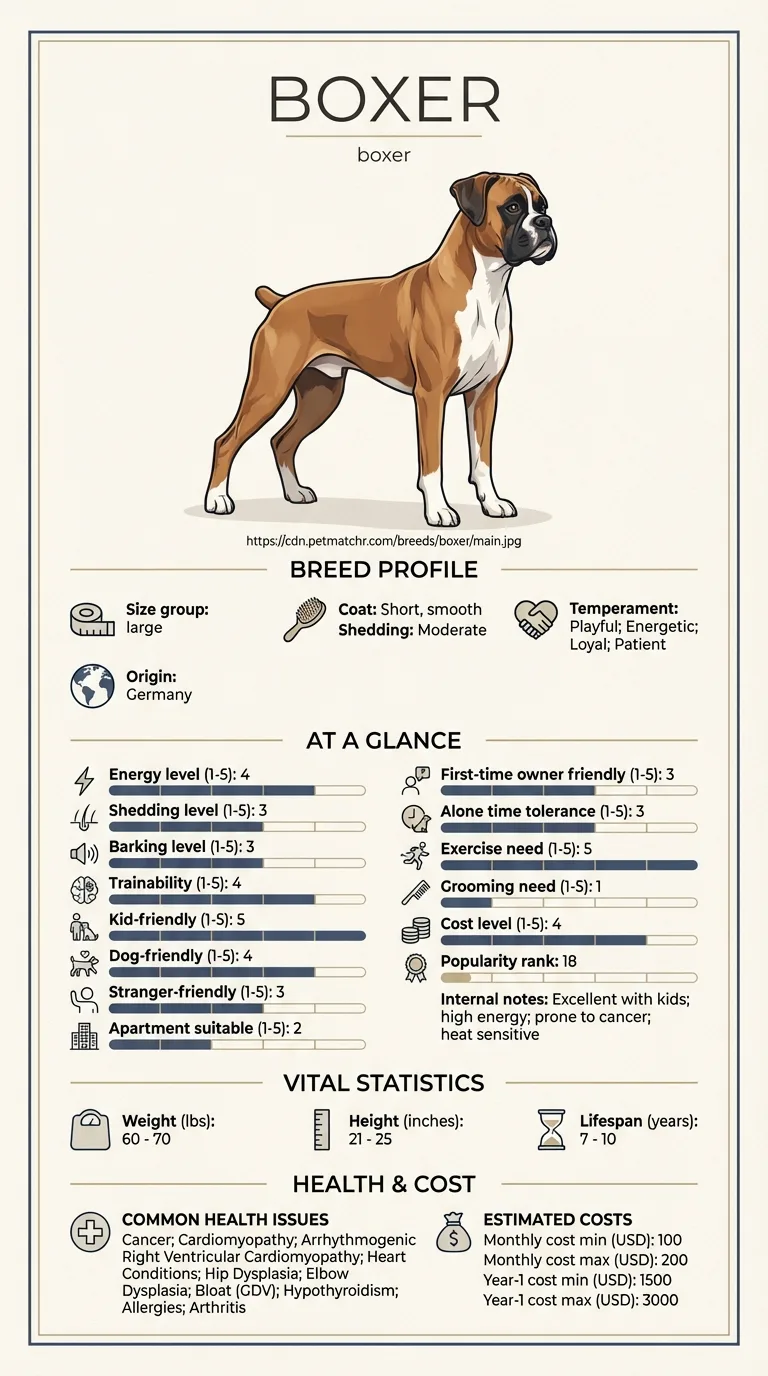
This problem commonly affects Boxer owners who may notice their dogs struggling to jump, play, or even walk comfortably. First-time dog owners and busy families may find it especially challenging to manage these health concerns.
This guide is not medical advice. If your dog shows pain, sudden behavior change, or worsening symptoms, consult a licensed veterinarian.
Some links may be affiliate links. We may earn a commission at no extra cost to you. We only suggest products we believe are helpful for dog owners.
We research and check what we publish, but we do not warrant that any figure, date, price, or statement is accurate, complete, or current, and we accept no liability for any loss, cost, injury, or other harm arising from the use of this site. Use it as one reference among several. You remain responsible for your own decisions and for your dog's care - confirm anything that matters with a licensed veterinarian or another qualified professional before you act on it. Full disclaimer.
Check this first
Understanding when Boxer back problems require immediate attention is crucial for your pet's health. Some signs are clear indicators that you need to call your vet right away. Others might not be as urgent, allowing you to monitor your dog at home with a plan.
Red-flag signs that mean it's time to call your vet include sudden inability to stand or walk, severe pain that causes your Boxer to cry out, or noticeable swelling in the back. If your dog shows signs of paralysis or has lost control of its bladder or bowels, these are serious emergencies. These symptoms can indicate a herniated disc or other severe spinal issues.
Mild cases can often be managed at home. If your Boxer shows slight stiffness or reluctance to jump, monitor it closely. You can also schedule a vet visit to discuss training techniques to help support your dog's back. Keep track of any changes in behavior and note if the stiffness persists or worsens. Regular gentle exercise and a comfortable resting area can also aid recovery. However, if any concerning symptoms arise, don’t hesitate to reach out to your vet for advice.
If any of these apply, call your vet or an emergency clinic now. The rest of this page is for the cases that are not an emergency.
Boxer back problems are common due to their long spine and short legs. This can lead to discomfort and mobility issues, especially as they age. Daily activities like jumping or running can exacerbate these problems, making it crucial for owners to recognize the signs early.
Back problems are fairly common in Boxers, particularly in older dogs or those that have not been well-exercised. Owners should be vigilant and proactive in managing their dog's activity levels to mitigate these issues.
Boxers have a long spine and short legs, which can put extra strain on their back. Their energetic playstyle can lead to injuries if they jump or run too hard. Additionally, some hereditary conditions like hip dysplasia can contribute to back issues.
A lack of proper exercise can weaken back muscles, leading to alignment issues. Overweight Boxers are more prone to back problems because excess weight adds pressure to their spine. Lastly, slippery floors can increase the risk of back injuries during play.
If your Boxer experiences persistent back pain, difficulty walking, or changes in behavior, consult a vet. Early intervention is crucial for back issues. Your vet may recommend imaging tests or treatments to address underlying problems.
Addressing Boxer back problems can be tricky. Many owners unknowingly make mistakes that can worsen these issues. Here are common pitfalls to avoid and safer alternatives to consider.
Start here: Boxer Most Common Genetic Disorders: What to Screen For
See all Boxer health problems, which breeds are prone to back problems, or the full Boxer breed guide for temperament, exercise needs and ownership costs.
When addressing Boxer back problems, expect to see gradual improvement within 4 to 8 weeks. Consistency is key, and individual progress may vary based on the dog's specific issues.
Success means your Boxer will have improved mobility and reduced discomfort. You'll notice them being more active, playing without hesitation, and showing fewer signs of pain.
Lucy, a busy nurse in San Francisco, noticed that her Boxer, Max, was struggling to jump onto the couch and often yelped when playing. After a vet visit confirmed back issues, Lucy learned how to stop Boxer back problems through a combination of gentle exercises and proper support. She dedicated time each day to help Max build strength and flexibility, even incorporating short walks into their routine. Within weeks, Max started to move more freely, and Lucy felt relieved to see him play without pain.
Key takeaway: With patience and a tailored approach, you can help your Boxer overcome back problems and enjoy a happier, more active life.
Boxers are prone to back problems due to their long spine and short legs. These structural traits can lead to issues like arthritis or disc disease. Regular vet check-ups can help monitor their spine health.
To prevent back problems in Boxers, ensure they maintain a healthy weight and engage in low-impact exercises. Avoid high jumps or rough play that might strain their back. Regular physical therapy can also strengthen their muscles.
Signs of back problems in Boxers include difficulty standing up, reluctance to jump, or visible pain when moving. If your Boxer seems stiff or has a hunched posture, consult your vet for a thorough evaluation.
Yes, training is essential in preventing Boxer back problems. Teaching them commands can help control their movements and reduce the risk of injury. Positive reinforcement can also encourage safer play habits.
If your Boxer shows signs of back pain, provide a comfortable, supportive bed and limit strenuous activities. Consult your vet for pain management options, including medication or physical therapy.
Yes, some back problems in Boxers can be hereditary. It's essential to choose a reputable breeder who tests for genetic conditions. This can help reduce the risk of inherited back issues.
Early signs of back problems in Boxers can include changes in their gait, reluctance to jump or climb stairs, and unusual stiffness. If your Boxer seems to be in pain or is hesitant to play, it's important to consult a vet.
Yes, older Boxers can develop back problems as they age, even if they were healthy previously. Age-related wear and tear on their spine can lead to issues like arthritis or degenerative disc disease, so regular vet check-ups are essential.
Even with regular exercise, Boxers can develop back problems due to their physical structure. Their long spine and short legs make them more susceptible to injuries, especially if they engage in high-impact activities without proper care.
Yes, gentle training methods that focus on building core strength can help prevent back problems in Boxers. Avoiding overly strenuous exercises and incorporating activities like swimming can also reduce the risk of injury.
If your Boxer shows signs of back pain, such as whimpering or difficulty moving, it's crucial to see a vet as soon as possible. They can assess your dog’s condition and recommend appropriate treatment options, which may include medication or physical therapy.
Ensure your Boxer maintains a healthy weight and avoid high-impact activities. Regular vet visits can catch problems early.
Boxers need at least 1 hour of moderate exercise each day to keep their spine healthy and strong.
Avoid high jumps or overly strenuous activities that can strain their back. Focus on low-impact exercises and training.
A one-page prep sheet for this condition: the signs, the questions to ask, what to get priced. Unlocks here.
You get: Vet visit prep sheet
No spam. One-click unsubscribe. See our privacy policy.
Preview page 1 before you decide.